Fleet Management · Last Mile Visibility
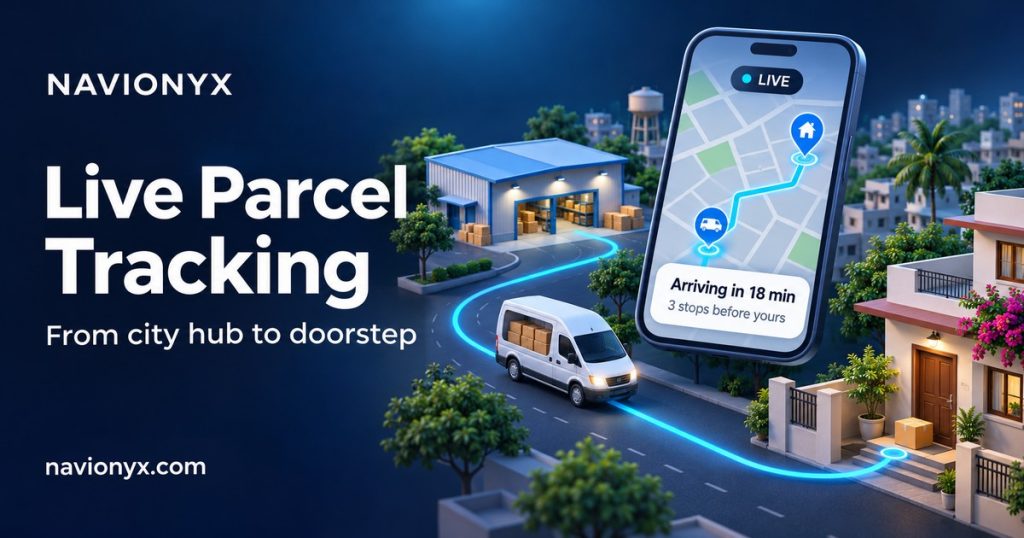
“Arrived at hub” and “Out for delivery” tell customers the status. A live map shows them the journey.
By Navionyx Team · November 2026 · 11 min read
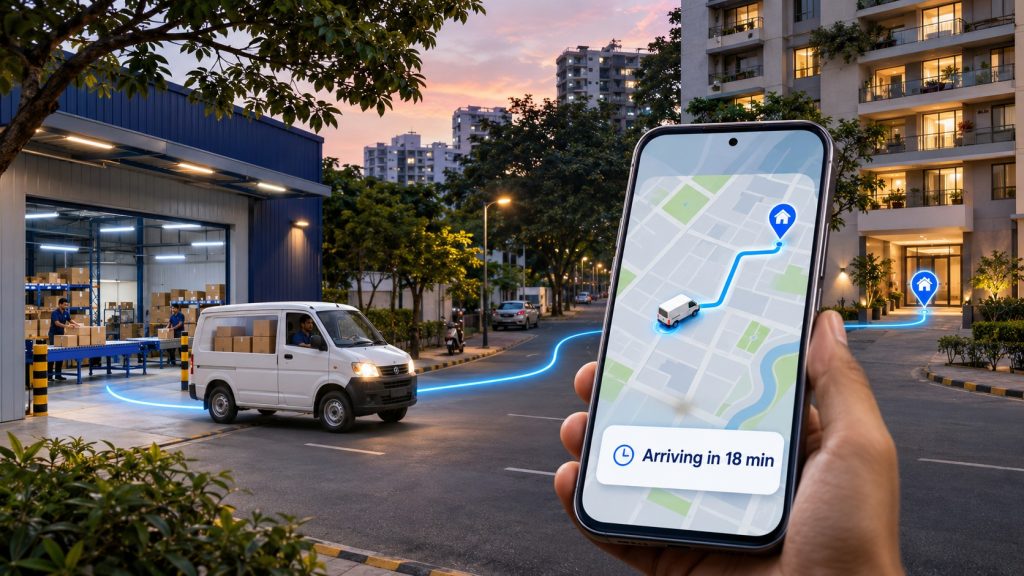
Your parcel has reached your city. The tracking page says so. And then, for hours, nothing changes. “Out for delivery” sits on the screen while the customer wonders whether to wait at home, step out for groceries, or call support.
This is the gap live parcel tracking closes. Courier tracking today mostly works on scan events: picked up, arrived at hub, out for delivery, delivered. Those events say what happened, but not where the parcel is right now. By connecting parcel tracking with the GPS of the delivery vehicle carrying it, courier and shipping platforms can show customers the actual journey on a live map, with an estimated arrival time that updates as the vehicle moves.
At Navionyx, we track delivery and logistics vehicles every day. This post explains how live parcel tracking works, what customers see, how to handle privacy and accuracy properly, and what it changes for courier providers.
Why Status Updates Stop Being Enough in the Last Mile
Scan based tracking works well over long distances, where a parcel moves between hubs over hours or days. Inside the city, the wait is short but customers are anxious. Delivery happens in a window of a few hours, and the customer has to be available for it. A status label cannot help them plan around that window.
The scale of the problem is large. India was expected to process 10 to 11 billion express shipments in FY2025, and ecommerce already makes up more than half of parcel volume. Every one of those parcels ends with a last mile visit that someone has to be home for.
The last mile in numbers
53% of total shipping cost now goes to the last mile, up from 41% in 2018, according to industry research.
1 in 5 orders needed more than one delivery attempt during the 2026 festive season, according to industry delivery data.
30% to 50% of ecommerce support contacts are commonly reported as “Where is my order?” queries, though the share varies with how teams count them.
Put these together and the pattern is clear. The most expensive leg of the journey is also the least visible one to the customer. Every missed doorstep visit means another attempt, and every unanswered “where is it now?” turns into a support ticket.
Scan Events vs Live Location: What the Customer Actually Learns
Scan events and live location answer different questions. Scans confirm that something happened at a known point in the network. Live location shows what is happening between those points. In the last mile, most of the waiting happens between them.
| Customer question | Scan based tracking | Live parcel tracking |
|---|---|---|
| Has my parcel left the hub? | Only if someone scans it out | Yes, detected automatically when the vehicle exits the hub geofence |
| Where is it right now? | “Out for delivery” for the whole day | Vehicle position on a live map |
| When will it reach me? | “By end of day” | A short time window that updates as the vehicle moves |
| Is it delayed? | Usually known only after the day ends | Visible as soon as the ETA starts slipping |
| Do I need to call support? | Often, yes | Rarely, because the answer is already on screen |
Live tracking does not replace scan events. Scans remain the record of custody, proof that a parcel moved from one hand to another. Live location fills the silence between scans, which is exactly where customer anxiety builds up.
What Live Parcel Tracking Looks Like for the Customer
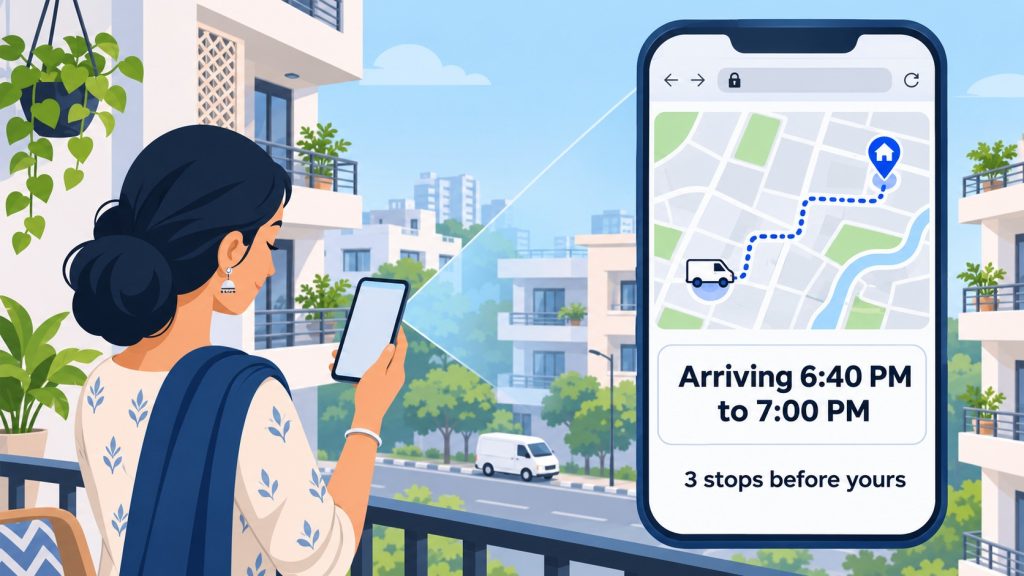
Once a parcel is assigned to a tracked delivery vehicle, the customer’s experience changes from waiting to watching. Here is what they get:
📍 Follow the journey on a live map
The delivery vehicle’s position appears on a map and refreshes as it moves through the city.
⏱️ See an estimated arrival time
The ETA comes from the vehicle’s live position and the stops still ahead, so it updates on its own instead of staying fixed at the time of dispatch.
🔗 Open a tracking link without installing another app
One tap on an SMS or notification opens the live view in any mobile browser. No sign up, no download.
🏠 Plan to be available
Customers can step out and come back, or tell someone at home to receive the parcel, because they know roughly when it will arrive.
How It Works: Connecting Parcel IDs With Delivery Vehicle GPS
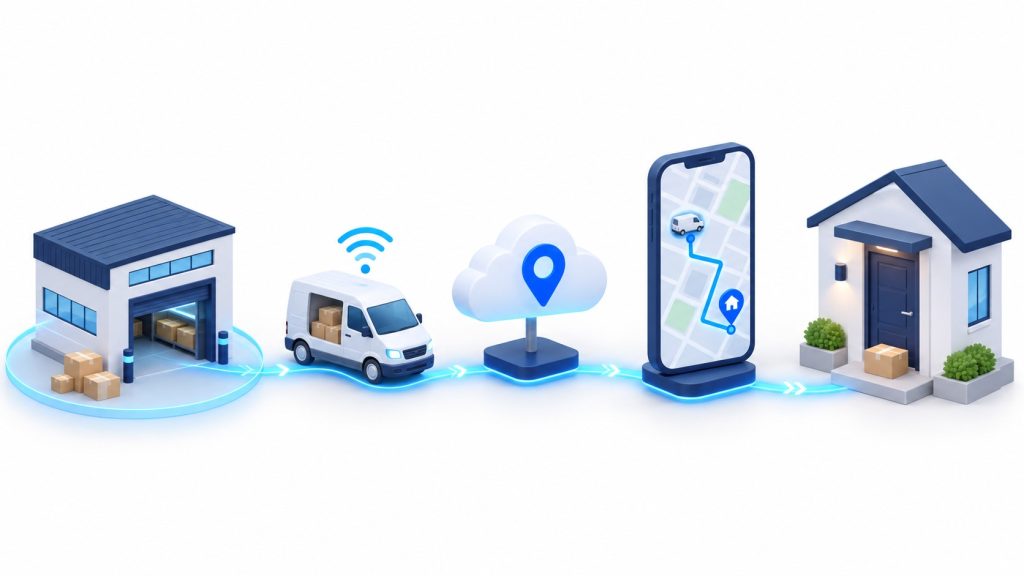
Live parcel tracking does not need a new kind of tracker on every parcel. The vehicle is already tracked. What has been missing is the link between a parcel ID and the vehicle carrying it. Here is how the flow works with Navionyx:
STEP 1 · Assign at the hub
When parcels are loaded for a delivery run, the courier’s system shares the parcel IDs, the vehicle number and the stop order with Navionyx through an API.
STEP 2 · Stream vehicle location
The GPS tracker on the delivery vehicle sends its position to the Navionyx platform throughout the run.
STEP 3 · Detect hub departure automatically
A geofence around the city hub registers the moment the vehicle leaves, so the live journey starts without anyone doing an extra scan.
STEP 4 · Share the live view
The customer gets a tracking link through the courier’s existing SMS or notification flow. Or the courier embeds the live map in its own tracking page or mobile app with an iframe or an in app web view, under its own brand.
STEP 5 · Close on delivery
Once the parcel is marked delivered, the live view stops showing the vehicle and the link expires.
Because the courier keeps its own scan events, order system and customer communication, live tracking adds to what is already there. Nothing needs to be replaced.
How the ETA Is Calculated
An ETA is only useful if customers believe it. A single figure calculated at dispatch and never touched again loses that trust within the first hour of the run. A live ETA is recalculated as the run progresses, using four inputs:
- Live vehicle position. Where the vehicle is now, not where it was planned to be.
- Stops remaining before the customer. Every delivery ahead in the sequence adds time to the wait.
- Time spent at each stop. Parking, climbing stairs, waiting at a society gate and collecting cash on delivery all take minutes. Historical GPS data shows how long stops really take in a given area.
- Local movement patterns. Past trips show how fast vehicles actually move through a neighbourhood at a given time of day, which is often very different from what a map suggests.
Real roads are messy, so the system also has to handle exceptions honestly. If a vehicle has been stationary longer than usual, the ETA window widens instead of pretending nothing has changed. If the GPS signal drops in a basement or a narrow lane, the view shows the last known position with its time, rather than a frozen dot that looks live. If the delivery sequence changes during the run, the stop count and ETA update with it. Being honest about uncertainty is what makes the rest of the information believable.
Integration Options for Courier Platforms
Every courier platform has its own customer touchpoints, so live tracking needs to fit into what already exists. There are three common ways to bring it in:
Hosted tracking link
The fastest route. Navionyx generates a secure live tracking link for each parcel, and the courier adds it to the SMS or notification it already sends when a parcel goes out for delivery.
Embedded live map
The live view sits inside the courier’s own tracking page or mobile app through an iframe or an in app web view. Customers never leave the courier’s brand.
Data through API
For platforms that want full control of the interface, vehicle location and ETA data can be shared through an API so the courier’s own team designs the customer experience.
Many platforms start with the hosted link to prove the value quickly, then move to an embedded or API based setup once the results are clear.
Designing for Privacy and Honest ETAs
Showing a delivery vehicle on a public link comes with responsibility toward other customers and toward the delivery staff. In our experience, a few design rules decide whether live tracking builds trust or erodes it:
- Show the vehicle only while the customer’s parcel is on board. Not before the run starts, and not after delivery.
- Never expose other stops. Customers see the vehicle and a count such as “3 stops before yours”, never other addresses or the full route.
- Expire every link. A tracking link should stop working once its parcel is delivered.
- Give a window, not a promise. An ETA shown as a short range that updates live is more believable than one exact minute that turns out wrong.
- Collect only what is needed. Parcel to vehicle mapping needs a parcel ID and a vehicle, not extra personal data about the customer.
Live tracking is not about showing more data. It is about showing the one piece of data the customer actually needs, at the moment they need it.
What Live Parcel Tracking Changes for Courier Providers
The benefits reach well past a nicer tracking page:
- Fewer “Where is my parcel?” enquiries. If customers can see the answer, they do not need to call and ask.
- More first attempt deliveries. Customers who know when the vehicle is coming are more likely to be home. Industry studies report that proactive pre delivery notifications can cut missed deliveries by around 30%.
- Better coordination at the hub. Operations teams see every run on one fleet dashboard and can spot delays before customers notice them.
- Greater customer confidence. A visible journey tells customers the parcel is moving, and that reassurance carries over to the brand that shipped it.
- A feature under your own brand. With white label and embeddable options, the experience belongs to the courier, not to a third party.
Where Live Tracking Makes the Biggest Difference
Live visibility helps every delivery, but some situations benefit far more than others. These are the cases where courier teams usually feel the change first:
- Cash on delivery orders. Customers can keep the exact amount ready when they see the vehicle approaching, which shortens time at the doorstep and reduces refused deliveries.
- High value parcels. Electronics, jewellery and documents are parcels customers want to receive in person. Knowing the arrival window means they can make sure someone is home.
- Tier 2 and Tier 3 cities. Addresses are often descriptive rather than precise. When customers can see the vehicle nearby, they can guide the delivery staff to the right lane or landmark over a quick call.
- Gated societies and office complexes. Customers can inform security or the reception desk in advance, so the delivery staff are not held at the gate.
- Festive season peaks. When volumes jump, support teams are stretched thin. Live visibility absorbs a large share of the “where is it?” load before it reaches them.
- Scheduled business deliveries. Shops, clinics and offices that receive stock can plan staff to unload when the vehicle actually arrives, rather than keeping someone waiting all day.
Why Courier Platforms Build This With Navionyx
Live parcel tracking is only as good as the vehicle tracking behind it. Navionyx is an AIS 140 certified fleet intelligence platform that already tracks around 3,000 vehicles, with more than 200 million km of GPS history across logistics fleets. Embeddable live tracking through iframes and in app web views, geofencing and fleet dashboards are already running in production on our platform. Live parcel tracking connects these existing building blocks to your parcel data.
When you onboard your delivery fleet with Navionyx, live parcel tracking can be switched on as part of the integration. You share parcel assignments, we handle vehicle tracking, ETAs and the live view, and your customers get a tracking experience that does not go dark once the parcel reaches their city.
Rolling Out Live Parcel Tracking: A Practical Pilot Plan
Live tracking does not need to launch across a whole network on day one. A focused pilot shows the impact clearly and gives operations teams time to adjust. We recommend this sequence:
1 · Pick one city hub
Choose a hub with steady volume and a fleet that is already fitted with GPS trackers, or can be fitted quickly.
2 · Record a baseline
Before switching anything on, note the hub’s current numbers: support contacts per thousand parcels, first attempt delivery rate and the share of parcels that need a second visit.
3 · Connect parcel assignments
Share delivery run data with Navionyx for that hub, set up the hub geofence and add the tracking link to the out for delivery message.
4 · Run for 30 days
A month covers weekday and weekend patterns and gives enough deliveries to compare fairly against the baseline.
5 · Compare and expand
Review the same metrics, collect feedback from delivery staff and customers, and roll out to more hubs based on what the numbers show.
Frequently Asked Questions
Do customers need to install an app to track their parcel live?
No. The live view opens from a link in any mobile browser. Couriers that already have their own app can also embed the live map inside it.
Does every parcel need its own GPS tracker?
No. The tracker is on the delivery vehicle. Navionyx links each parcel to the vehicle carrying it, so one tracker gives live visibility for every parcel on board.
Can customers see other deliveries on the same route?
No. Customers only see the vehicle while their own parcel is on board, along with a count of stops ahead of them. Other addresses and the full route stay hidden.
What happens if the vehicle loses GPS signal?
The view shows the last known position along with the time it was recorded, and the ETA window adjusts. Tracking resumes on its own once the signal returns.
Can the tracking experience carry our brand?
Yes. Through embedded and white label options, the live map can appear inside your own tracking page or app, so customers see your brand throughout.
How long does it take to get started?
It depends on how many hubs are involved and whether the delivery fleet is already fitted with GPS trackers. Starting with a single hub pilot is the quickest way to see results. Our team will scope the timeline with you during onboarding.
Conclusion: Make the Last Mile Visible
Customers do not just want to know that their parcel is out for delivery. They want to know where it is and when it will reach them. Live parcel tracking answers both by linking each parcel to the GPS of the vehicle carrying it. For courier and shipping platforms, that means fewer enquiries, fewer missed doorsteps and customers who trust the delivery promise. From the city hub to the customer’s doorstep, the journey can now be seen.
Bring live parcel tracking to your shipping platform
Onboard your delivery fleet with Navionyx and give your customers a live map, a live ETA and a tracking link that works without another app.
Talk to Our Team →Sources: published Indian courier and parcel market research, global last mile cost studies, 2026 festive season delivery data and customer service benchmarks. This article was researched and written with AI assistance and reviewed by the Navionyx team.