Button pressed
A passenger, student attendant, or driver presses the SOS panic button fitted inside the cabin.
Every public service vehicle in India must carry an AIS-140 tracking device with SOS panic buttons. Navionyx fits the device and panic buttons, tests every alert, and issues your installation certificate the same day.
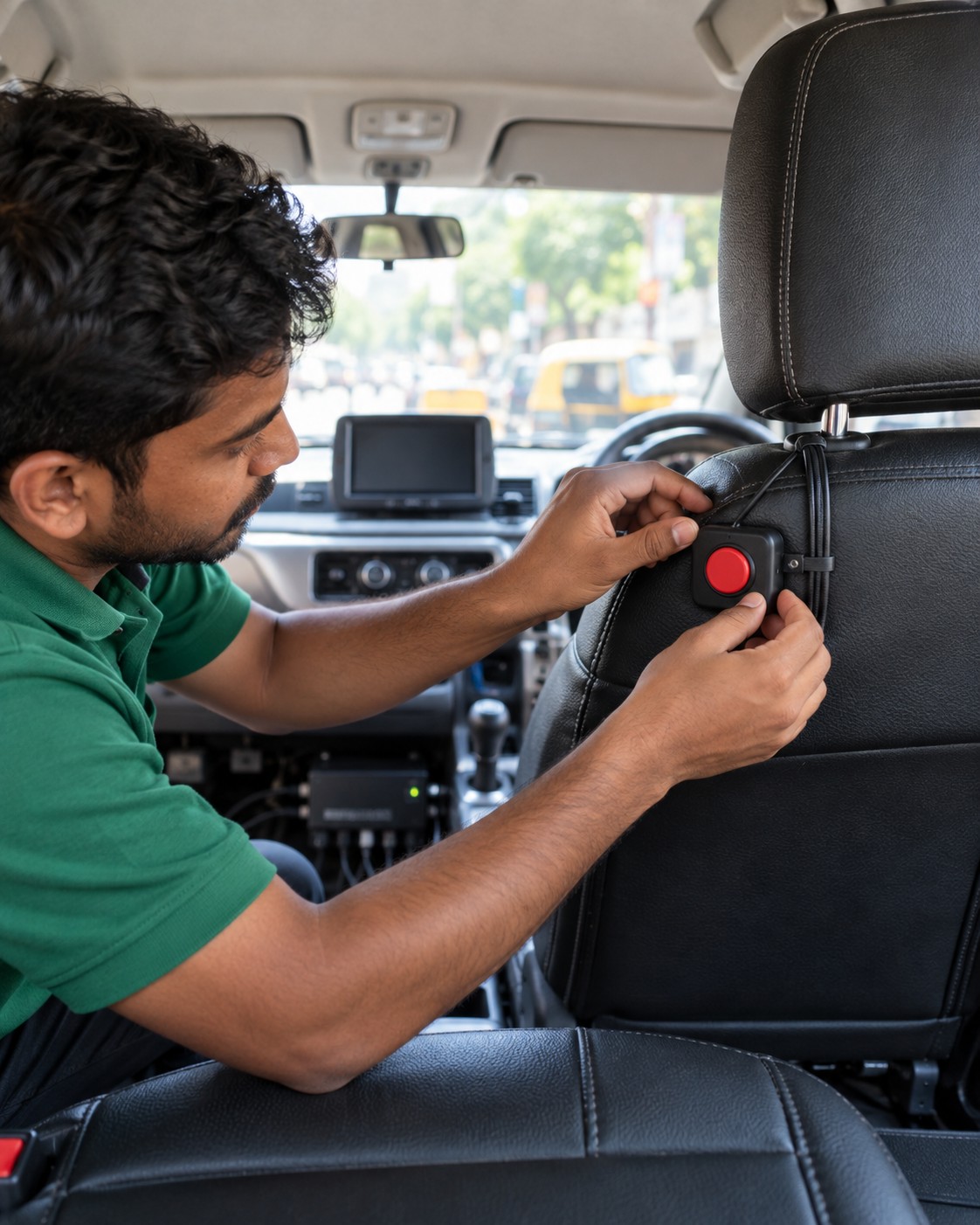
A panic button, also called an SOS or emergency button, is a hardwired switch inside the vehicle cabin. It is connected to the AIS-140 vehicle location tracking device (VLTD). On its own the button does nothing. It works because the tracking device sends the alert and the vehicle's live location the moment it is pressed.
That is why some people ask for panic button installation and others ask for VLTD installation. It is the same job: one certified device, the panic buttons wired to it, activation on the server, and one installation certificate.
A passenger, student attendant, or driver presses the SOS panic button fitted inside the cabin.
The AIS-140 VLTD immediately transmits an emergency packet with vehicle number, live GPS location, and time. AIS-140 devices also support SMS fallback for emergency alerts when mobile data is weak.
The alert reaches the state transport monitoring backend where integrated, and the Navionyx platform notifies the fleet owner and saved emergency contacts.
Responders follow the vehicle on a live map until the emergency is closed, with the full event saved in trip history.
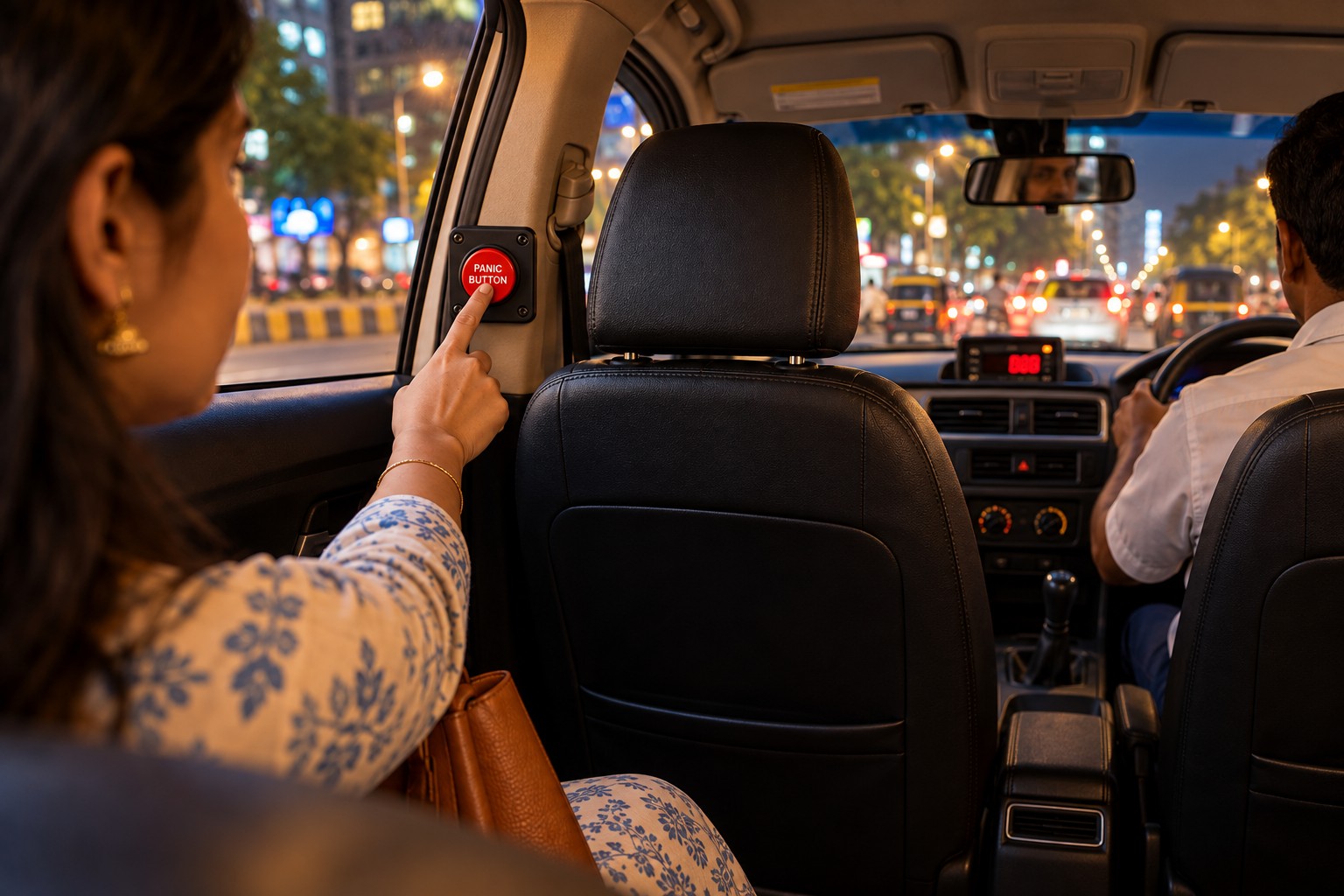
Yes. Under Rule 125H of the Central Motor Vehicles Rules, every public service vehicle must be fitted with a vehicle location tracking device and one or more emergency buttons. New public service vehicles registered from 1 January 2019 must have them, and each state notifies the deadline for older vehicles.
In practice, a vehicle without a working panic button can face fitness certificate rejection, permit trouble, fines during RTO checks, and removal from ride-hailing platforms.
MoRTH notification GSR 1095(E) added Rule 125H to the Central Motor Vehicles Rules, requiring public service vehicles to carry a vehicle location tracking device and one or more emergency (panic) buttons.
State transport departments check VLTD and panic button fitment at permit issue, fitness certificate renewal, and roadside checks. A missing or inactive panic button can hold up your fitness renewal.
Panic buttons are the in-vehicle part of the passenger safety system that states built with Nirbhaya Framework support, linking public transport to monitoring and emergency response centres.
The number and position of panic buttons depend on the vehicle. Here is what each type needs.
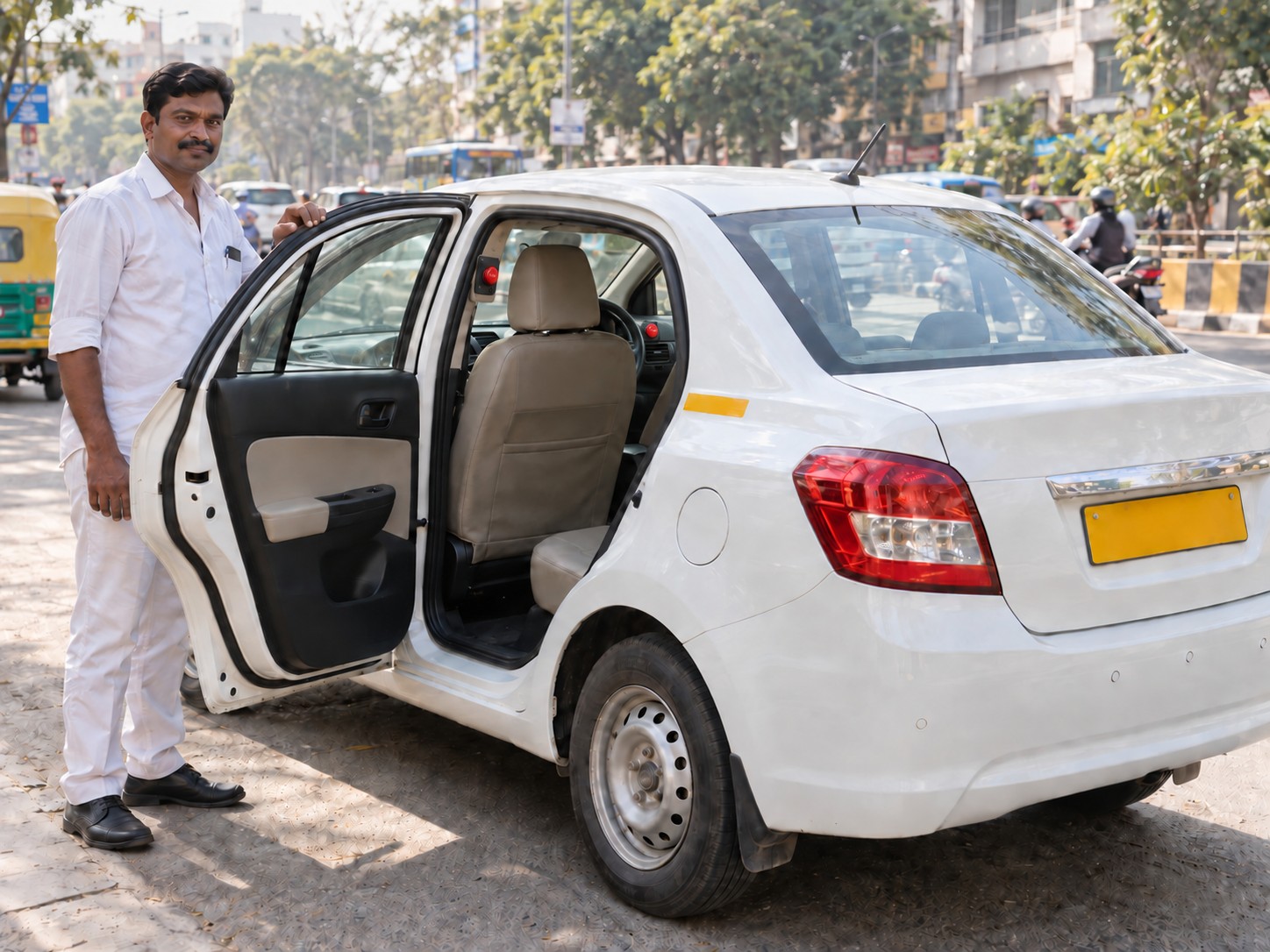
Every yellow-board taxi, app-based cab, and All-India Tourist Permit vehicle needs an AIS-140 VLTD with a working panic button. Buttons are placed within reach of rear-seat passengers so a rider can raise an alert without the driver's help. Ride-hailing aggregators also ask for a valid VLTD certificate, which records the SOS button fitment, before a driver can go online.

School buses and contracted student vans carry children who cannot always call for help themselves. SOS buttons are fitted for the driver and attendant and in the passenger area. When one is pressed, the school transport team sees the bus location instantly. Paired with live tracking, schools can also share bus location with parents.
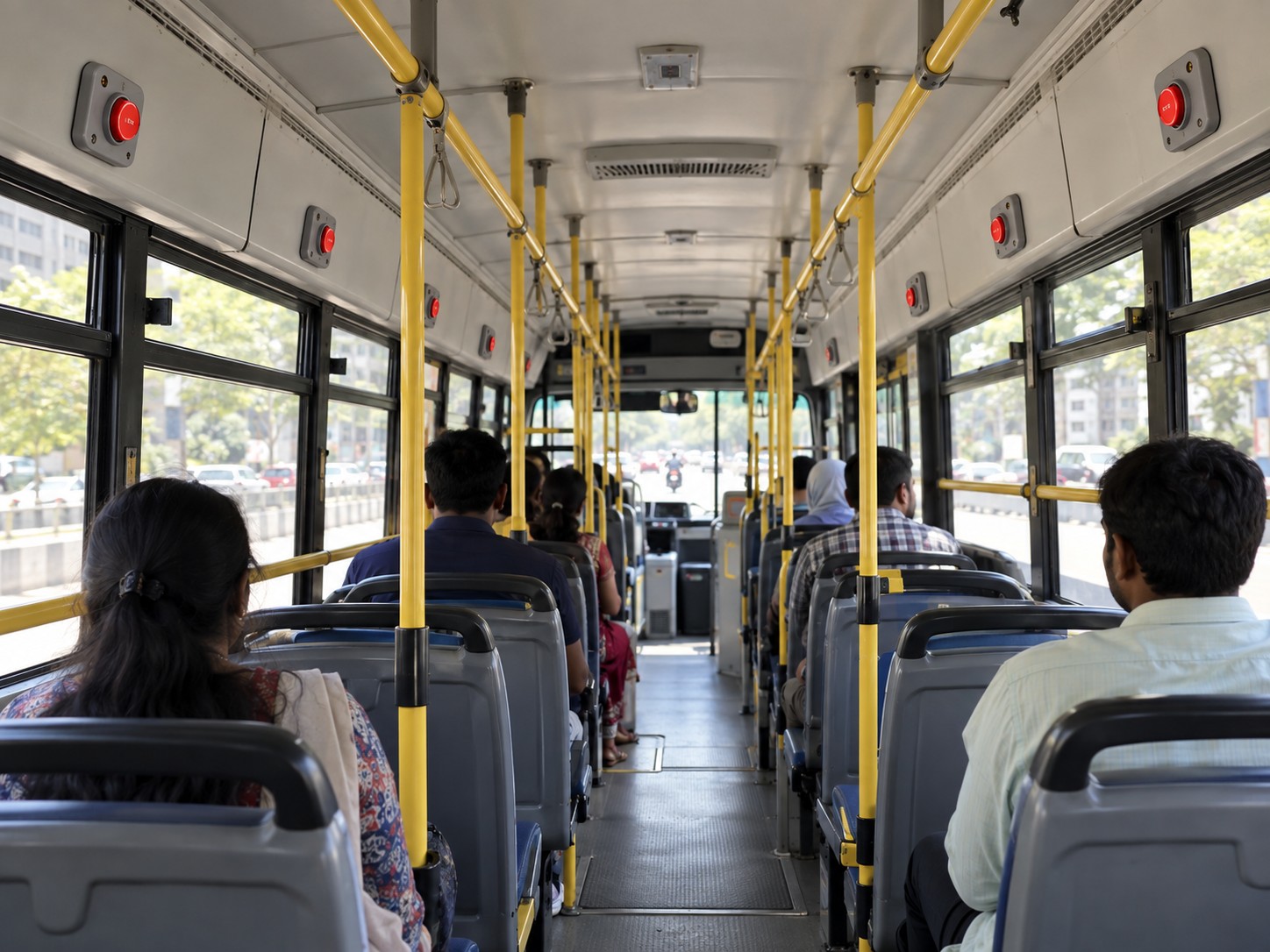
City, intercity, and private contract buses need several emergency buttons spread along the cabin so every passenger has one within reach. The exact count depends on seating layout and your state's notification. Our technician plans button positions before wiring so the bus passes the RTO inspection the first time.

On long-haul routes the SOS button protects the driver, whether from highway robbery, a breakdown at night, or a medical emergency. Goods carriers covered by AIS-140 tracking requirements in their state get the same certified device and SOS button, with alerts routed to the fleet owner.

Corporate cab and shuttle operators running night shifts use SOS alerts as part of their employee safety obligations. SOS events, routes, and response times are logged in the Navionyx platform for client audits.
The panic button certificate is the VLTD fitment certificate issued after installation. It records the vehicle, chassis and engine numbers, device IMEI, fitment date, and confirms the panic button is installed and active. RTO officers use it at fitness and permit checks, and aggregators ask for it at driver onboarding.
Navionyx issues the certificate the same day in printed and digital form, with a QR code for verification. If you lose your copy, WhatsApp us your vehicle number and we will send it again.
Download Sample Certificate (PDF)
Navionyx technicians and service partners install panic buttons across 20 states. Pick your state for local cities, RTO notes, and availability, or WhatsApp us your city for the nearest slot.

Mumbai, Thane, Pune, Nagpur, Nashik, Chhatrapati Sambhajinagar
Our home state. Same-day SOS button fitment for Mumbai and Pune cabs, Nagpur and Nashik school buses, and fleets across Maharashtra.
Panic button installation in Maharashtra
Bengaluru, Mysuru, Mangaluru, Hubballi
Same-day fitment for Bengaluru airport taxis, app-based cabs, and IT-park employee shuttles, plus Mysuru, Mangaluru, and Hubballi.
Panic button installation in Karnataka
Delhi, Gurugram, Noida, Ghaziabad, Faridabad
Emergency button fitment for Delhi taxis, Gurugram and Noida corporate cabs, and school buses across the NCR.
Panic button installation in Delhi NCR
Hyderabad, Secunderabad
SOS buttons for Hyderabad app-based cabs, airport taxis, and HITEC City employee transport running night shifts.
Panic button installation in Telangana
Chennai, Coimbatore, Madurai, Trichy
Fitment for Chennai cabs, Coimbatore school buses, and Madurai and Trichy tourist and pilgrim vehicles.
Panic button installation in Tamil Nadu
Ahmedabad, Surat, Vadodara, Rajkot
Panic buttons for Ahmedabad and Surat taxis, Vadodara school transport, and goods carriers on the Mundra and Kandla port corridor.
Panic button installation in Gujarat
Jaipur, Udaipur, Jodhpur, Ajmer
SOS fitment for Jaipur and Udaipur tourist taxis carrying visitors on long heritage routes, plus city cabs and buses.
Panic button installation in Rajasthan
Lucknow, Kanpur, Varanasi, Agra, Noida
Fitment for Lucknow and Kanpur cabs, Varanasi and Agra tourist vehicles, and school buses across the state.
Panic button installation in Uttar Pradesh
Kolkata, Howrah, Siliguri
Emergency buttons for Kolkata taxis and app cabs, Howrah buses, and Siliguri tourist vehicles heading to the hills.
Panic button installation in West Bengal
Kochi, Thiruvananthapuram, Kozhikode, Backwater Circuit
Fitment for Kochi airport taxis, tourist cabs on the Munnar and backwater circuit, and school buses across Kerala.
Panic button installation in Kerala
Vijayawada, Visakhapatnam, Tirupati
SOS buttons for Vijayawada and Visakhapatnam cabs and Tirupati pilgrim taxis and buses.
Panic button installation in Andhra Pradesh
Indore, Bhopal, Gwalior
Fitment for Indore and Bhopal taxis, school buses, and intercity contract carriages across Madhya Pradesh.
Panic button installation in Madhya Pradesh
Chandigarh, Ludhiana, Amritsar, Jalandhar
Panic buttons for Amritsar tourist taxis, Ludhiana and Jalandhar cabs, and Chandigarh tricity fleets.
Panic button installation in Punjab
Gurugram, Faridabad, Panipat, Ambala
Fitment for Gurugram corporate cabs, Faridabad goods vehicles, and buses on the Panipat and Ambala highway routes.
Panic button installation in Haryana
Patna, Bodh Gaya
SOS buttons for Patna taxis and school buses, and tourist vehicles on the Bodh Gaya Buddhist circuit.
Panic button installation in Bihar
Bhubaneswar, Cuttack, Puri, Paradip
Fitment for Bhubaneswar and Cuttack app-cabs, Puri and Konark pilgrim taxis, and Paradip port goods carriers.
Panic button installation in Odisha
Guwahati
Emergency buttons for Guwahati taxis, tourist vehicles to Kaziranga, and trucks on the NH-27 corridor.
Panic button installation in Assam
Ranchi, Jamshedpur, Dhanbad
Fitment for Ranchi cabs, Jamshedpur employee transport, and Dhanbad goods vehicles in the mining belt.
Panic button installation in Jharkhand
Raipur, Bilaspur
SOS buttons for Raipur and Bilaspur taxis, school buses, and goods carriers serving the industrial belt.
Panic button installation in Chhattisgarh
Dehradun, Haridwar, Char Dham Circuit
Fitment for Dehradun taxis and Char Dham pilgrim vehicles on mountain routes where a quick SOS matters most.
Panic button installation in UttarakhandWhatsApp us your vehicle registration number, vehicle type, and city. We confirm the number of panic buttons your vehicle needs and book a slot at your location or our nearest service point.
Our technician installs the AIS-140 VLTD, wires the panic buttons, and presses each one to confirm the emergency alert reaches the server before handing the vehicle back.
You receive the installation certificate covering the VLTD and panic button fitment, plus Navionyx app access to see live location and SOS alerts on your phone.
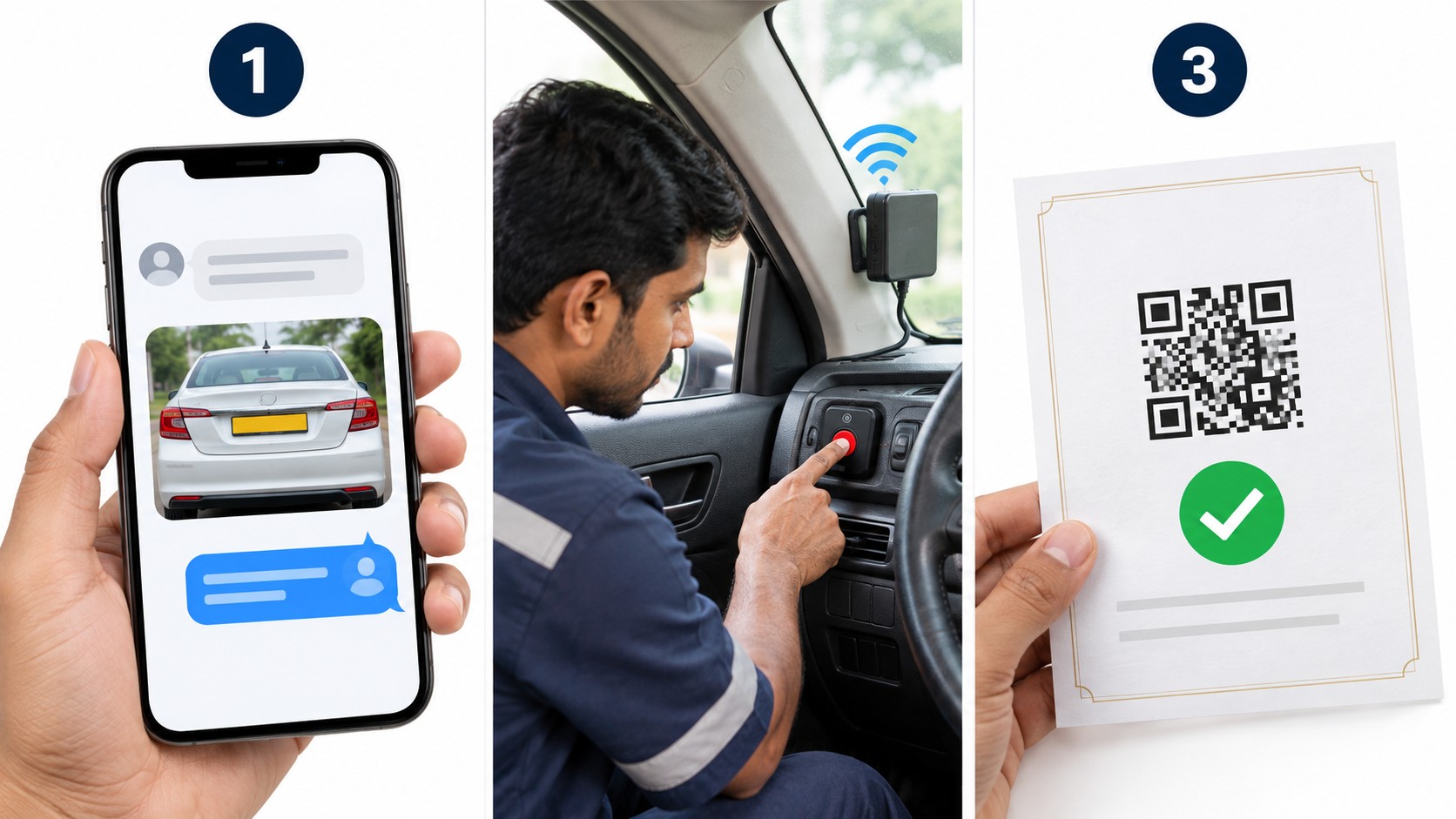
Send your vehicle number on WhatsApp. We confirm the buttons your vehicle needs, book the nearest technician, and issue your certificate the same day.

Real-time insights. Predictive analytics. Seamless EV operations.

Now available on Google Play

Now available on App Store
Monday – Friday
10:00 am – 8:00 pmSaturday – Sunday
12.00 pm – 06.00 pmAddress:
Navionyx Mobility Solutions Private LimitedEmail:
info@navionyx.com




Made in 🇮🇳 India