Fleet Management · Dealer Strategy
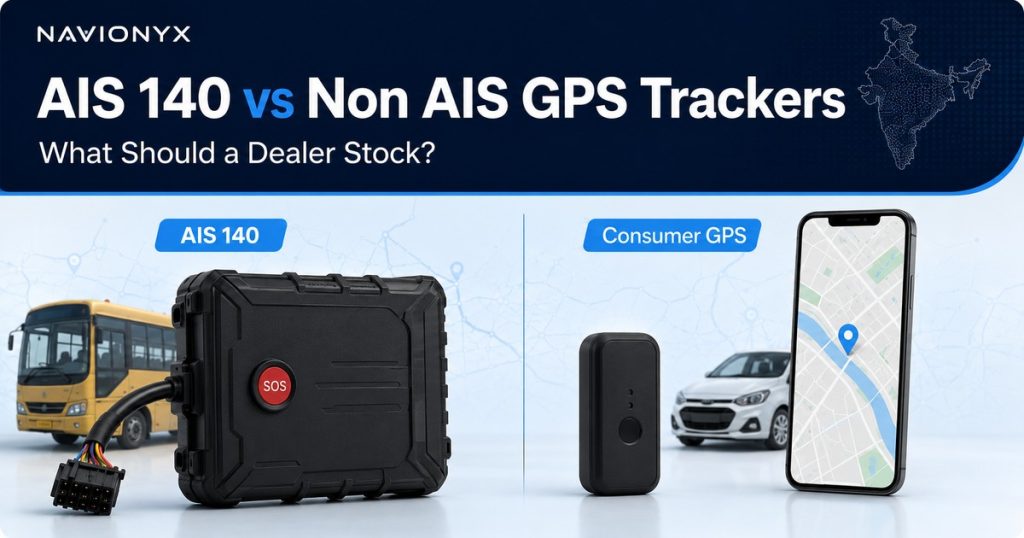
A side by side comparison of the two device categories every new GPS tracker dealer in India has to choose between, with a clear framework for deciding what to stock first.
By Navionyx Team · February 2026 · 7 min read
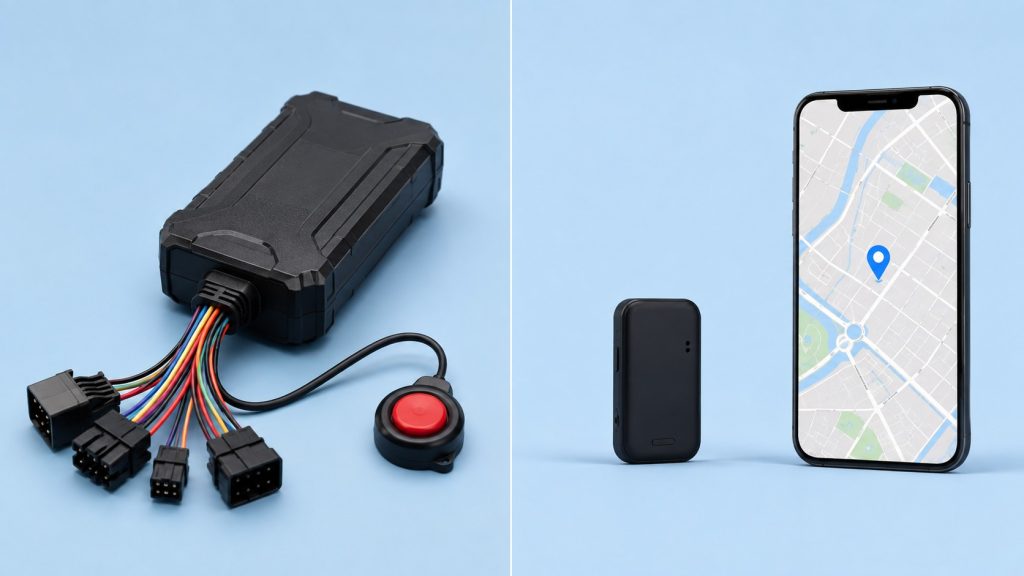
Every new GPS tracker dealer in India faces the same first decision : should I stock AIS 140 devices, consumer GPS trackers, or both. The two device categories look similar (both track vehicles, both use GPS, both integrate with a mobile app) but serve completely different customers, follow completely different economics, and require completely different sales approaches. Getting this decision right in month 1 saves you months of course correction later.
This article gives you a clear side by side comparison and a simple framework for deciding what to stock based on your local market.
The Side by Side Comparison
Start with the numbers and product specs. Everything else flows from these.
| Attribute | AIS 140 Devices | Consumer GPS Trackers |
|---|---|---|
| Dealer buy price | ₹3,900 to ₹10,500 (varies by state) | ₹1,300 (flat, pan India) |
| Sell price to customer | ₹4,800 to ₹11,800 | ₹2,300 to ₹2,800 |
| Dealer profit per device | ₹700 to ₹1,300 | ₹1,000 to ₹1,500 |
| Minimum first stock | 5 devices | 10 devices |
| Entry investment | ₹20,000 to ₹52,000 | ₹13,000 |
| Regulatory context | Mandatory in 18 states + national permit | Optional, no state restriction |
| Panic button (SOS) | Required, included | Optional, usually not included |
| Installation time | 45 to 60 minutes | 20 to 30 minutes |
| RTO paperwork required | Yes, per fitment | No |
| Tracking subscription bundled | 1 or 2 years | 1 year |
Different Customers, Different Sales Conversations
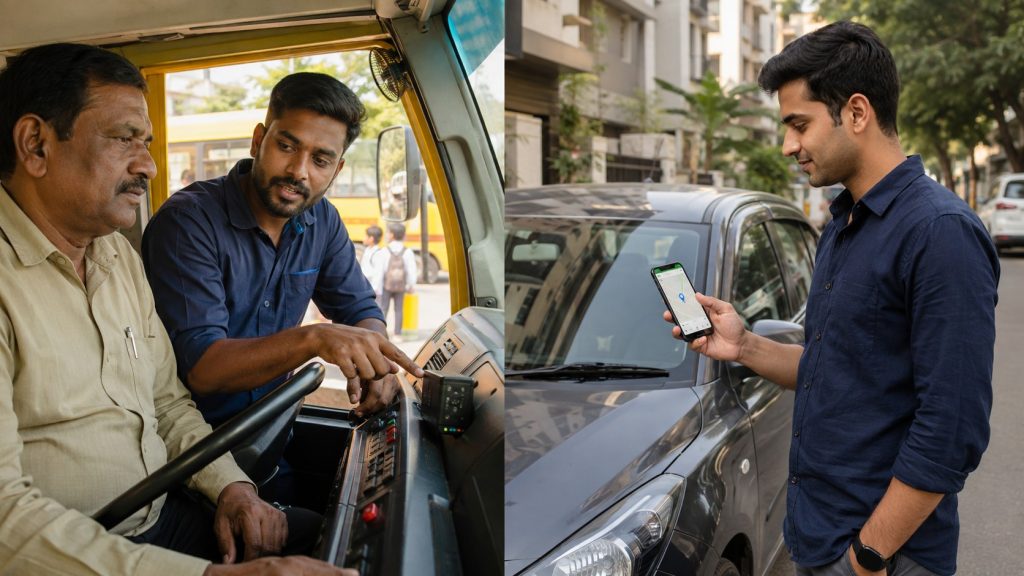
The bigger difference between the two categories is the customer type. Understanding this shapes everything from your marketing message to your closing approach.
AIS 140 CUSTOMER PROFILE
Commercial vehicle owners under regulatory pressure
School bus operators, taxi and auto operators, tourist vehicle operators, national permit truck fleet owners, transport company owners. They are buying because they have to (state RTO or national permit rules). Sales conversation focuses on compliance, price competitiveness, RTO paperwork support, and installation speed. Emotional temperature : anxious about deadlines, price sensitive, decision made by the business owner or transport manager.
CONSUMER GPS CUSTOMER PROFILE
Personal vehicle owners solving a specific problem
Personal car owners worried about theft, bike owners after a stolen bike incident, parents wanting to know where a teenage child drives, cab drivers wanting trip records, small delivery fleet owners wanting driver oversight. Sales conversation focuses on the specific problem they want solved (theft, oversight, family safety). Emotional temperature : reactive (after a scare) or preventive (peace of mind), less price sensitive if the problem is real, decision made by the vehicle owner directly.
Which Category Has Higher Volume Potential
Volume potential depends on your local market. As a rule of thumb :
- ✓ Consumer GPS has higher volume potential in metros and IT corridor cities where personal vehicle ownership and theft awareness are high. Bengaluru, Mumbai, Delhi NCR, Chennai, Pune, Hyderabad can support 100+ consumer GPS sales per month for a dedicated dealer.
- ✓ AIS 140 has higher volume potential in transportation hubs, industrial cities, and states with strict enforcement. Mumbai Pune corridor, Chennai auto belt, Aurangabad manufacturing corridor, Delhi commercial vehicle base, Ahmedabad and Surat industrial fleet all support 20 to 50+ AIS 140 sales per month.
- ✓ Tier 3 cities and small towns typically support 5 to 15 devices per month in either category, with consumer GPS slightly ahead because it does not require a mandate to buy.
Which Category Has Higher Absolute Profit
Per device, consumer GPS often wins in most standard AIS 140 states :
- ✓ Consumer GPS profit per device : ₹1,000 to ₹1,500 (dealer buy ₹1,300, sell ₹2,300 to ₹2,800)
- ✓ AIS 140 standard state profit per device : ₹700 to ₹1,050
- ✓ AIS 140 higher tier state profit per device : ₹900 to ₹1,300 (Tamil Nadu, West Bengal)
But per hour of sales effort, AIS 140 often wins because the sales conversation is shorter (the customer already knows they need one) and the customer base is more concentrated (a single school with 15 buses is 15 devices from one conversation).
Both categories have similar annual renewal revenue potential per device from year 2 onwards, so long term the two streams compound similarly.
The Simple Framework : Stock Both, in the Right Ratio
The strong recommendation for almost every new dealer is to stock both categories. AIS 140 gives you the regulated commercial vehicle customer who has to buy. Consumer GPS gives you the higher volume walk in and referral customer who wants to buy. Together they cover almost every customer that could show up at your shop or on your WhatsApp.
The right ratio depends on your local market context :
STOCK MIX A · METRO CITY WITH IT CORRIDOR
5 AIS + 25 Consumer for first stock
Bengaluru, Mumbai, Delhi NCR, Chennai, Pune, Hyderabad. Consumer GPS demand is strong from personal car owners, cab drivers, and small delivery fleets. AIS 140 demand exists but is smaller relative to consumer demand. Skew towards consumer GPS.
STOCK MIX B · INDUSTRIAL OR TRANSPORT HUB
10 AIS + 15 Consumer for first stock
Aurangabad, Ahmedabad, Surat, Nagpur, Coimbatore, Chennai auto belt. Industrial fleet, national permit trucks, and school buses create strong AIS 140 demand. Balance the mix roughly equally with a slight AIS skew.
STOCK MIX C · TIER 2 OR TIER 3 CITY
5 AIS + 15 Consumer for first stock
Kolhapur, Nashik, Vadodara, Rajkot, Mysuru, Madurai, Warangal, Thrissur. Lower absolute volumes in both categories. Consumer GPS ramps faster because it does not need a mandate. AIS 140 grows steadily from school buses and local commercial fleet.
When Should You Stock Only One Category
Only 3 cases where stocking one category alone makes sense :
Case 1 : Very tight starting budget (under ₹20,000).
If you cannot afford ₹35,000+ for a mixed first stock, start with 10 consumer GPS devices (₹13,000 investment). Add AIS 140 after your first month once cash starts coming in.
Case 2 : Existing installer with strong commercial vehicle customer base.
If you already run an auto electrician shop or CCTV installation business with a commercial vehicle customer pipeline, start with AIS 140 only. Your existing customers already trust you for vehicle related services, and AIS 140 leverages that trust directly.
Case 3 : Location without commercial vehicle base.
Some residential township markets or IT campus retail areas have almost no commercial vehicle demand. In these locations, focus on consumer GPS only.
Conclusion
AIS 140 and consumer GPS are two different products serving two different customers with two different sales conversations. Both are profitable. The decision for a new dealer is not “which one” but “in what ratio”. For almost every dealer in India, stocking both categories from day one is the right strategy because it lets you serve every customer that walks in and doubles your addressable market.
Start with a stock mix that matches your local market : consumer heavy in metro and IT corridor cities, balanced in industrial and transport hubs, consumer leaning in tier 2 and tier 3 cities. Adjust the ratio after your first 90 days based on what actually sells in your area.
Stock Both Categories with the Navionyx Dealer Program
One dealer account covers both tracks. AIS 140 for commercial vehicles across 18 mandated states plus national permit. Consumer GPS at ₹1,300 pan India with apps and platform bundled. No joining fee. Minimum first stock 5 AIS or 10 consumer, or both.
See the Full Dealer Program →