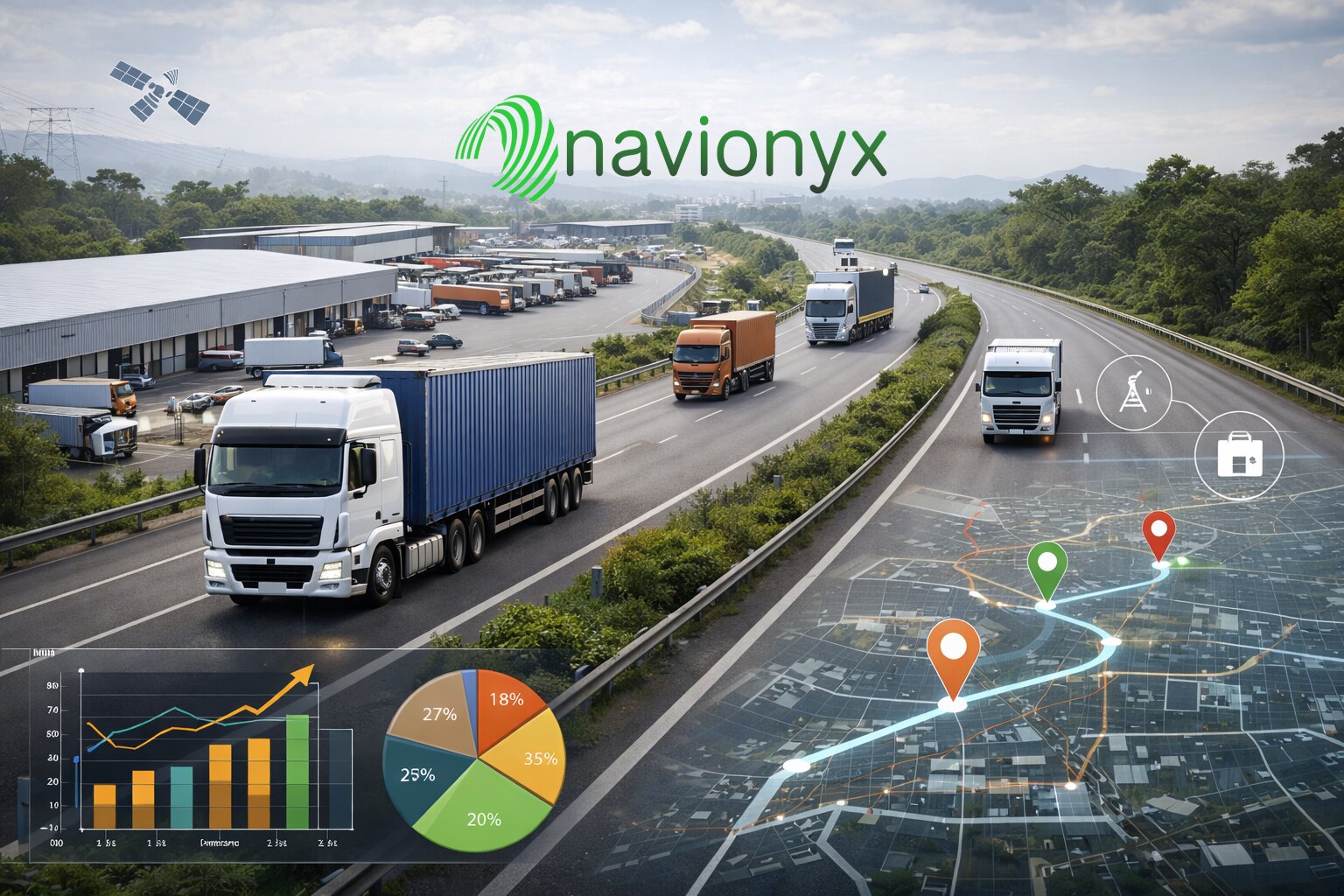
India’s transportation and logistics industry is undergoing a massive digital transformation. What was once driven by phone calls, paper logs, and manual supervision is now being powered by real-time data, automation, and smart decision-making. At the center of this transformation is GPS tracking technology, which has quickly moved from being a “nice-to-have” to an operational necessity.
From small fleet owners to large logistics enterprises, Indian transporters are rapidly adopting GPS tracking solutions to stay competitive, compliant, and profitable. But what is driving this shift so strongly—and why now?
Let’s explore the key reasons behind this growing adoption.
🚚 Rising Operational Costs Are Forcing Smarter Decisions
Fuel prices in India continue to fluctuate, vehicle maintenance costs are rising, and profit margins for transporters remain thin. In such an environment, even small inefficiencies can lead to significant losses.
GPS tracking helps transporters:
-
Monitor fuel consumption
-
Identify route deviations
-
Reduce idle time
-
Prevent unauthorized vehicle usage
With real-time visibility into vehicle movement, fleet owners can quickly identify where money is being wasted and take corrective action. This ability to control operational costs is one of the biggest reasons GPS adoption is accelerating across India.
📍 Demand for Real-Time Visibility and Transparency
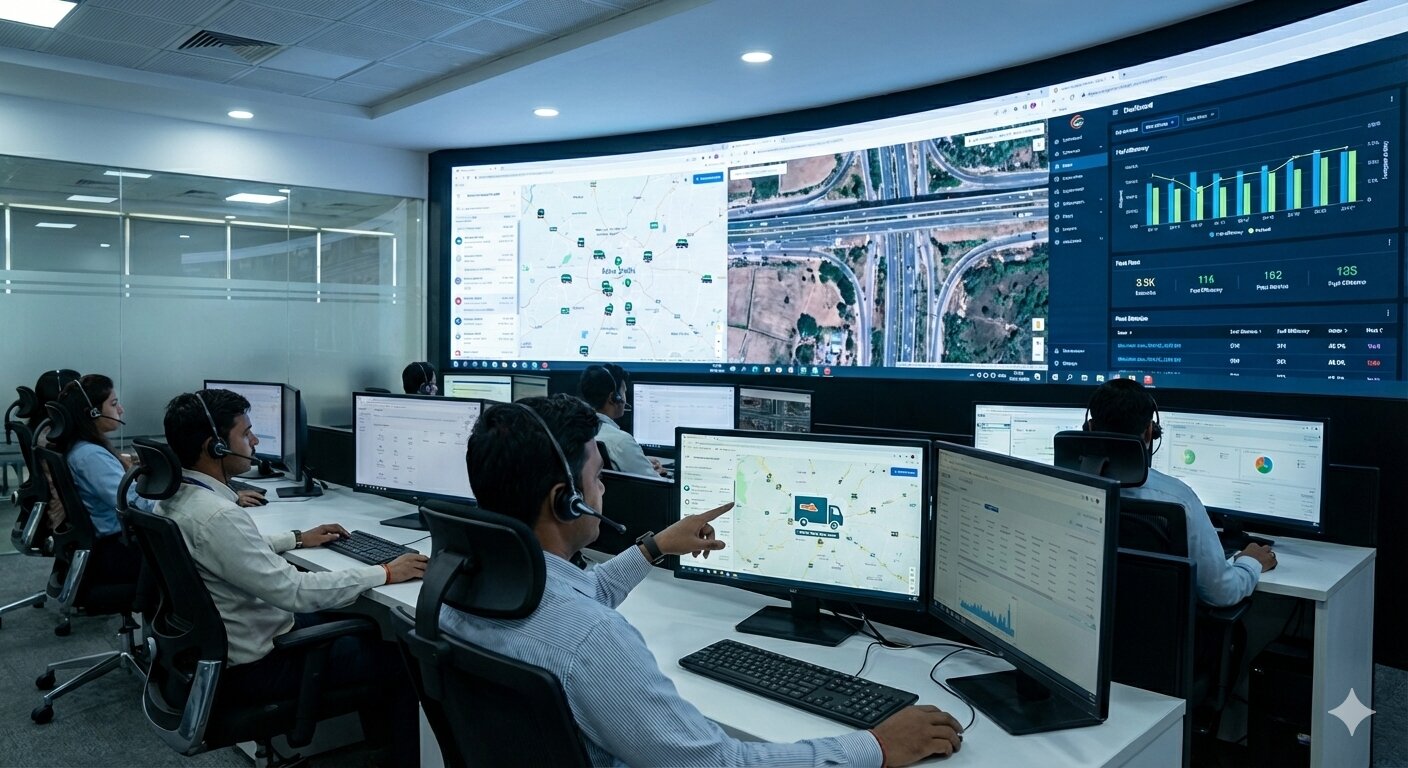
Customers today expect accurate delivery timelines, live tracking links, and proactive communication. This expectation is no longer limited to e-commerce giants—it applies equally to transport contractors, distributors, and B2B logistics providers.
GPS tracking enables:
-
Live vehicle location sharing
-
Accurate Estimated Time of Arrival (ETA)
-
Better coordination between drivers, dispatchers, and customers
For Indian transporters working across long distances and unpredictable traffic conditions, this level of transparency builds trust and improves service quality.
🛣️ India’s Infrastructure Growth Needs Smarter Fleet Management
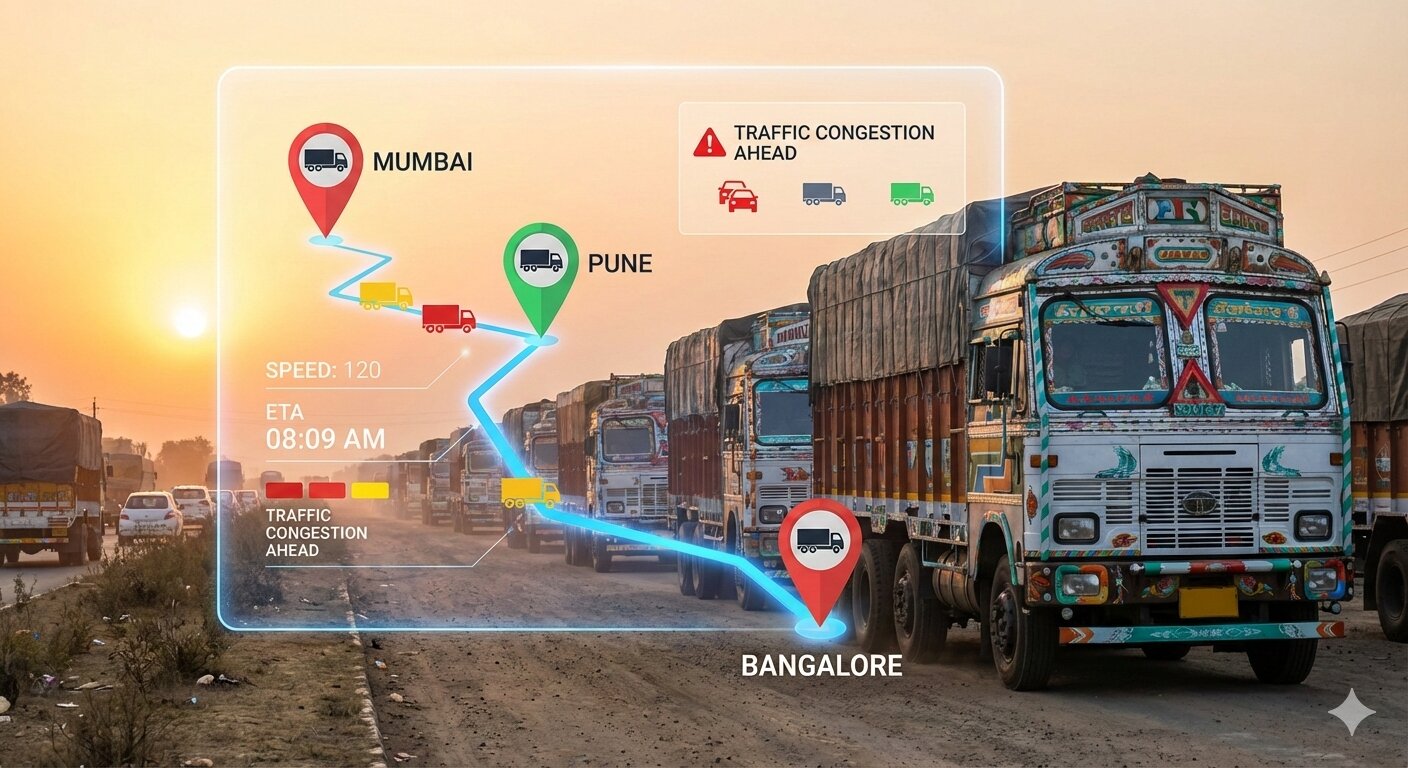
India’s rapid expansion of highways, expressways, and logistics corridors has increased the speed and scale of transportation. While infrastructure has improved, it has also increased operational complexity.
GPS systems help transporters:
-
Choose optimal routes
-
Avoid congestion-prone areas
-
Track vehicle movement across states
-
Manage long-haul operations more efficiently
As fleets grow and routes become more complex, manual monitoring simply doesn’t scale—making GPS tracking essential.
🔐 Improved Vehicle Security and Theft Prevention
Vehicle theft, cargo theft, and misuse of company vehicles remain serious concerns for Indian transporters—especially those operating across state borders.
GPS tracking provides:
-
Real-time alerts for unauthorized movement
-
Geo-fencing to restrict vehicle usage
-
Historical route playback for investigation
-
Faster recovery in case of theft
For many transporters, GPS adoption starts as a security measure and quickly evolves into a full fleet intelligence system.
👷 Better Driver Monitoring and Safety
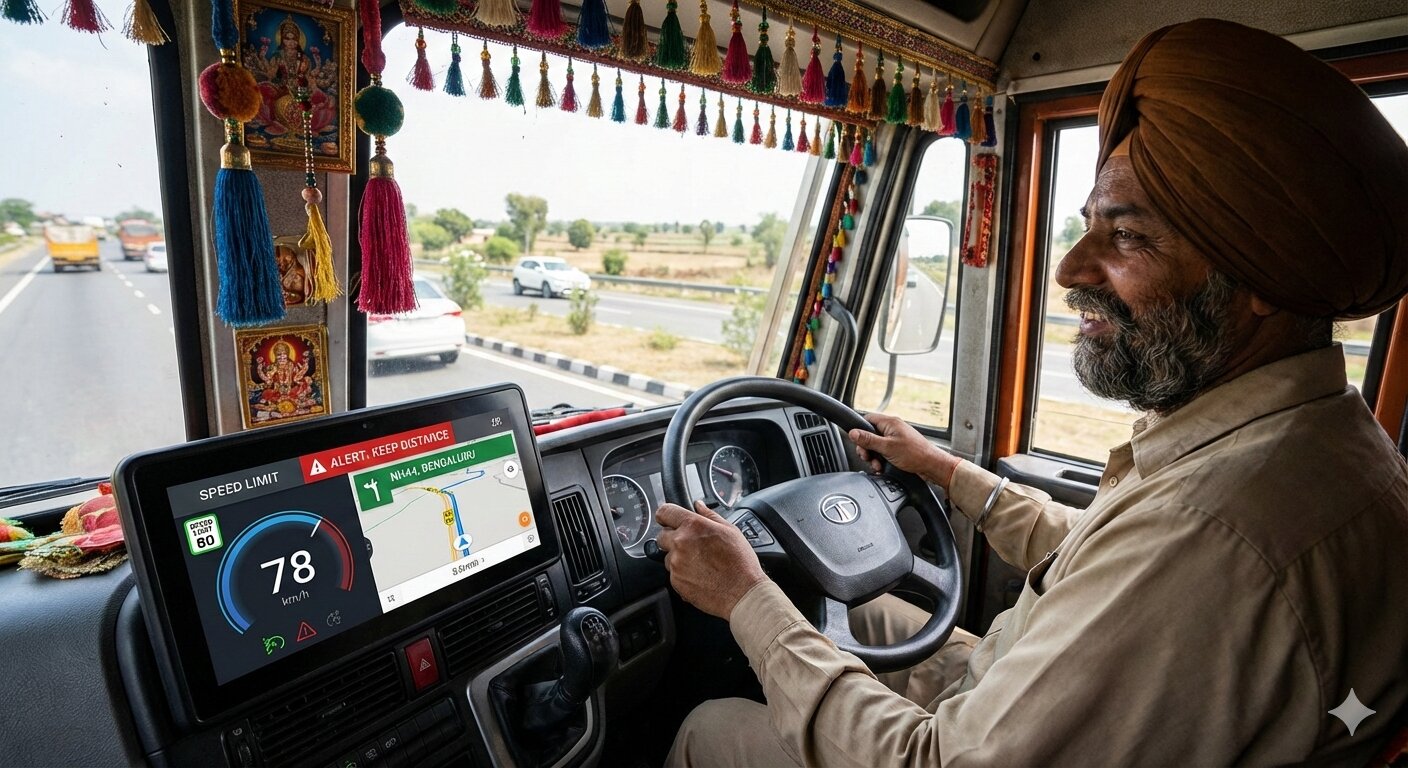
Driver behavior has a direct impact on fuel efficiency, vehicle wear and tear, and accident rates. GPS tracking allows transporters to monitor:
-
Over-speeding
-
Harsh braking
-
Long idle times
-
Route violations
This data helps fleet owners improve driver accountability while also promoting safer driving practices. Over time, this leads to fewer accidents, lower insurance claims, and better overall fleet performance.
📊 Data-Driven Decisions Are Replacing Guesswork
Traditionally, many transport decisions in India were based on experience and intuition. While experience is valuable, it cannot replace real-time and historical data.
Modern GPS platforms provide:
-
Trip reports
-
Distance and fuel analytics
-
Route efficiency insights
-
Vehicle utilization metrics
With this data, transporters can make informed decisions about fleet expansion, route planning, maintenance schedules, and driver performance. This shift from guesswork to data-driven operations is a major driver of GPS adoption.
📜 Compliance and Regulatory Pressure
Government regulations related to vehicle tracking, driver safety, and transport compliance are increasing. In many sectors, GPS tracking is either mandatory or strongly recommended.
GPS solutions help transporters:
-
Maintain digital trip records
-
Support compliance audits
-
Improve accountability and reporting
-
Align with government safety initiatives
As regulatory oversight grows, GPS tracking becomes a protective tool rather than just an operational one.
🧩 Affordable Technology for Small & Medium Transporters
Earlier, GPS tracking was perceived as expensive and complex—accessible only to large enterprises. Today, cloud-based platforms and scalable pricing have made GPS solutions affordable even for small fleet owners.
Indian MSME transporters are now able to:
-
Start with a few vehicles
-
Scale gradually
-
Access enterprise-grade features
-
Use mobile-friendly dashboards
This accessibility has significantly accelerated adoption across tier-2 and tier-3 cities.

🚀 How Navionyx Supports This Transformation
Platforms like Navionyx are helping Indian transporters modernize their operations with:
-
Real-time GPS tracking
-
Intelligent alerts and analytics
-
Fleet performance dashboards
-
Scalable solutions for growing businesses
By combining GPS technology with actionable insights, Navionyx enables transporters to move beyond tracking—and toward full operational intelligence.
🔮 The Road Ahead
GPS tracking in India is no longer just about knowing where a vehicle is. It’s about improving efficiency, reducing costs, enhancing safety, meeting compliance requirements, and delivering better customer experiences.
As competition intensifies and margins tighten, transporters who embrace GPS technology early will be better positioned to grow, scale, and sustain their businesses.
The rapid adoption of GPS tracking across India is not a trend—it’s a transformation.