Fleet Management · Business Guide
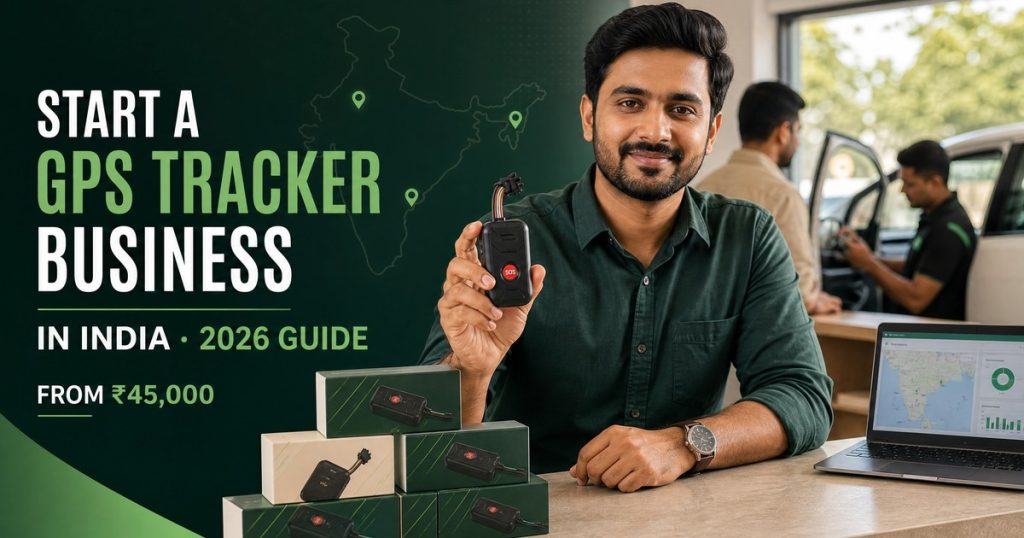
A practical, step by step guide for anyone who wants to build a GPS tracker dealership from scratch, with real numbers on investment, profit, and the first 90 days.
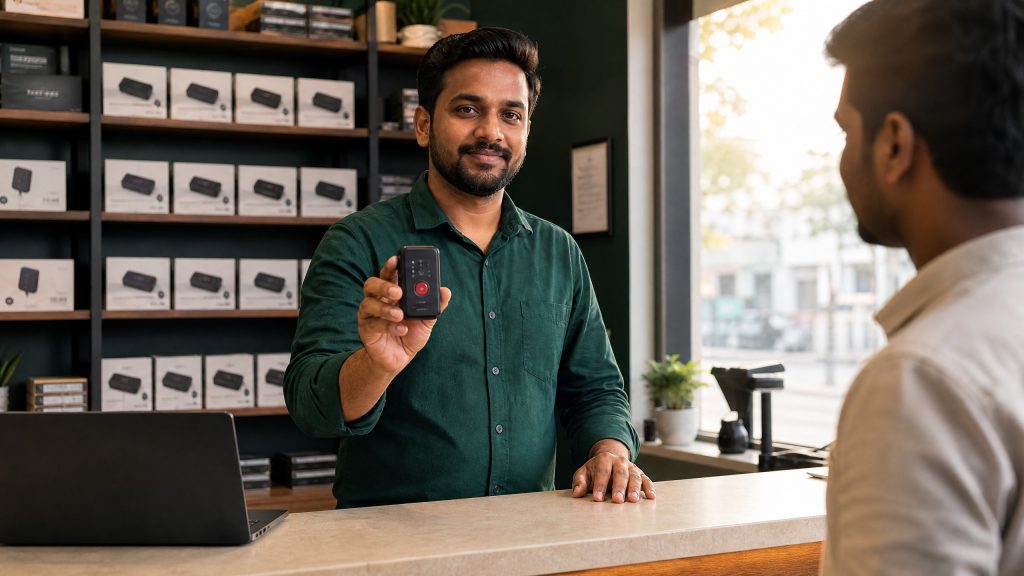
Starting a GPS tracker business in India in 2026 is more accessible than most people think. You do not need a manufacturing license, a large office, or lakhs of upfront investment. What you need is a working understanding of two device categories (AIS 140 for regulated commercial vehicles and consumer GPS for personal and small fleet), a first stock of 15 to 25 devices, and the willingness to talk to customers on WhatsApp and install devices on their vehicles.
This guide walks through everything you need to know : the two device categories, the total investment for a first stock, the profit math per device, the 4 step process from idea to first sale, and the common mistakes new dealers make. Written for aspiring dealers who have never sold GPS trackers before.
Why GPS Tracker Is a Strong Business in India Right Now
The Indian commercial vehicle market crossed 60 lakh registered vehicles in 2025 based on Ministry of Road Transport and Highways data. Every one of these vehicles is a potential customer for a GPS tracker, either because state or national permit rules require AIS 140 fitment or because the fleet owner wants operational visibility.
On the consumer side, personal vehicle theft rates have risen consistently over the last 5 years in major metros and tier 2 cities. Personal car owners, bike owners, and small fleet operators are increasingly fitting GPS trackers for anti theft, family location sharing, and vehicle recovery. This is a segment that barely existed 10 years ago and is now one of the fastest growing consumer electronics categories in India.
Two structural tailwinds make now a strong time to start :
- ✓ 18 Indian states have made AIS 140 fitment mandatory for state permit commercial vehicles, creating a compliance driven demand base that grows every year.
- ✓ Consumer awareness of GPS tracking is rising because of insurance company incentives, vehicle theft news coverage, and family safety concerns.
- ✓ Every device you sell in year 1 becomes an annual renewal revenue source from year 2, which means your income compounds as your customer base grows.
The Two Device Categories You Need to Understand
Almost every GPS tracker in India falls into one of two categories. The economics, target customer, and regulatory context are completely different. Most successful dealers stock both.
Category 1 : AIS 140 Certified Devices for Commercial Vehicles
AIS 140 is an Indian government standard that specifies GPS tracker requirements for commercial vehicles. It includes a panic button (SOS), a dual profile eSIM for pan India coverage, minimum tracking data reporting frequency, and integration with the state RTO backend server. 18 states have made AIS 140 fitment mandatory for state permit commercial vehicles. National permit vehicles registered in any state need AIS 140 under national permit rules.
AIS 140 device pricing varies by state because each state’s transport department has different approval fees. Dealer buy prices range from around ₹3,900 in Kerala’s 1 year variant to ₹10,500 in West Bengal. Suggested sell prices range from ₹4,800 to ₹11,800. Dealer profit per device is ₹700 to ₹1,300 depending on state.
Category 2 : Consumer GPS Trackers for Personal and Small Fleet Vehicles
Consumer GPS trackers are for personal cars, bikes, cab drivers, small delivery fleets, and any vehicle not subject to AIS 140 mandate. There is no state restriction and no RTO paperwork. Any personal vehicle owner in any state of India is a potential customer. This is the higher volume segment for most dealers, particularly in metros and tier 2 cities.
Consumer GPS pricing is much simpler : dealer buy price is typically ₹1,300 to ₹1,900 depending on which supplier you work with. Some suppliers bundle the mobile app and platform in this price, others charge separately. Suggested sell price to customers is ₹2,300 to ₹2,800, which is the range the Indian market has settled at. Dealer profit per device is ₹400 to ₹1,500 depending on your dealer cost.
DEALER TIP
Stock both categories. AIS 140 gives you the regulated commercial vehicle customer. Consumer GPS gives you the personal vehicle walk in customer. Every customer segment that could walk into your shop or WhatsApp you gets covered by one of these two products.
What It Actually Costs to Start
A realistic entry investment for a new GPS tracker dealer looks like this :
| Line item | Amount |
|---|---|
| First stock : 5 AIS 140 devices (assume standard state pricing) | ₹22,000 |
| First stock : 10 consumer GPS devices | ₹13,000 |
| Basic installation tools (crimping tool, wire strippers, multimeter) | ₹3,000 |
| Marketing kit printing (posters, brochures, visiting cards) | ₹2,000 |
| WhatsApp Business setup and initial ad spend | ₹5,000 |
| Total entry investment | ₹45,000 |
₹45,000 is enough to start a viable GPS tracker business in most Indian tier 2 cities. You do not need a shop for the first 3 to 6 months. Home office plus WhatsApp Business is enough. Add a shop only after you consistently sell 20+ devices per month and have local walk in demand justifying the rent.
If you already have an existing business (mobile shop, auto electrician, transport office), your entry investment can be as low as ₹35,000 since you already have the physical location, tools, and customer walk in traffic.
The 4 Step Process from Idea to First Sale
The path from deciding to start to your first paying customer is much shorter than most people think. Realistic timeline : 15 to 20 days from decision to first sale.
STEP 1 · DAY 1 TO 3
Choose a supplier and apply for their dealer program.
Look for a supplier that : bundles apps and platform in the device price, provides RTO paperwork for AIS 140 fitments, has no joining fee, allows a small first stock (5 to 10 devices), and provides WhatsApp support. Apply to 2 or 3 suppliers to compare terms. The Navionyx dealer program meets all these criteria; details at navionyx.com/dealers.
STEP 2 · DAY 3 TO 5
Onboarding call with your chosen supplier.
This is where you confirm your state pricing, understand the RTO process, get the training materials, and finalise your first stock order. Ask about warranty, return policy for unactivated stock, and how the annual renewal revenue share works. A good supplier will spend 30 to 45 minutes with you on this call.
STEP 3 · DAY 5 TO 12
Pay for and receive your first stock.
Metro city delivery typically completes in 2 to 4 working days after dispatch. Tier 2 cities in 3 to 5 days. While waiting, watch the supplier’s training videos (installation, activation, troubleshooting), set up your WhatsApp Business profile, and start reaching out to your first potential customers using the marketing kit.
STEP 4 · DAY 12 TO 20
Sell and install your first devices.
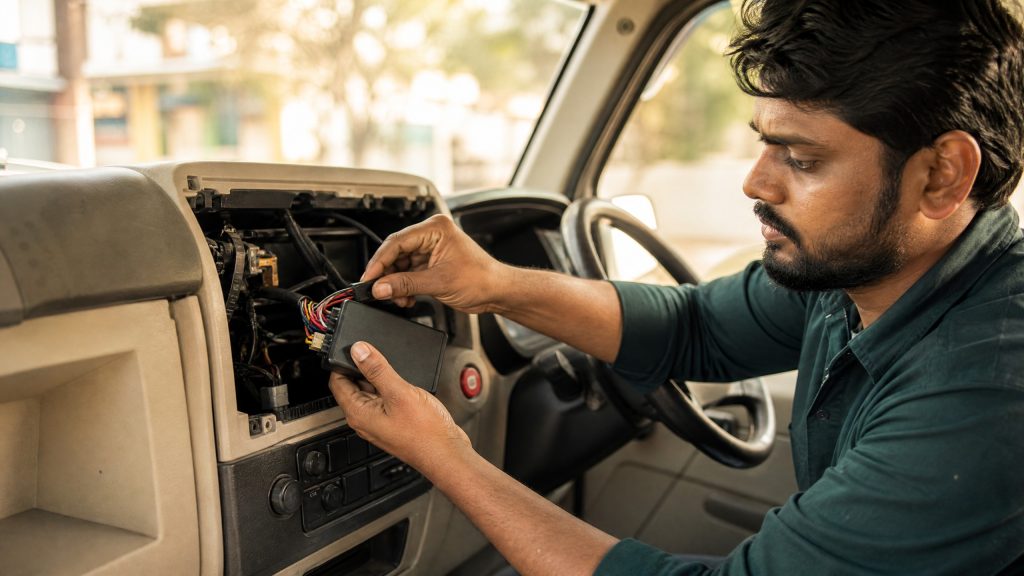
Your first customers usually come from your existing network : auto electrician contacts, transport business owners you know, mobile shop referrals, neighbourhood contacts, friends and family with vehicles. Install for the first 2 to 3 customers under supervision if you have any doubt about the wiring. From the third install onwards, most dealers become fully independent.
Common Mistakes New GPS Tracker Dealers Make
Every new dealer makes some mistakes. Some are recoverable, some are expensive. Here are the 5 most common and how to avoid them.
Mistake 1 : Over ordering the first stock.
New dealers often think 50 devices sounds like a small first order and put in ₹2 lakh upfront. In practice, your first month usually sells 5 to 10 devices as you build your local network. Start with 5 AIS plus 10 consumer, reorder every 2 to 4 weeks as demand grows.
Mistake 2 : Racing to the bottom on price.
Some new dealers price at cost plus ₹200 to win the first customers. This is a losing strategy. It destroys your margin, damages the pricing structure for other dealers in your area, and does not build customer loyalty. Price at the middle to upper end of the suggested band and compete on installation quality and support instead.
Mistake 3 : Ignoring the annual renewal revenue.
Every device you sell in year 1 is a potential renewal in year 2. Track every customer contact, keep in touch throughout year 1, and be ready for the renewal conversation 60 days before their subscription expires. Renewal revenue compounds as your customer base grows and is the reason this business becomes highly profitable in years 2 and 3.
Mistake 4 : Skipping AIS 140 RTO paperwork.
Some new dealers hand over the device without the backend server slip and ARAI certificate reference. This causes problems for the customer when they try to renew their fitness certificate or transfer the vehicle. Always provide the paperwork per fitment. Good suppliers generate the paperwork automatically from your dealer login.
Mistake 5 : No customer support after the sale.
Customers ask questions about the app, request password resets, need help understanding alerts. If you ignore these messages, they stop referring you and they do not renew. Respond to every customer message within 4 hours during working hours, even if the answer is “let me check and get back to you”.
What Realistic Income Looks Like
Assuming you follow the process, avoid the common mistakes, and put in consistent effort, here is a realistic income trajectory for a new dealer :
- Month 1 : 5 to 10 devices sold. Gross profit ₹6,000 to ₹15,000. You are still learning, building your first customer references.
- Month 3 : 15 to 25 devices per month. Gross profit ₹18,000 to ₹35,000. Local network starting to refer you.
- Month 6 : 25 to 50 devices per month. Gross profit ₹30,000 to ₹70,000. Established local reputation.
- Month 12 : 50 to 100 devices per month. Gross profit ₹60,000 to ₹1,50,000. Consistent monthly demand.
- Year 2 : Same monthly volume plus renewal revenue on year 1 devices. Total income can reach ₹2,00,000 per month or more for consistent dealers.
These numbers assume you sell every device you stock and price at the middle of the band. Local operating cost (rent, installation labour, marketing) is not included and typically runs 15 to 25 percent of gross profit for shop based dealers.
Conclusion
A GPS tracker business in India in 2026 is a low investment, high margin, recurring revenue business that can be started from home with ₹45,000 and scaled to a full time income within 12 months. The two device categories (AIS 140 and consumer GPS) cover almost every customer that walks into your shop or WhatsApps you. The 4 step process from idea to first sale takes about 20 days.
The right supplier partner makes the difference between an easy start and a frustrating one. Choose a supplier that bundles apps and platform in the device price, provides RTO paperwork, has no joining fee, allows a small first stock, and offers WhatsApp support. Then do the operational basics well : respond to customers, provide paperwork per fitment, price at the middle of the band, track your customer base for renewal, and reinvest a portion of your profit into local marketing.
Ready to Start Your GPS Tracker Dealership?
The Navionyx Dealer Program offers dealer pricing on AIS 140 and consumer GPS devices across every state of India. No joining fee, minimum first stock 5 AIS or 10 consumer, ₹700 to ₹1,500 profit per device. First stock delivered in 5 to 7 working days.
See the Dealer Program →