Fleet Compliance · GPS Tracking · AIS-140
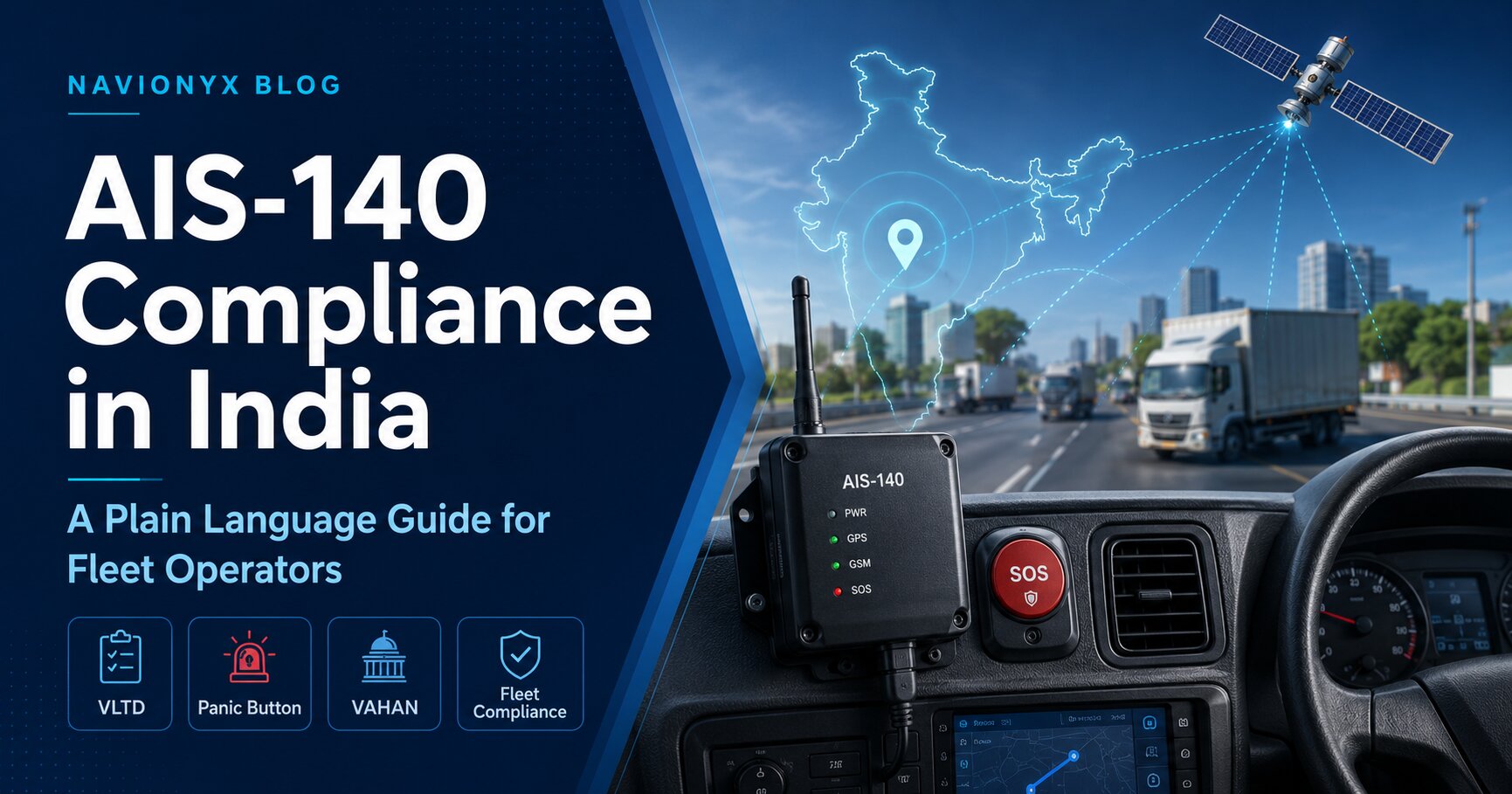
If you operate a commercial vehicle in India and someone has told you that AIS-140 is “just a GPS rule,” they have not read the full notification. AIS-140 is India’s Intelligent Transportation System standard, and it covers everything from the satellite constellation your device must use to the exact packet format in which your vehicle must transmit data to the government. VLTD installation is the visible tip of a much deeper compliance framework. This guide breaks all of it down without the jargon, so you can make informed decisions for your fleet.
Why This Law Exists: The Story Behind the Mandate
The AIS-140 mandate did not emerge from a routine regulatory exercise. It has a specific, deeply human origin. After the 2012 Nirbhaya incident in Delhi, the government recognised a fundamental gap in public transport accountability. A bus could deviate from its route, an emergency could go unreported for hours, and there was no mechanism for authorities to locate a vehicle in real time. The absence of any tracking infrastructure meant that response was always delayed, and accountability was always absent.
The Ministry of Road Transport and Highways responded with a structured, phased approach. The first notification came on 28 November 2016 under the Automotive Industry Standards Committee, directing all state governments to equip public transport vehicles with certified GPS tracking devices from April 1, 2018. A follow-up notification, GSR 979(E) dated 28 September 2018, extended the mandate to all new commercial vehicles at the point of registration. In 2025, MoRTH enforced fresh updates that replaced paper-based, officer-dependent enforcement with automated digital verification through the VAHAN portal.
The objective was not just tracking. It was to create a standardised, government-connected Intelligent Transportation System that gives authorities real-time visibility into commercial vehicle movement across the entire country, and gives passengers a mechanism to call for help.
What Is AIS-140 and What Is a VLTD?
AIS stands for Automotive Industry Standard. The standard numbered 140 was developed by the Automotive Research Association of India (ARAI) under the authority of MoRTH, notified under the Motor Vehicles Act, 1988. It defines the minimum technical and functional requirements for a Vehicle Location Tracking Device that must be installed in any commercial vehicle operating on Indian roads.
VLTD stands for Vehicle Location Tracking Device. It is the regulatory term for an AIS-140 certified VLTD. The device must track vehicle position using GPS and NavIC, India’s own Indian Regional Navigation Satellite System built by ISRO. It must transmit real-time location data at defined intervals to a certified backend server. It must include a physical panic button for passenger safety. And all data must integrate simultaneously with MoRTH’s centralised VAHAN portal and the National Vehicle Location Tracking system. AIS-140 is not optional for new commercial vehicles. It is a legal prerequisite for obtaining a fitness certificate and transport permit.
AIS-140 Certified VLTD vs. a Regular GPS Tracker: Not the Same Thing
This is where the market creates the most confusion, and where fleet operators make costly mistakes. Vendors routinely describe generic GPS trackers as “AIS-140 compatible.” That phrase has no legal meaning. What matters is whether the device carries a valid ARAI or ICAT type approval number. Without it, the device is not compliant regardless of what the vendor claims or what the product label says.
| Feature | Regular GPS Tracker | AIS-140 Certified VLTD |
|---|---|---|
| Certification | None required | ARAI or ICAT type approval mandatory |
| Panic Button | Optional add-on | Hardwired, physical, mandatory by law |
| Data Destination | Private server only | Must transmit simultaneously to government NVLT and VAHAN |
| Satellite System | GPS only | GPS plus NavIC, India’s IRNSS constellation |
| Data Format | Proprietary | Standardised MoRTH packet format |
| Tamper Detection | Rarely included | Mandatory, immediate alert on any tampering attempt |
| SIM Requirement | Any SIM card | AIS-140 M2M SIM, minimum 12 months validity |
| Battery Backup | Rarely included | Mandatory, must operate even when vehicle power is cut |
| RTO Acceptance | Not accepted at fitness renewal | Accepted and verified directly on VAHAN |
Critical Distinction
A device marked “AIS-140 compatible” without a printed ARAI or ICAT approval number is not legally compliant. Installing such a device does not make your vehicle compliant. It only means you have spent money on hardware that will fail at the RTO inspection and leave your fitness certificate renewal blocked.
Which Vehicles Are Covered Under the AIS-140 Mandate?
Every vehicle operating under a commercial permit with a yellow number plate falls under this mandate. As per MoRTH Notification GSR 979(E) dated 28 September 2018 and subsequent state-level enforcement orders, the following categories are covered:
App-Based Cab Operators
Every app-registered cab under a commercial permit. Aggregators require a valid VLTD certificate before platform onboarding. A lapsed certificate triggers deactivation from the platform.
Tourist Taxis and AITP Vehicles
All-India Tourist Permit vehicles running intercity, outstation, and airport transfer routes. Compliance is checked at state border crossings and at permit renewal.
School Buses and Student Transport
Any vehicle contracted for school pickup and drop, including private vans on contract routes. The panic button must be accessible to both driver and bus attendant. Live data must reach school management and parents. States like Delhi, Maharashtra, Karnataka, and Tamil Nadu have additional requirements layered on top of the central standard.
Stage Carriage Buses
City and intercity buses on fixed routes under stage carriage permits, including state transport undertakings and private route operators.
Goods Transport Vehicles
Logistics fleets, delivery trucks, mini commercial vehicles, and last-mile freight carriers on national permits. Hazardous goods carriers carry additional tracking requirements under separate MoRTH notifications. Individual truck owners with one to five vehicles currently have the lowest compliance rates nationwide and are the primary target of 2025 and 2026 enforcement drives.
Employee Transport Fleets
Corporate cab operators and IT park employee shuttle providers under contract carriage permits. This segment has seen relatively high early compliance driven by enterprise client requirements in Bengaluru, Pune, Hyderabad, and Chennai.
Ambulances and Emergency Vehicles
Emergency medical transport vehicles operating on contract with hospital networks and state services. Real-time tracking enables dispatch centres to identify the nearest available unit and request traffic corridor clearance.
Three-Wheeler Autos on Contract
Auto-rickshaws on contract carriage permits in metro and tier 2 cities, including aggregator-led auto unions. State-level enforcement timelines and threshold definitions vary.
Private vehicles registered for personal use are exempt. The moment a vehicle earns revenue by transporting passengers or goods, the mandate applies in full.

What an AIS-140 VLTD Actually Does: Technical Requirements in Plain Language
Understanding what the device must technically do helps fleet operators ask the right questions when evaluating vendors and avoid being sold something that will not hold up at the RTO.
Satellite Positioning
The device must use a dual constellation GNSS module combining GPS and NavIC, ISRO’s Indian Regional Navigation Satellite System. Minimum position accuracy is 5 metres CEP (Circular Error Probable). Cold start acquisition must be achieved within 60 seconds. NavIC inclusion is a deliberate policy choice to support India’s indigenous satellite infrastructure and ensure positioning reliability independent of foreign GNSS systems.
Connectivity and SIM Requirements
4G LTE is the primary connectivity standard, with mandatory fallback to 3G and 2G. The SIM must be an AIS-140 specific M2M SIM from an approved telecom provider with a minimum validity of 12 months. State Monitoring Centres check SIM validity before activating a device on their backend and at defined renewal intervals. An expired SIM is a live compliance failure even if the hardware is physically intact.
The Panic Button
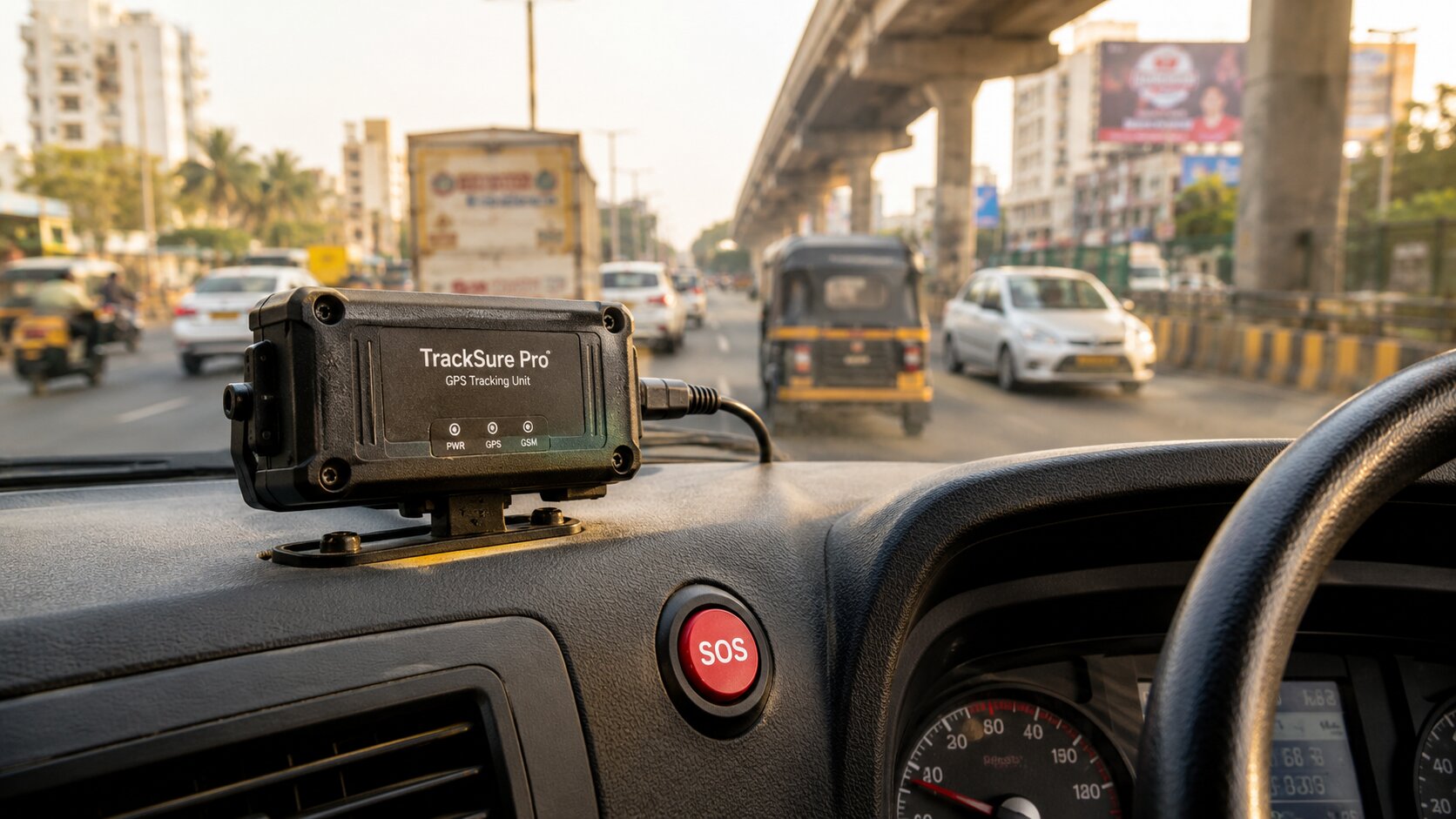
Physical and hardwired directly into the vehicle. Software-based or app-based panic buttons do not qualify as compliant under any interpretation of AIS-140. When pressed, the button triggers an immediate emergency packet transmitted to the State Monitoring Centre without waiting for the next regular data cycle. The button must be clearly labelled, distinguishable from other controls, and accessible to both the driver and passengers. Exact placement requirements vary by vehicle type.
Dual Server Data Transmission
This is the requirement that disqualifies most generic GPS trackers immediately. An AIS-140 VLTD must transmit data simultaneously to the vendor’s backend server and the government’s NVLT server. A device that only sends data to a private server is not compliant, regardless of how well it tracks location. When the vehicle is moving: location and telemetry every 30 seconds. When stationary: typically every 5 minutes. Emergency and tamper events: immediate transmission, no waiting for the regular schedule.
Battery Backup
The device must sustain operation and continue transmitting tamper alerts even when the vehicle’s primary power supply is disconnected. This directly addresses the practice of defeating tracking by unplugging the device. Disconnecting the power supply does not stop the device. It triggers a tamper alert to the government dashboard.
Local Data Storage
A minimum of 6 hours of data must be stored in non-volatile memory, not RAM. When connectivity is lost due to a network gap or tunnel, data buffers locally and transmits in sequence once the network is restored. No data gaps on the government backend.
Tamper Detection
Mandatory and non-negotiable. Power supply disconnection, opening of the device casing, and SIM card removal must each generate an instant tamper alert packet to the government backend. State transport authorities monitor for unusual tamper event patterns in their NVLT dashboards as a core part of enforcement operations.
How a Device Gets Certified: The Full Chain from ARAI to Your RTO
Understanding the certification and installation chain helps you verify a vendor before spending money, and avoid the expensive mistake of installing a device that the RTO will not accept.
Step 1 — Device Testing at ARAI or ICAT
The device manufacturer submits hardware to the Automotive Research Association of India (ARAI) or the International Centre for Automotive Technology (ICAT), the two government-approved testing bodies. The device is tested against the full AIS-140 specification: GNSS accuracy, panic button response time, dual-server data transmission, standardised packet format, tamper detection, and battery backup.
Step 2 — Type Approval Certificate Issued
A Type Approval Certificate with a six-digit approval number is issued by ARAI or ICAT. This certificate is valid for two years. Only devices carrying a current, valid approval number can be legally installed and registered on VAHAN. If a vendor cannot produce this number on request, do not proceed with the purchase.
Step 3 — Installation by an RTO-Empanelled Vendor
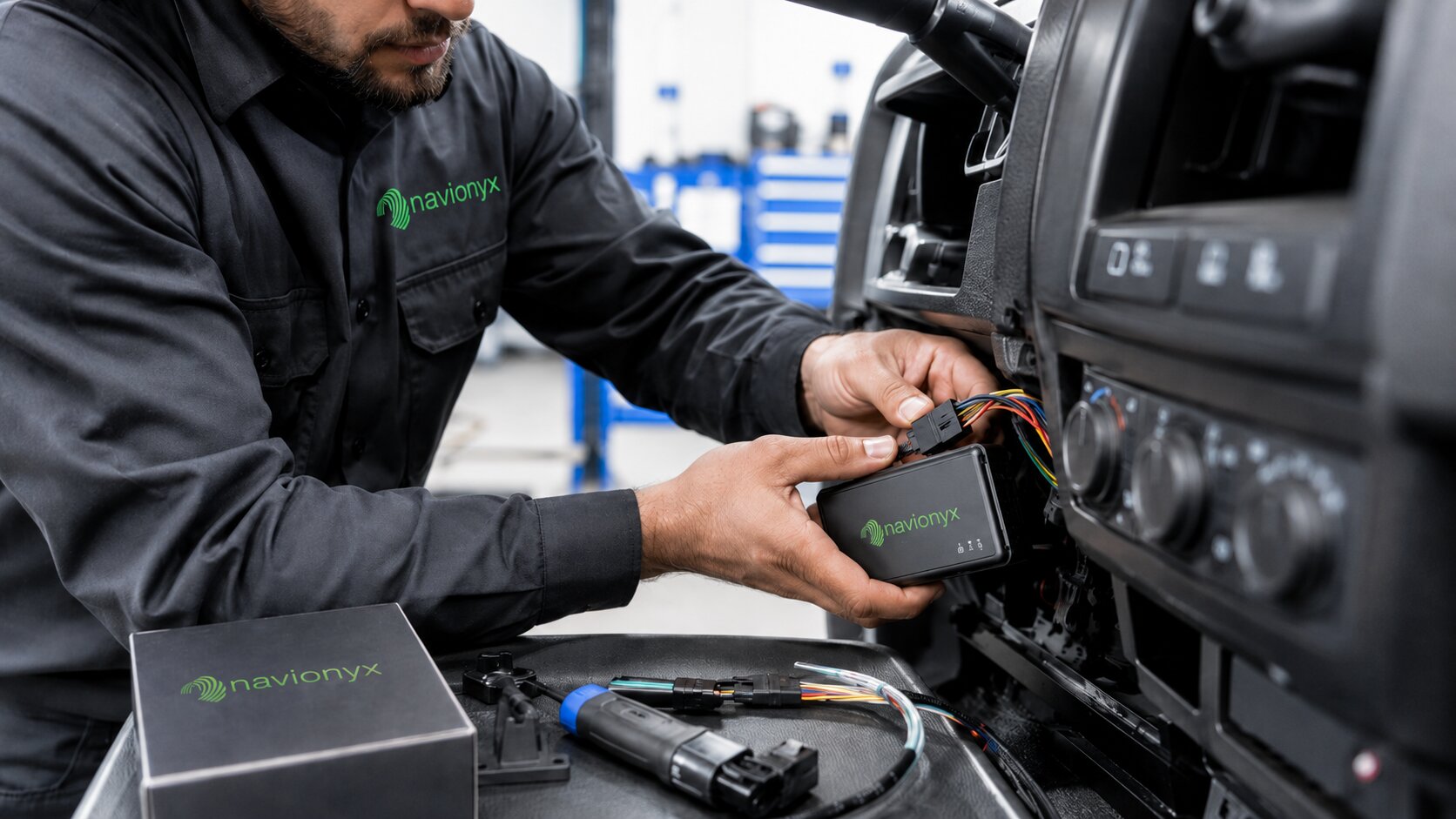
Installation must be done by a vendor empanelled with the RTO. An installation by a private mechanic or non-authorised workshop does not count legally, even if the hardware work is technically identical. The empanelled installer hardwires the device and panic button into the vehicle’s power and ignition circuit and registers the installation in the system.
Step 4 — State Monitoring Centre Activation
The device registers on the state AIS-140 backend or the national common layer. The State Monitoring Centre verifies three things before activation: health status transmission is working, the panic button is functional, and the M2M SIM has at least 12 months of validity remaining. All three must pass.
Step 5 — VAHAN Entry and Certificate Download
Activation details flow from the state backend into VAHAN. The VLTD fitment certificate is generated on VAHAN and downloaded by the authorised dealer. This certificate includes vehicle owner details, vehicle registration number, chassis number, engine number, IMEI number of the installed device, fitment date, device manufacturer, and a QR code for digital verification. This certificate is submitted to the RTO for fitness certificate and permit renewal processing.
Step 6 — Automated Testing Station Fitness Inspection (from October 2024)
From October 2024, all commercial vehicle fitness testing moved to Automated Testing Stations (ATS). These government-approved facilities use calibrated, automated equipment to assess roadworthiness and upload results directly to VAHAN. A vehicle not inspected at an ATS cannot receive a fitness certificate renewal, regardless of other compliance status.

State-Wise Enforcement: Where the Pressure Is Highest Right Now
AIS-140 is a central government mandate, but enforcement is executed at the state level through Regional Transport Offices and State Monitoring Centres. Each state has been directed to establish a monitoring centre connected to the national NVLT system. Below is the enforcement picture across the states where compliance activity is most concentrated:
| State | Enforcement Status | What to Know |
|---|---|---|
| Maharashtra | Active | Motor Vehicle Aggregator Rules 2025 tighten VLTD compliance for app-based cabs. Fitness certificate rejected without an active, transmitting device on record in VAHAN. |
| Karnataka | Active | 6.5 lakh vehicles mandated statewide. Centralised CDAC monitoring centre at RTO Commissioner Building with 25 agents on 24×7 operations. Over 40,000 vehicles fitted as of end 2024. System has already saved lives through real-time panic alert response. |
| Delhi NCR | Active | High RTO check frequency. School buses carry Delhi-specific tracking obligations on top of the central AIS-140 standard. Strong enforcement across cab aggregator categories. |
| Telangana | Active | Hyderabad’s large corporate cab and employee transport market drives compliance activity. IT corridor operators are a primary focus of state enforcement. |
| Gujarat | Active | High goods carrier density. Logistics operators along the Mundra and Kandla port corridors face strict check-post verification. VLTD compliance is required at commercial permit renewal. |
| Tamil Nadu | Active | School bus tracking strictly enforced with additional state requirements layered over the central mandate. Tourist vehicles on hill station and pilgrimage routes actively checked. |
| Uttar Pradesh | Active | Largest state by commercial vehicle volume. Individual truck owners operating one to five vehicles are the primary target of enforcement drives running through 2025 and 2026. |
| Kerala | Active | Early national adopter. First state to mandate school bus tracking before the central AIS-140 rollout. Tourist vehicle compliance high due to active enforcement on major inter-district routes. |
Navionyx currently provides certified VLTD installation across all 20 states Navionyx serves, including Rajasthan, West Bengal, Andhra Pradesh, Madhya Pradesh, Punjab, Haryana, Bihar, Odisha, Assam, Jharkhand, Chhattisgarh, and Uttarakhand, where state transport departments are actively ramping enforcement activity in line with the 2025 MoRTH updates.
What Non-Compliance Actually Costs You
The consequences of operating without a valid AIS-140 certified VLTD are no longer theoretical. Enforcement since 2025 is automated through VAHAN, which means an RTO officer’s individual discretion no longer stands between a non-compliant vehicle and a penalty. The digital system flags it. Here is what fleet operators face:
- Fitness certificate rejection at renewal. Without a valid VLTD fitment certificate reflected in VAHAN, the fitness certificate cannot be processed. Your vehicle cannot operate legally on Indian roads.
- Permit suspension or cancellation. For repeat offenders or vehicles flagged during roadside checks, transport permits can be suspended or revoked, halting operations entirely with no revenue during the suspension period.
- Vehicle detention at RTO checkpoints. Non-compliant vehicles detected during highway and city checks are detained on the spot, causing direct revenue loss from delayed trips and deliveries.
- Deregistration from ride-hailing platforms. Ride-hailing aggregators require a valid VLTD certificate for onboarding and continued listing. A lapsed or absent certificate triggers platform deactivation.
- Increased legal liability in accidents. In the event of an accident involving a non-compliant vehicle, the absence of an AIS-140 device and its data record significantly increases the legal and financial exposure of the vehicle owner and operator.
- Remote immobilisation. Under the 2025 MoRTH update, fleet vehicles can now be remotely immobilised through the AIS-140 device itself in cases of non-compliance or theft detection.
Beyond Compliance: What You Actually Gain from a Working VLTD
Most AIS-140 coverage stops at “you must comply or face a fine.” That framing misses something important. The same device that satisfies the RTO also gives fleet operators operational intelligence they would otherwise pay separately for. The compliance cost and the fleet management benefit come bundled together.
90-Day Route History
An irrefutable GPS record for billing disputes, delivery proof, and insurance claims. No driver can contest a route or timing with 90 days of timestamped coordinates on record.
Driver Behaviour Monitoring
Speed alerts, harsh braking detection, sudden acceleration flags, idle time reports. Identify unsafe patterns before they become accidents or insurance claims. Driver behaviour accounts for nearly 90 percent of road accidents globally.
Fuel Theft Detection
The VLTD tracks vehicle performance alongside location. A fuel drop that does not match distance travelled is flagged. Route optimisation through live tracking can reduce fleet fuel costs by 10 to 20 percent. Fuel accounts for roughly 55 percent of total fleet operating costs.
Accurate Customer ETAs
Real-time location means precise ETAs for customers and dispatch teams without calling the driver every 30 minutes. Significant reduction in operational noise for logistics operators managing multiple deliveries.
Odometer-Based Maintenance Alerts
Service alerts prevent the “forgot the service was due” category of breakdowns. Proactive maintenance extends vehicle lifespan, reduces unplanned downtime, and avoids expensive emergency repairs.
Theft Recovery and Remote Immobilisation
Live GPS tracking allows stolen vehicles to be located in real time. The 2025 MoRTH update additionally allows fleet owners to remotely immobilise a vehicle through the AIS-140 device in cases of theft or non-compliance.
Common Mistakes Fleet Operators Make with VLTD Compliance
These are the compliance failures that come up repeatedly across fleets of all sizes:
- Buying a device without verifying the ARAI or ICAT approval number. “AIS-140 compatible” is a marketing phrase with no legal weight. Before any discussion about price or features, ask for the type approval number. If the vendor hesitates, that is the answer.
- Letting the M2M SIM expire. State Monitoring Centres check SIM validity at 12-month intervals. An expired SIM means the device stops transmitting data to the government portal. The vehicle is flagged as non-compliant on VAHAN even though the hardware is physically installed and working.
- Using a non-empanelled workshop for installation. The device must be installed by an RTO-empanelled vendor. An installation by a regular auto electrician or private workshop, however technically competent, does not generate a valid fitment certificate on VAHAN. The compliance record simply does not exist.
- Not testing the panic button before activation. The State Monitoring Centre checks panic button functionality before activating the device on its backend. A non-functioning button stalls the entire activation process and delays certificate generation.
- Cutting power to the device to defeat tracking. The device carries battery backup specifically for this scenario. Disconnecting the vehicle’s power supply does not stop the device. It triggers an immediate tamper alert on the government dashboard. It does not defeat tracking. It creates an additional, recorded compliance violation.
- Treating compliance as a one-time installation. The Type Approval Certificate is valid for two years. The M2M SIM needs annual renewal. New commercial vehicle fitness certificates require yearly renewal after the initial two-year period. AIS-140 compliance is an ongoing operational activity, not a single installation event.
How to Get Your Fleet AIS-140 Compliant: Where to Start
If you are starting from scratch or replacing a non-certified device, here is the sequence that results in a valid, VAHAN-recognised fitment certificate:
1. Verify the device approval number before anything else
Before any conversation about pricing or features, ask the vendor for the ARAI or ICAT type approval number. If they cannot produce it immediately, the device is not compliant. Move on.
2. Confirm the vendor is RTO-empanelled
Only an empanelled vendor can generate a valid VLTD fitment certificate on VAHAN. Ask to see evidence of empanelment for your state, not just a verbal assurance. An RTO-empanelled partner can also handle the VAHAN registration steps on your behalf.
3. Book installation, verify activation, and collect your certificate
After device fitting, confirm that the device is transmitting on the state backend and that your fitment certificate has been generated on VAHAN. Do not assume this happens automatically. Ask to see the certificate before the technician leaves. You can book your VLTD installation with Navionyx across 20 states, with same-day certificate issuance after fitment.
AIS-140 compliance is now measurable, digitally tracked, and actively enforced. The question for fleet operators in 2026 is not whether they need to comply. The question is how quickly they can do it correctly and avoid the accumulating cost of being non-compliant every day they delay.
The Bottom Line for Every Fleet Operator in India
AIS-140 is not a bureaucratic checkbox. It was designed in direct response to a national safety failure, built on India’s own satellite infrastructure, and is now enforced through an automated digital system that does not depend on a checkpoint officer being present or lenient. For fleet operators across India, the practical reality is straightforward: a non-compliant vehicle cannot legally earn revenue. Fitness certificates, permits, and ride-hailing platform access all require a valid, active, transmitting VLTD.
Getting compliant is not complicated when you work with the right vendor. The device must carry a verified ARAI or ICAT approval number. Installation must be done by an RTO-empanelled partner. The panic button must be tested and confirmed working before activation. The fitment certificate must appear on VAHAN. Everything else follows from those four conditions being met correctly, the first time.
This article was researched and written with AI assistance and reviewed by the Navionyx team. Government notification references are drawn from published MoRTH notifications, ARAI documentation, and state transport authority guidelines as of June 2026.
AIS-140 Certified · 20 States · Same-Day Certificate
Get Your VLTD Installed the Right Way
Navionyx provides AIS-140 certified VLTD installation with panic button activation, Android and iOS app access, and an official RTO-accepted installation certificate. Serving 20 states across India with same-day certificate issuance after fitment.
Get VLTD Installed