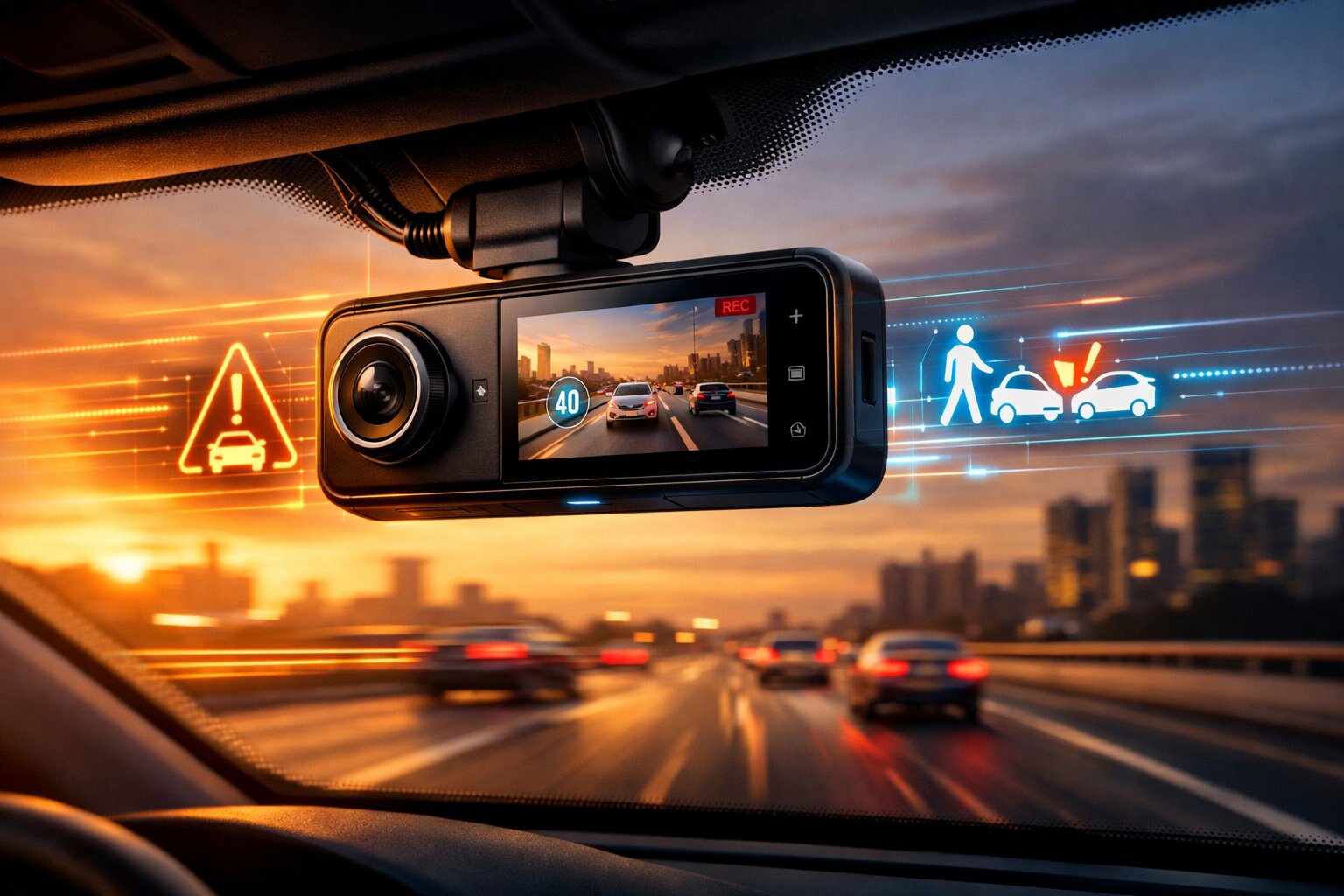
AI DASHCAM 4G
Transforming Road Safety, Insurance Claims & Fleet Management
A Complete Guide for Drivers, Fleet Owners, Insurers & Policymakers
faster claim settlement with
dashcam footage (2024 report)
more likely to win claims — AAA
study on dashcam users
fewer accidents in AI dashcam fleet
programs — AXA XL data
Introduction: Why Every Vehicle Needs an AI Dashcam
Roads are unpredictable. Whether you are an individual car owner navigating daily commutes, a fleet manager overseeing dozens of vehicles, or an insurer managing thousands of claims — one thing is clear: traditional methods of documenting road events are no longer enough.
The AI Dashcam 4G changes everything. It is not just a camera. It is a real-time, cloud-connected safety co-pilot that monitors your vehicle, your driver, and your surroundings — and automatically downloads video clips to the cloud the moment an incident occurs, giving you irrefutable evidence within seconds.
This article explores how AI dashcams are revolutionising road safety, transforming insurance claims, protecting businesses, and empowering every type of road user — backed by the latest global research and industry data.
What is the AI Dashcam 4G?
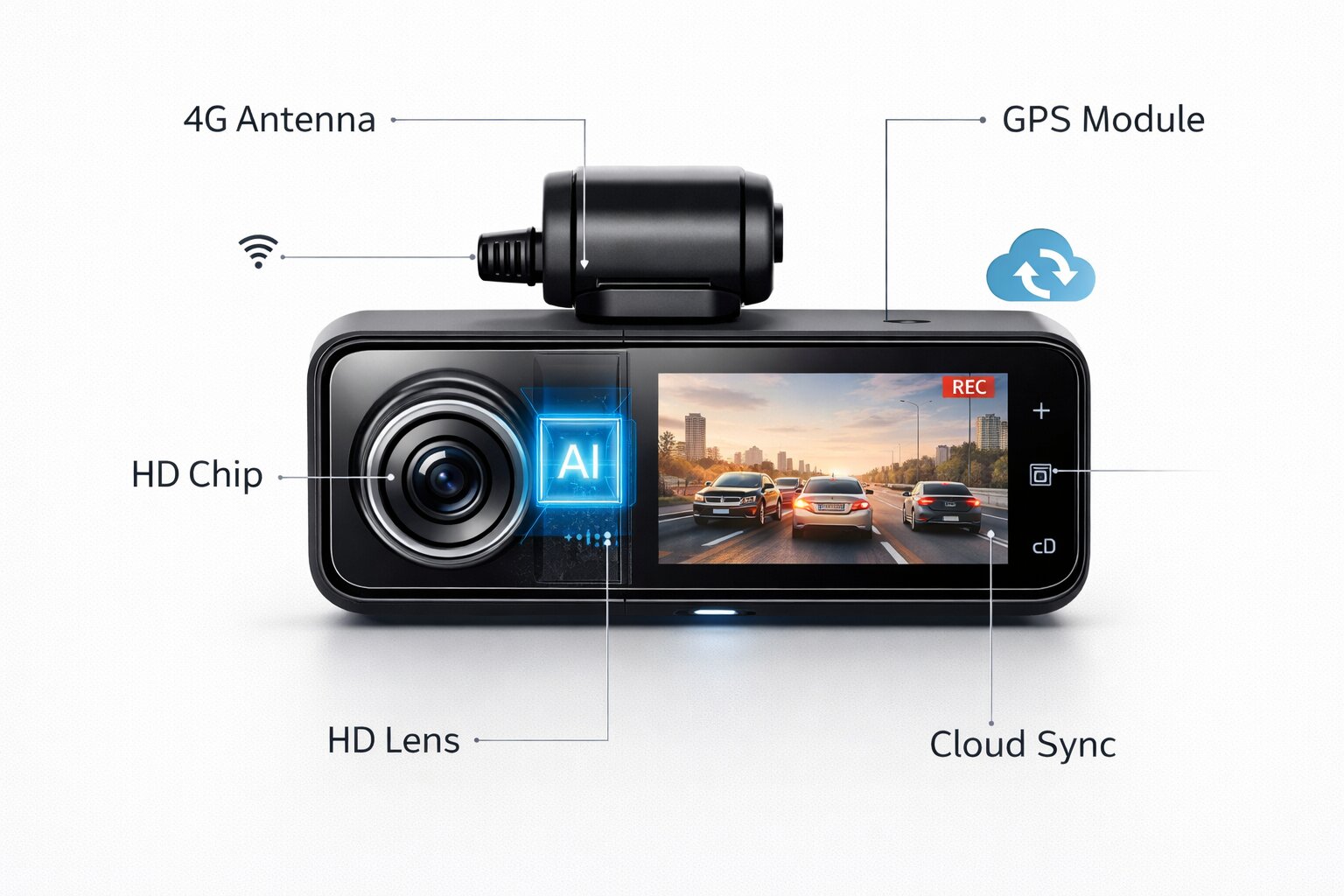
The AI Dashcam 4G is a next-generation vehicle monitoring system that combines high-definition video recording with artificial intelligence, 4G connectivity, and real-time cloud sync. Unlike traditional dashcams that simply record footage to an SD card, this system actively analyses what it sees — detecting dangerous behaviours, generating instant alerts, and automatically uploading incident clips to the cloud the moment something happens.
- Live 4G connectivity for real-time cloud video sync — no manual retrieval required
- AI-powered driver behaviour monitoring across 14 distinct event categories
- Automatic incident clip download triggered the moment an alert fires
- GPS tracking with speed and location data embedded in every clip
- Tamper detection and vehicle security monitoring around the clock
Automatic Clip Download: Evidence Secured in Seconds
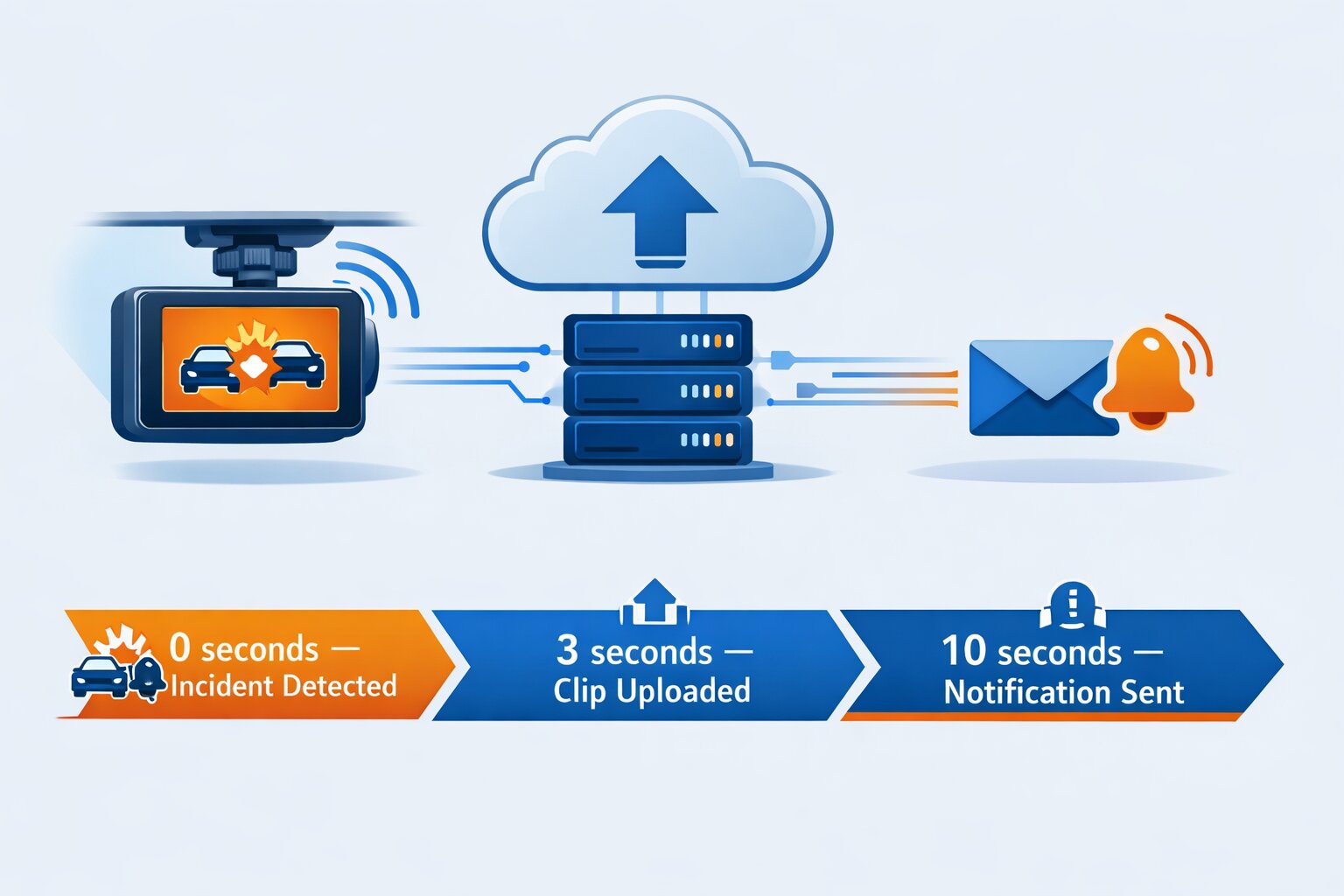
The single most powerful advantage of the AI Dashcam 4G over traditional dashcams is automatic clip upload. The moment an AI alert fires — be it a collision, sudden braking, or a theft attempt — the dashcam immediately transmits the relevant video clip to secure cloud storage over 4G. No waiting. No manual SD card extraction. No risk of footage being overwritten before you can retrieve it.
MATTERS
Traditional dashcam owners face a serious problem: they record locally to an SD card that loops and overwrites. If the driver doesn’t manually extract the clip in time — or if the SD card is damaged in the accident — the footage is gone forever. Our 4G cloud upload eliminates this risk entirely.
14 AI Alert Categories: Complete Coverage of Every Road Risk
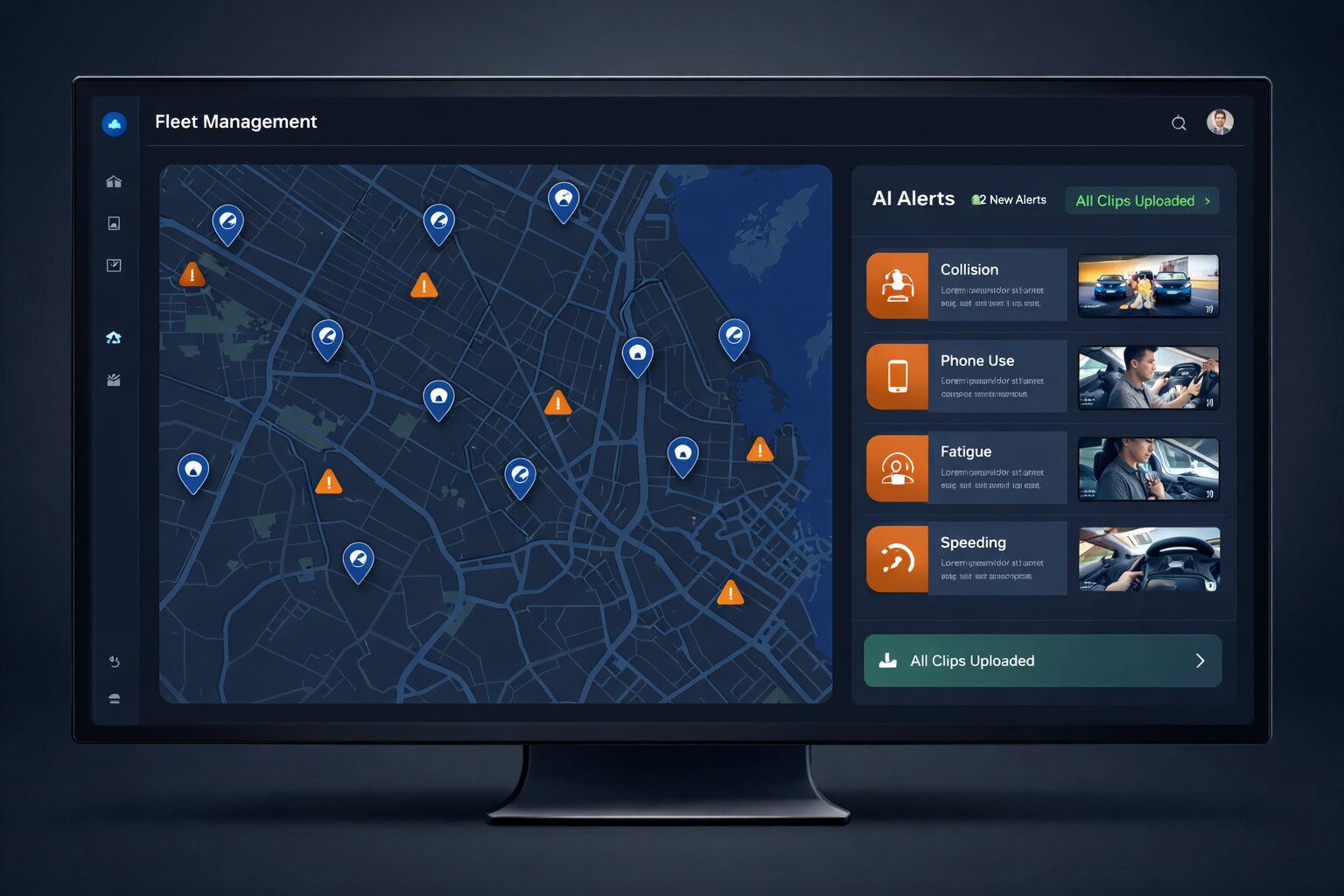
The AI Dashcam 4G monitors and responds to 14 distinct incident types — making it one of the most comprehensive on-road safety platforms available. Each alert is time-stamped, GPS-tagged, and automatically backed up as a downloadable video clip.
| # | Alert Type | What It Detects & Its Insurance / Safety Value |
|---|---|---|
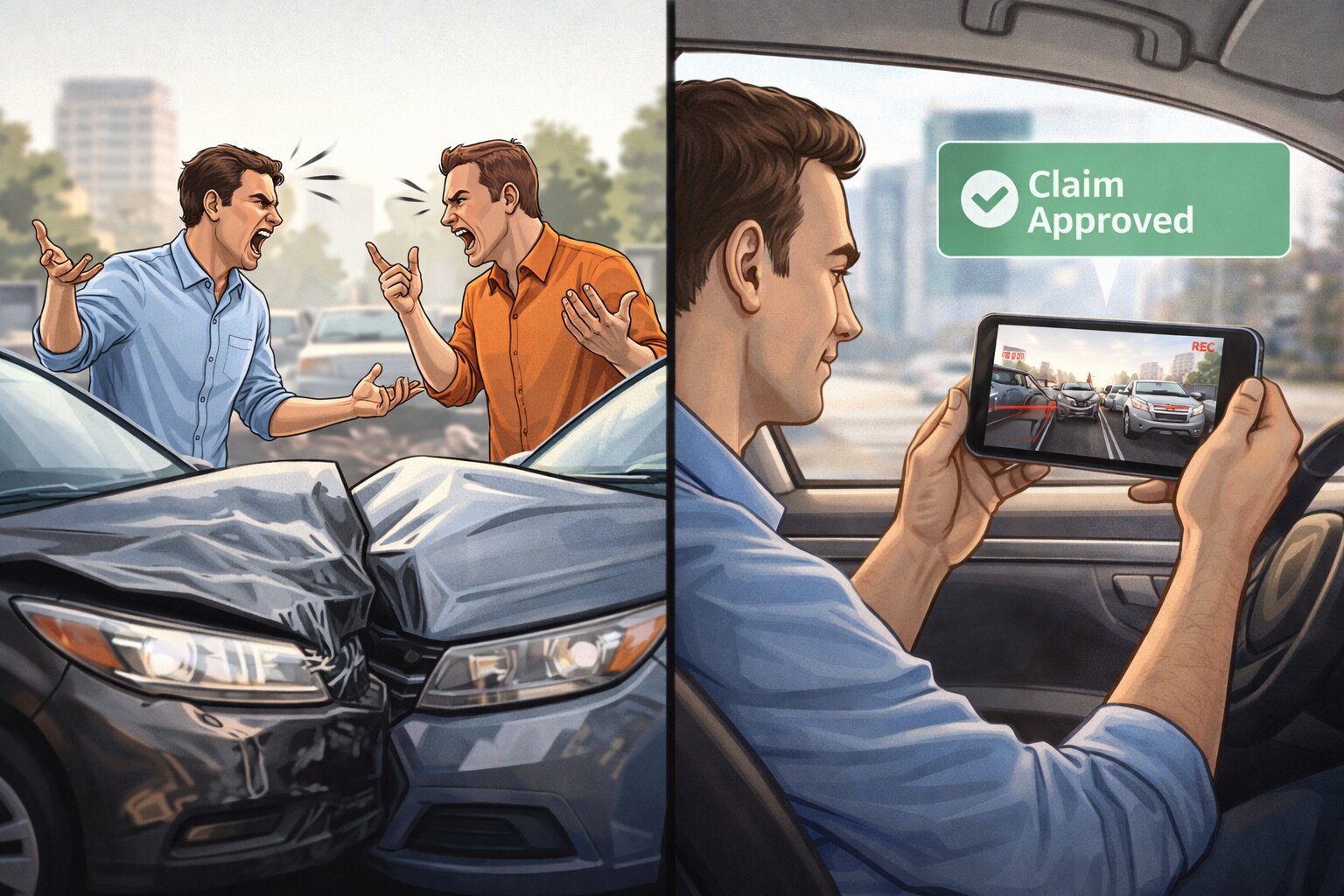
| 1 | Collision Warning | Detects vehicle crash or impact. Clip auto-uploads for immediate insurer submission and emergency response. Eliminates the ‘word vs. word’ dispute. |
| 2 | Illegal Open Doors | Flags doors left open in unauthorised areas — parking lots, restricted zones. Critical for fleet liability and parking enforcement compliance. |
| 3 | Driver on Phone Call | AI detects mobile phone use while driving — a leading cause of road accidents and insurance disputes. Provides timestamped driver behaviour evidence. |
| 4 | Driver Too Sleepy | Monitors driver fatigue indicators in real time. Alerts before microsleep events. Essential for long-haul commercial driver compliance. |
| 5 | Smoking While Driving | Detects in-cabin smoking. Important for vehicle hygiene policies, rental fleets, and employer duty-of-care documentation. |
| 6 | Driving Alarm / Malfunction | System malfunction alerts flag technical failures in real time, preventing breakdown-related incidents and enabling proactive maintenance. |
| 7 | Illegal Displacement | Detects unauthorised vehicle movement when parked. Anti-theft and fleet misuse detection with automatic clip evidence. |
| 8 | Illegal Ignition | Flags unauthorised engine starts. Critical for fleet theft prevention and proof of vehicle misuse for insurers. |
| 9 | Driver Overspeeding | Real-time GPS speed monitoring. Generates an alert and clip when speed limits are exceeded — admissible insurer evidence. |
| 10 | Driver Overtime | Tracks cumulative driving hours against safe operating limits. Critical for HGV, commercial driver, and fleet compliance with working time regulations. |
| 11 | Rollover Warning | Detects vehicle rollover. Triggers immediate emergency clip upload and SOS escalation protocols. |
| 12 | SOS Event / Emergency | Manual or AI-triggered emergency alert. Instantly notifies fleet managers, uploads footage, and can initiate emergency service contact. |
| 13 | Timeout Parking | Flags vehicles parked beyond permitted durations. Prevents fines, supports zone compliance, and reduces fleet idle time waste. |
| 14 | Vehicle Theft Attempt | Detects malicious entry attempts with engine inactive. Alerts owner and uploads tamper evidence footage instantly for insurer and police. |
Deep Dive: How AI Dashcams Transform Insurance
The global insurance industry is undergoing one of its most significant structural shifts in decades — driven by data. AI dashcams are at the heart of this transformation, giving every stakeholder (policyholders, insurers, fleet operators, and regulators) something they have never had before: objective, real-time, incident-level evidence.
1. Faster Claims: From Weeks to Days
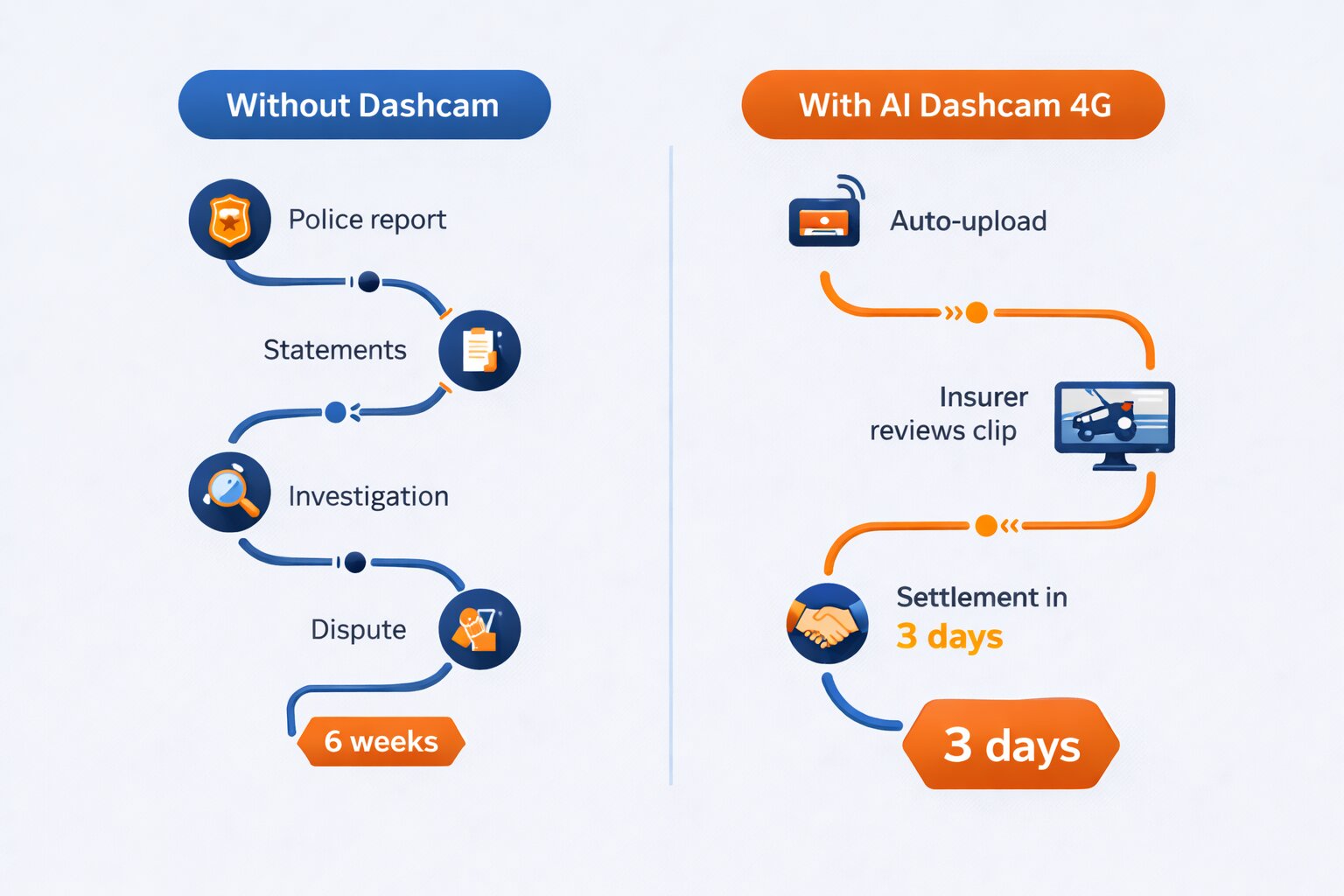
Traditional insurance claims are slow because they depend on subjective evidence: police reports written hours after the fact, eyewitness accounts that contradict each other, and physical damage assessments that take days to schedule. The result is a process that typically takes weeks — and sometimes months — before a payout is made.
AI dashcam footage with automatic 4G cloud upload transforms this completely. When an incident occurs, the clip is available to the insurer within minutes — before the vehicles are moved, before the scene changes, and before either party has a chance to alter their account of events.
FINDING
The clip also reduces the administrative burden on insurers. When GPS data, timestamp, speed at the moment of impact, and AI alert type are all embedded in the footage metadata, insurers need fewer follow-up inspections, fewer surveyor visits, and fewer requests for supplementary documents. Approval cycles for cashless repairs and claim reimbursements shrink dramatically.
2. Fraud Detection and Staged Accident Prevention
Insurance fraud costs the global industry billions every year — and honest policyholders pay the price through rising premiums. Staged accidents, where fraudsters deliberately cause collisions to claim false payouts, are a particularly damaging and growing problem.
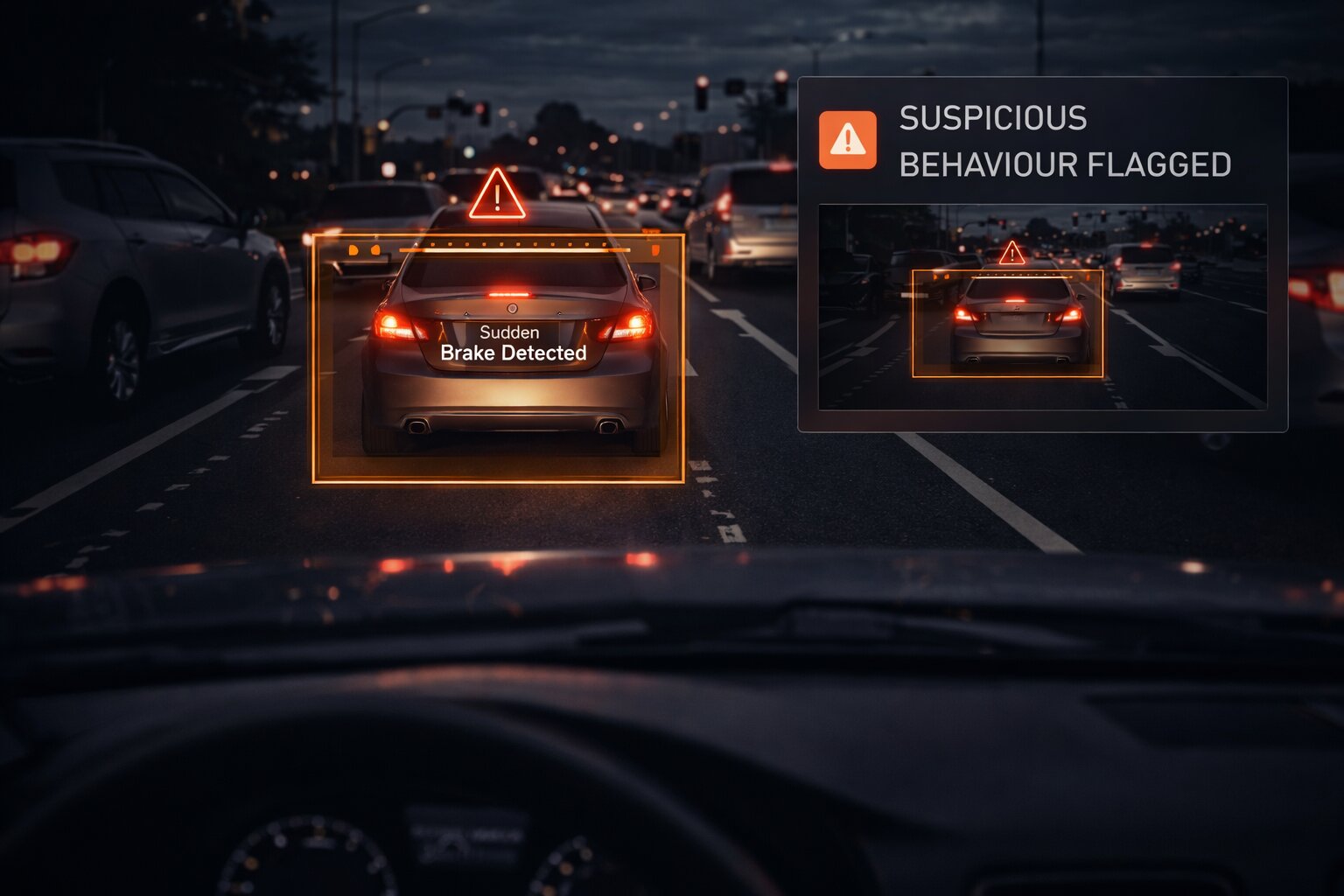
AI dashcam footage is the single most effective countermeasure available. The footage shows the deliberate nature of braking patterns, unnatural driving behaviour prior to impact, or the presence of multiple coordinated vehicles — details that would otherwise be invisible to investigators. It is virtually impossible to fabricate an incident narrative when the entire sequence is captured on video from multiple angles with GPS and speed data.
REPORT
The AI Dashcam 4G adds an additional layer: its AI actively flags unusual pre-collision behaviour — sudden stops, deliberate weaving, unexpected reversals — as part of its alert system. This means that even before a human reviews the footage, the system has already flagged the event as anomalous, creating an audit trail that insurers can use to challenge fraudulent claims.
3. Premium Reduction for Safe Drivers — Usage-Based Insurance (UBI)
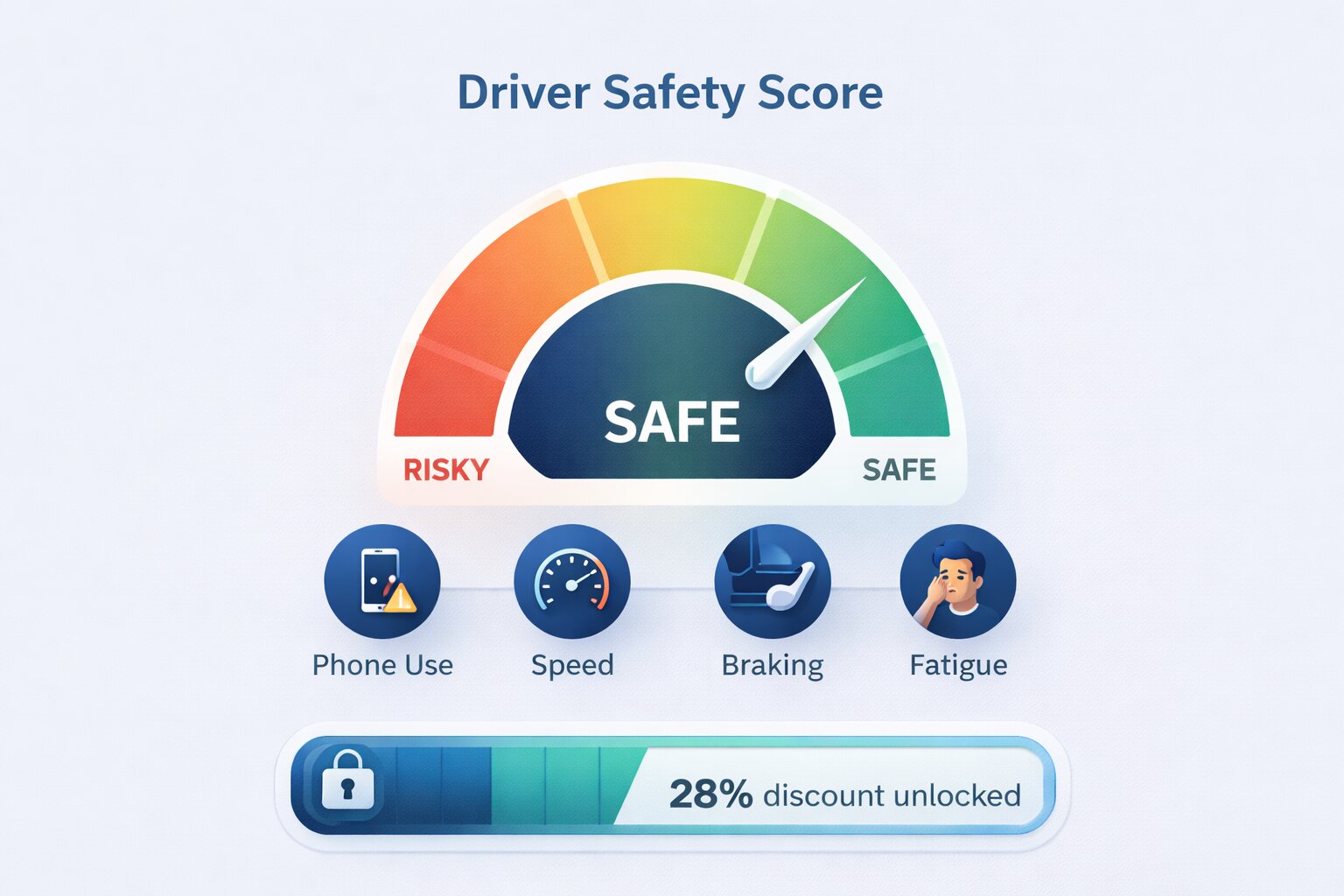
One of the most significant shifts in the insurance industry is the move from demographic-based pricing to behaviour-based pricing. Under traditional models, your premium is calculated largely from statistics about people like you — your age, your location, your car. Under Usage-Based Insurance (UBI), your premium reflects how you actually drive.
AI dashcam data makes UBI possible at a new level of accuracy. By sharing verified driving behaviour data — speed compliance, phone usage, fatigue indicators, harsh braking frequency, and overtime hours — safe drivers can now prove their record to insurers with objective, tamper-proof evidence and negotiate lower premiums accordingly.
| Traditional Insurance Pricing | UBI with AI Dashcam Data |
|---|---|
| Based on age, gender, postcode | Based on your actual driving behaviour |
| Same rate for careful and reckless drivers | Safe drivers pay less — up to 30-40% discount |
| Annual renewal with no feedback | Real-time score + monthly coaching insights |
| No incentive to improve driving | Gamified safety rewards and milestone bonuses |
| Insurer has no incident-level evidence | Every alert and clip creates a verified data trail |
| Claims judged on verbal accounts | Instant footage review — faster, fairer outcomes |
The market data is compelling. The global UBI market was valued at $61.8 billion in 2024 and is projected to reach $224 billion by 2035. In 2024, more than 21 million US policyholders shared telematics data with their insurer — a 28% compound annual growth rate since 2018. Major insurers including Allstate, AXA, and Liberty Mutual have all launched AI-driven UBI programmes in 2024-2025, specifically citing dashcam and telematics integration as the core data source.
Over 50% of drivers under age 35 would switch insurers to enrol in a UBI programme, according to a 2024 J.D. Power study. The safe driver reward is real: telematics-equipped fleets are now securing 15-30% premium reductions while others face double-digit increases.
4. How Insurers Use Dashcam Data: A Policy Maker’s Guide
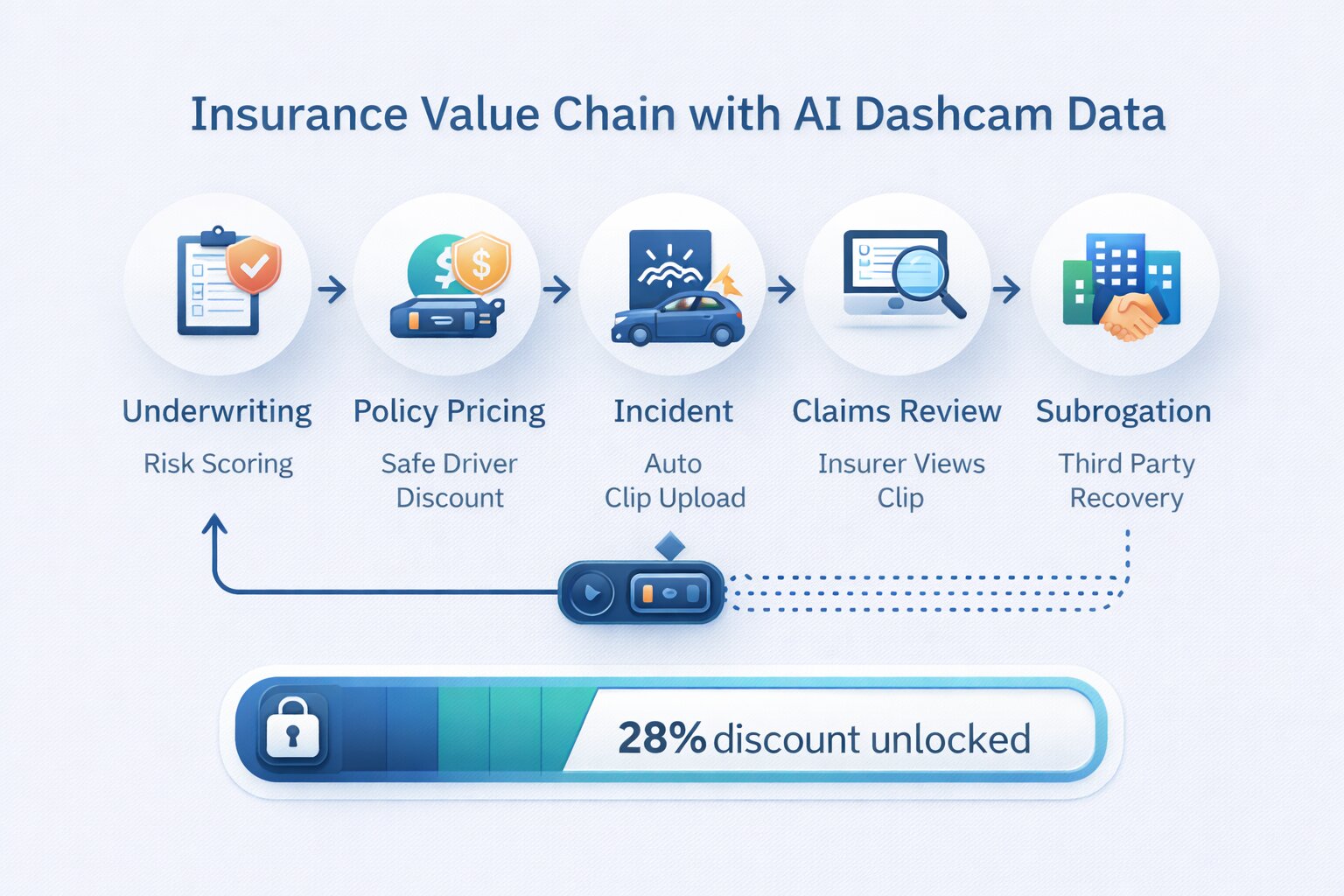
For insurance companies and policy designers, AI dashcam integration is not just a customer benefit — it is a fundamental shift in how risk is assessed, priced, and managed. Here is precisely how the data flows and how it changes the insurance process end to end.
Underwriting: From Guess to Certainty
Traditional underwriting relies on actuarial tables: statistical averages built from historical claim data segmented by demographics. This approach is blunt. A 45-year-old careful driver with 20 years of clean history pays a similar rate to a reckless 45-year-old in the same postcode. AI dashcam telematics breaks this model apart. Insurers now receive a continuous stream of actual driving behaviour — braking patterns, speed compliance, response times, fatigue indicators — that allows genuinely individualised risk pricing. The result is better risk selection, improved retention of good risks, and reduced premium leakage from riskier drivers hiding within demographic bands.
Claims Investigation: Instant Evidence Access
When a policyholder files a claim, the insurer’s claims team can access the auto-uploaded dashcam clips immediately. The clip is GPS-tagged, timestamped, AI-annotated with the alert type, and includes speed data at the moment of incident. This allows adjusters to determine fault, assess damage severity, and validate the claim narrative in minutes rather than days. Surveyors can assess damage from the footage without extended physical inspections. The approval loop for cashless repairs and reimbursements shrinks from weeks to days.
Subrogation: Recovering Costs from the At-Fault Party
Subrogation — the process by which an insurer recovers money paid out on a claim from the party responsible for the incident — is dramatically improved with dashcam footage. Clear video evidence of third-party fault makes subrogation cases straightforward, reduces legal costs, and increases recovery rates. Without dashcam footage, many valid subrogation claims are abandoned because the evidence is insufficient to pursue. With it, the footage is often dispositive.
Loss Ratio Improvement
The loss ratio — the percentage of premiums paid out in claims — is the most important metric for insurer profitability. AI dashcam programmes reduce loss ratios through multiple mechanisms simultaneously: fewer accidents (because drivers behave better when monitored), faster fraud detection (reducing fraudulent payouts), faster claims resolution (reducing administrative overhead), and better subrogation recovery. Fleets using AI dashcam monitoring have reported up to 52% fewer accidents and defeated fraudulent claims worth $200,000 to $500,000 annually for mid-size fleet operators.
5. Step-by-Step: How to Use AI Dashcam Footage in a Claim
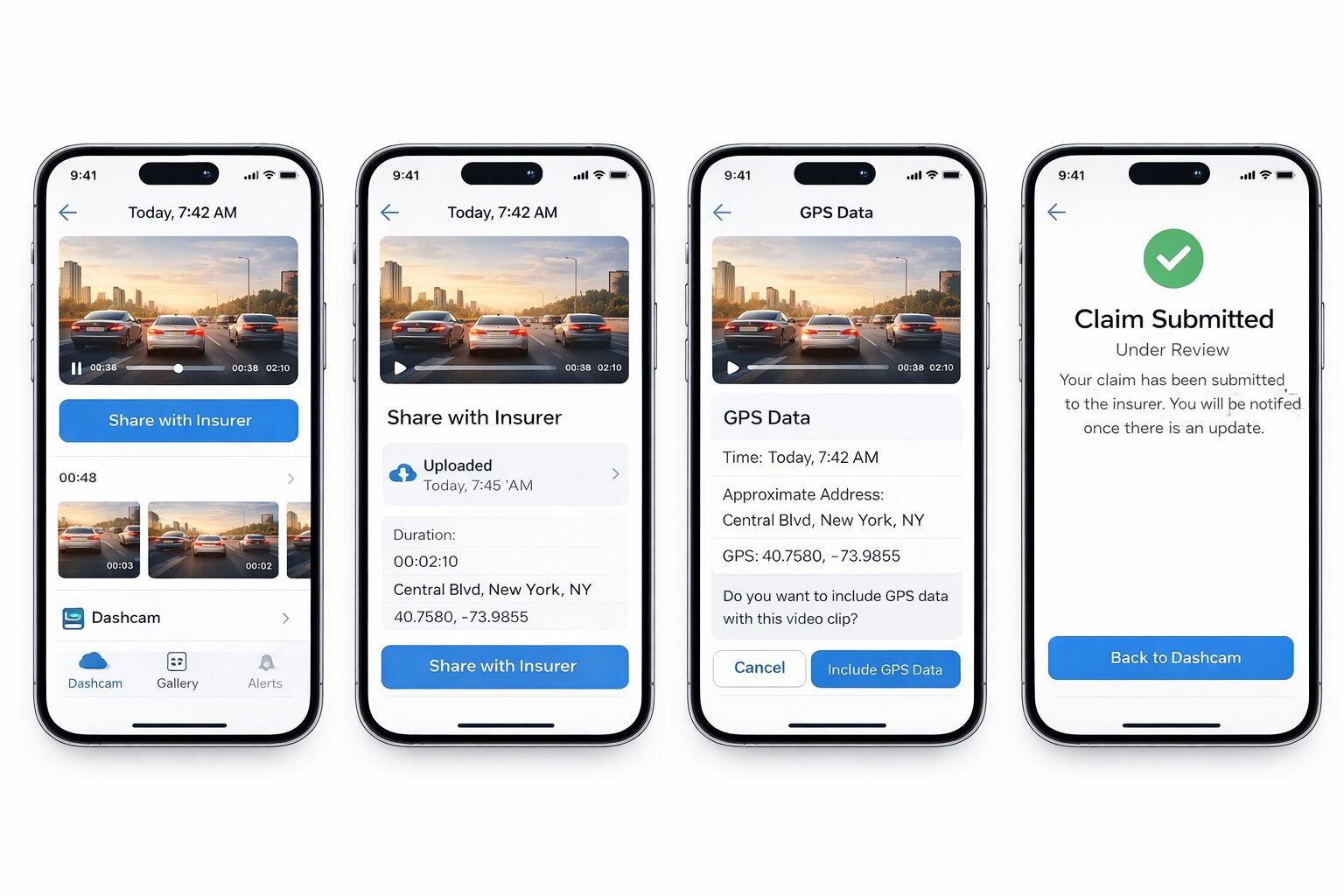
Knowing you have the footage is one thing. Knowing exactly how to use it — and when — is what determines whether it delivers its full value. Here is a practical, step-by-step guide for drivers and fleet managers on how to leverage AI dashcam footage in an insurance claim.
| STEP | Action | What to Do and Why It Matters |
|---|---|---|
| STEP 1 | Incident Occurs | Your AI Dashcam 4G detects the event and automatically uploads the clip via 4G. You receive an instant notification. The evidence is already secured — nothing to do. |
| STEP 2 | Access Your Cloud Portal | Log in to the dashcam cloud portal from your phone or computer. Locate the incident clip. Verify the footage shows the full sequence of events before and after the incident. |
| STEP 3 | Do NOT Edit the Footage | Share the original, unedited clip with all metadata intact. Edited footage can be challenged for authenticity. Submit the complete recording — not a trimmed highlight. Tampering voids the evidentiary value. |
| STEP 4 | File Your Claim Promptly | Contact your insurer immediately and inform them that dashcam footage is available. Most major insurers now have dedicated dashcam submission portals. Upload the clip directly as part of the initial claim request. |
| STEP 5 | Submit GPS & Speed Data | Include the GPS track and speed data from the incident moment. This corroborates the footage, confirms your location, and shows vehicle speed at impact — all critical for fault determination. |
| STEP 6 | Match Footage to FIR / Police Report | If a police report was filed, ensure the footage timeline matches the reported time. Consistency between the FIR and your clip eliminates disputable inconsistencies. |
| STEP 7 | Share Alert Data with Insurer | The AI alert type (e.g. Collision Warning, Vehicle Theft Attempt) is automatically logged. Share this alongside the footage — it provides the insurer with pre-labelled context that accelerates their review. |
| STEP 8 | Follow Up with a Legal Advisor | For high-value or disputed claims, consult a road traffic lawyer before the settlement is finalised. They can ensure the footage is presented in the most legally effective way and challenge any attempt by the opposing party to dismiss it. |
For Individual Car Owners
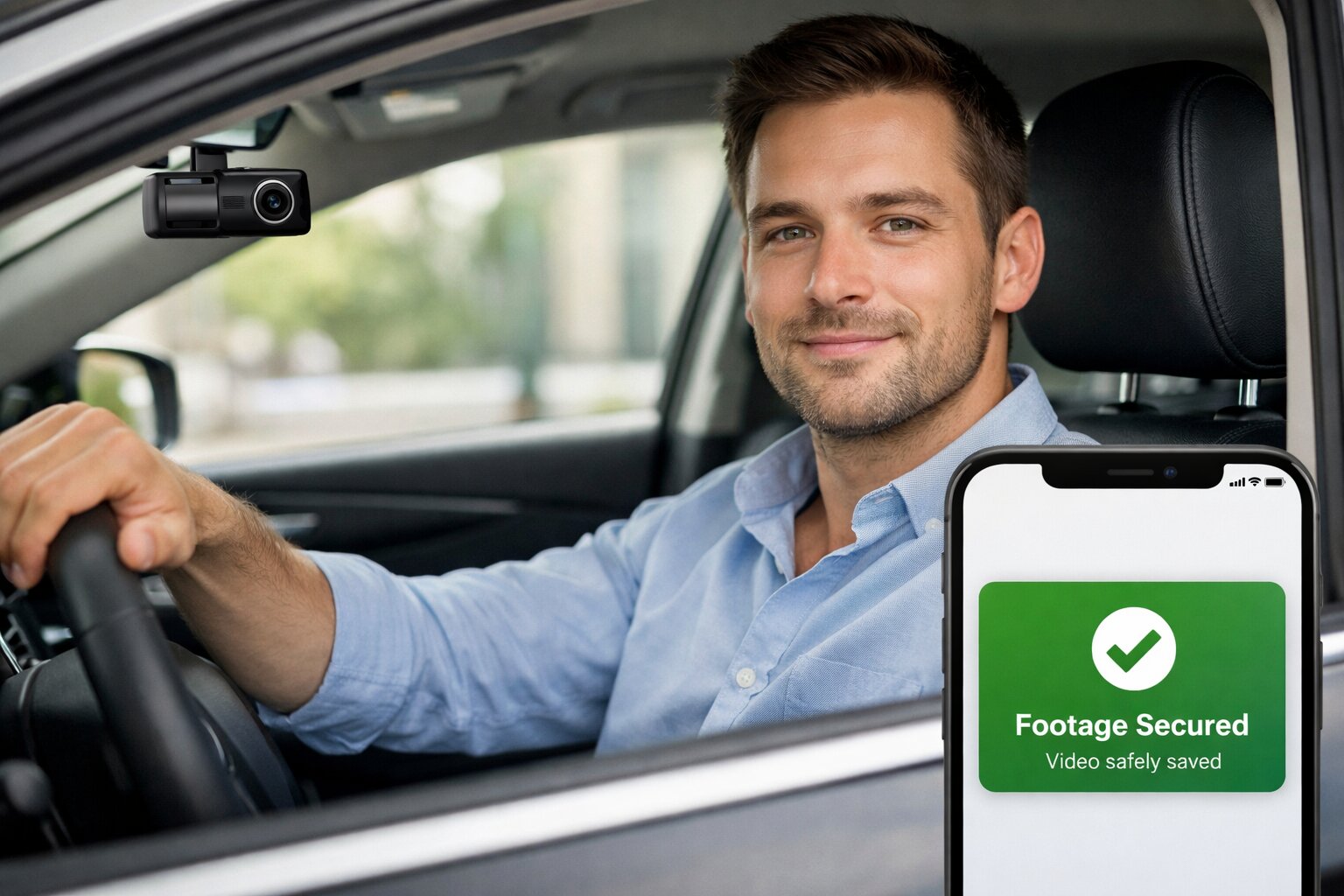
You do not have to be a fleet manager to benefit from AI dashcam technology. Individual drivers face exactly the same risks: reckless third parties, fraudulent claims, parking incidents, and vehicle theft. The AI Dashcam 4G gives private car owners the same level of protection that large fleets have relied on for years.
- Protection against false blame — footage proves your version of events instantly
- Theft and vandalism evidence uploaded automatically while you are away from the vehicle
- Parking incident detection — captures hit-and-run events in car parks
- SOS emergency button with automatic clip upload for personal safety
- Potential insurance premium reductions with verified safe driving behaviour data
- Peace of mind for parents of young or newly qualified drivers
- Drivers with dashcams are 40% more likely to have claims settled in their favour (AAA)
For Fleet Owners: Total Visibility, Zero Blind Spots
Managing a fleet means managing risk at scale. Every vehicle is an asset. Every driver represents your brand. Every incident carries financial, legal, and reputational consequences. The AI Dashcam 4G gives fleet managers unprecedented real-time visibility and control — and the data shows it pays for itself rapidly.
The Financial Case
AI-powered dashcam fleets report 40-60% reductions in accident frequency and 10-30% insurance premium reductions. For a mid-size fleet, that typically translates to $15,000-$50,000 saved per avoided accident, and $200,000-$500,000 annually in defeated fraudulent claims. Most fleets achieve full ROI within 6-12 months of deployment.
STUDY
Driver Behaviour Coaching
AI alert data allows fleet managers to generate a driving behaviour score for each driver. Overspeeding events, phone use detections, fatigue alerts, and harsh braking frequency are all logged automatically. Fleet managers can identify consistently risky drivers before an accident happens, deliver targeted coaching, and document the improvement — all with objective, AI-generated data.
Compliance and Legal Protection
Driver overtime alerts ensure compliance with working time regulations. Malfunction alerts enable proactive maintenance before breakdowns cause accidents. Every alert is logged and clip-backed — providing a complete, time-stamped audit trail that protects fleet operators in litigation and regulatory inspections.

For Insurers and Policymakers
The message from 2024-2025 market data is unambiguous: telematics-equipped, AI-dashcam-integrated policyholders are better risks, generate fewer and faster-resolved claims, and represent the growth segment of the market. Insurers that build AI dashcam data into their underwriting and claims workflows gain competitive advantages that compound over time.
- More accurate risk profiling based on actual driving behaviour rather than demographics
- Instant access to incident footage — claims reviewed in hours, not weeks
- Fraud detection through AI-annotated clip analysis and pre-collision behaviour flags
- Telematics data integration for Usage-Based Insurance product differentiation
- Improved subrogation outcomes through clear third-party fault evidence
- Loss ratio improvement: 52% fewer accidents, 86% lower incident costs reported in AI dashcam programmes

How the Automatic Clip System Works: End to End
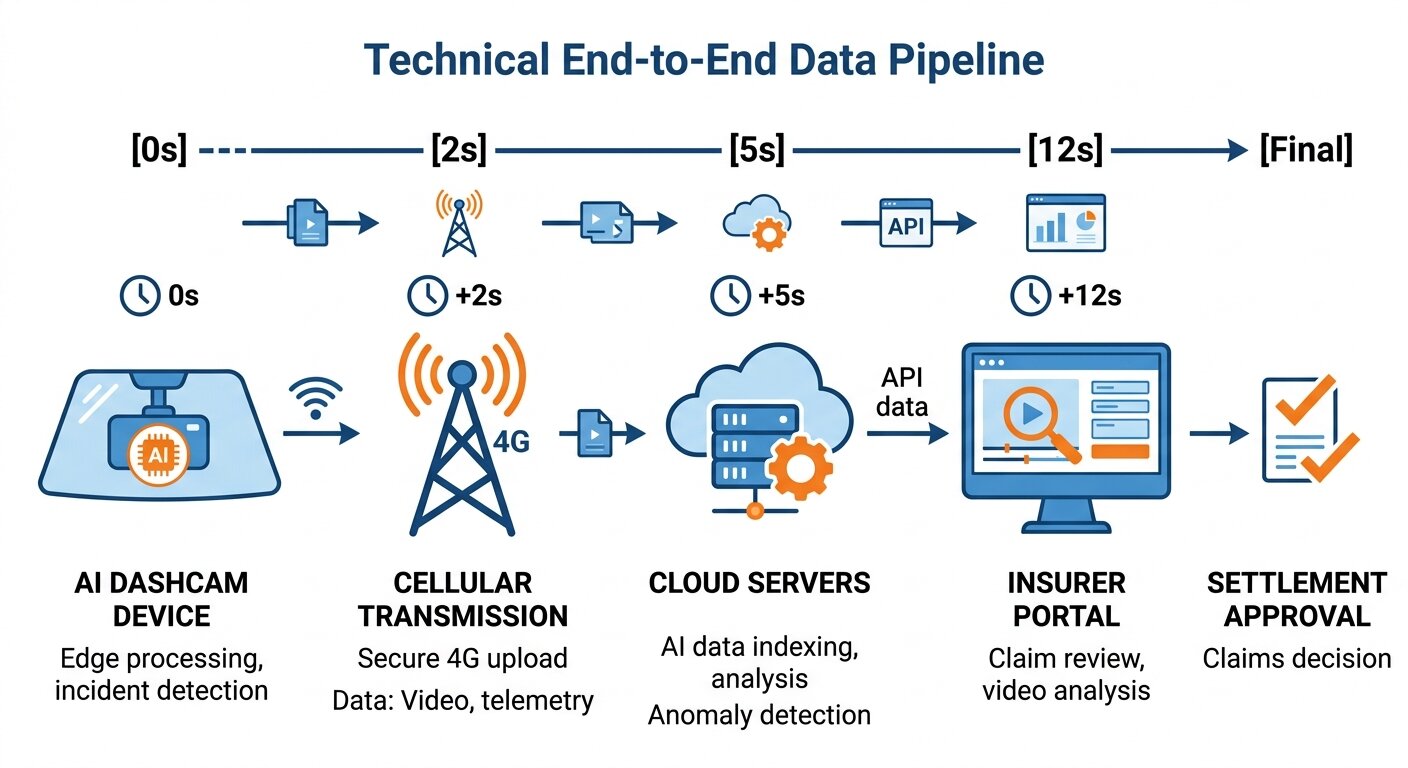
The technology behind the AI Dashcam 4G’s instant clip delivery is what separates it from every other product on the market. Here is exactly what happens in the seconds after an incident — from detection to insurer delivery.
| 0 sec | AI Detection | The dashcam’s onboard AI detects an event — collision, overspeeding, phone use, theft attempt, or any of the 14 alert categories. Processing happens on-device, in real time. |
| 1-2 sec | Metadata Tagging | The dashcam tags the precise moment using GPS coordinates, timestamp, vehicle speed, heading, and AI-classified alert type. All embedded in the clip file. |
| 3-5 sec | 4G Cloud Upload | The relevant clip (seconds before and after the event) is immediately transmitted over 4G to secure cloud storage. The footage is secured before you have even stopped the vehicle. |
| 5-10 sec | Instant Notification | Fleet managers, vehicle owners, and authorised parties receive an instant push notification with alert type and a direct link to the uploaded clip. |
| Minutes | Insurer Submission | The clip is available for immediate download and sharing. One-click submission to your insurer’s claims portal — including all metadata — accelerates the entire claims process. |
| Ongoing | Secure Archive | Every clip is stored securely in the cloud with access controls. Available for download, sharing with legal counsel, or police at any time. Never overwritten. |
Conclusion: The Road Ahead
The AI Dashcam 4G is not simply a camera. It is a comprehensive safety, compliance, and evidence platform that delivers measurable value to every stakeholder on the road — individual drivers, fleet operators, and insurers alike.
The research is conclusive: claims settle 35% faster with dashcam footage, drivers are 40% more likely to win their cases, and AI-monitored fleets see up to 60% fewer incidents. The global UBI market is racing toward $224 billion by 2035, fuelled precisely by the kind of real-time, AI-verified data that our system provides.
With 14 AI alert categories, automatic real-time clip download over 4G, GPS-tagged metadata, and seamless cloud storage, the AI Dashcam 4G delivers what no traditional dashcam can: certainty. Certainty about what happened, when, where, why, and at what speed. That certainty protects drivers from false claims, helps fleet managers run safer and more profitable operations, and gives insurers the behavioural data they need to price fairly, settle fast, and fight fraud effectively.