🧊 The Silent Profit Killer No One Talks About
Every year, billions of dollars worth of pharmaceuticals, vaccines, dairy products, seafood, and frozen foods are silently destroyed — not by accidents or theft, but by a few degrees of temperature deviation that went undetected for just a few hours. This is the cold chain failure problem, and it is far more common, far more expensive, and far more preventable than most businesses realize.
In India’s rapidly expanding logistics ecosystem — where distances are vast, ambient temperatures routinely cross 40°C, and power supply remains unpredictable in tier-2 and tier-3 regions — cold chain monitoring is no longer a premium add-on. It is a mission-critical business function. Whether you are a pharmaceutical distributor in Mumbai, a dairy exporter in Anand, or a frozen food logistics operator in Delhi, the question is no longer whether to monitor your cold chain — it is how quickly you can deploy a system robust enough to protect your cargo, your compliance, and your customers.
This blog provides a comprehensive, deeply researched overview of cold chain monitoring — what it is, why failures happen, the real financial and human cost of those failures, the technology that prevents them, and why Navionyx is uniquely positioned to deliver cold chain intelligence across India’s most demanding logistics environments.
❄️ What Is Cold Chain Monitoring?
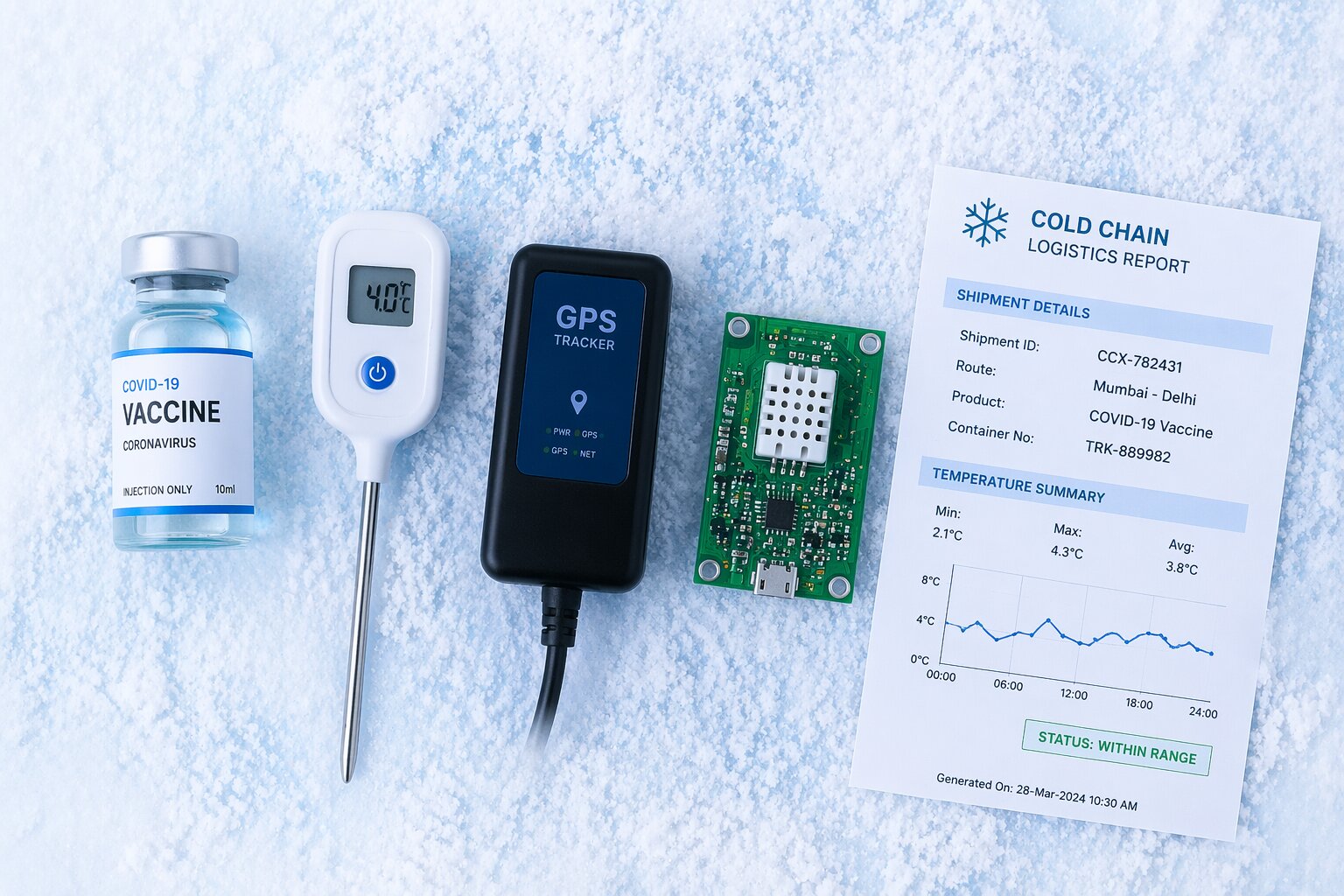
Cold chain monitoring is the continuous, real-time tracking and recording of temperature, humidity, location, and environmental conditions of perishable or temperature-sensitive goods throughout their entire supply chain journey — from the manufacturer’s warehouse all the way to the end consumer’s doorstep.
Unlike traditional temperature logging — which relied on paper records, manual readings, or simple data loggers that could only be read after delivery — modern cold chain monitoring is a live, always-on digital system that gives logistics operators complete situational awareness at every point in the journey.
The Cold Chain Journey
A typical cold chain passes through four critical stages, each with its own risk profile:
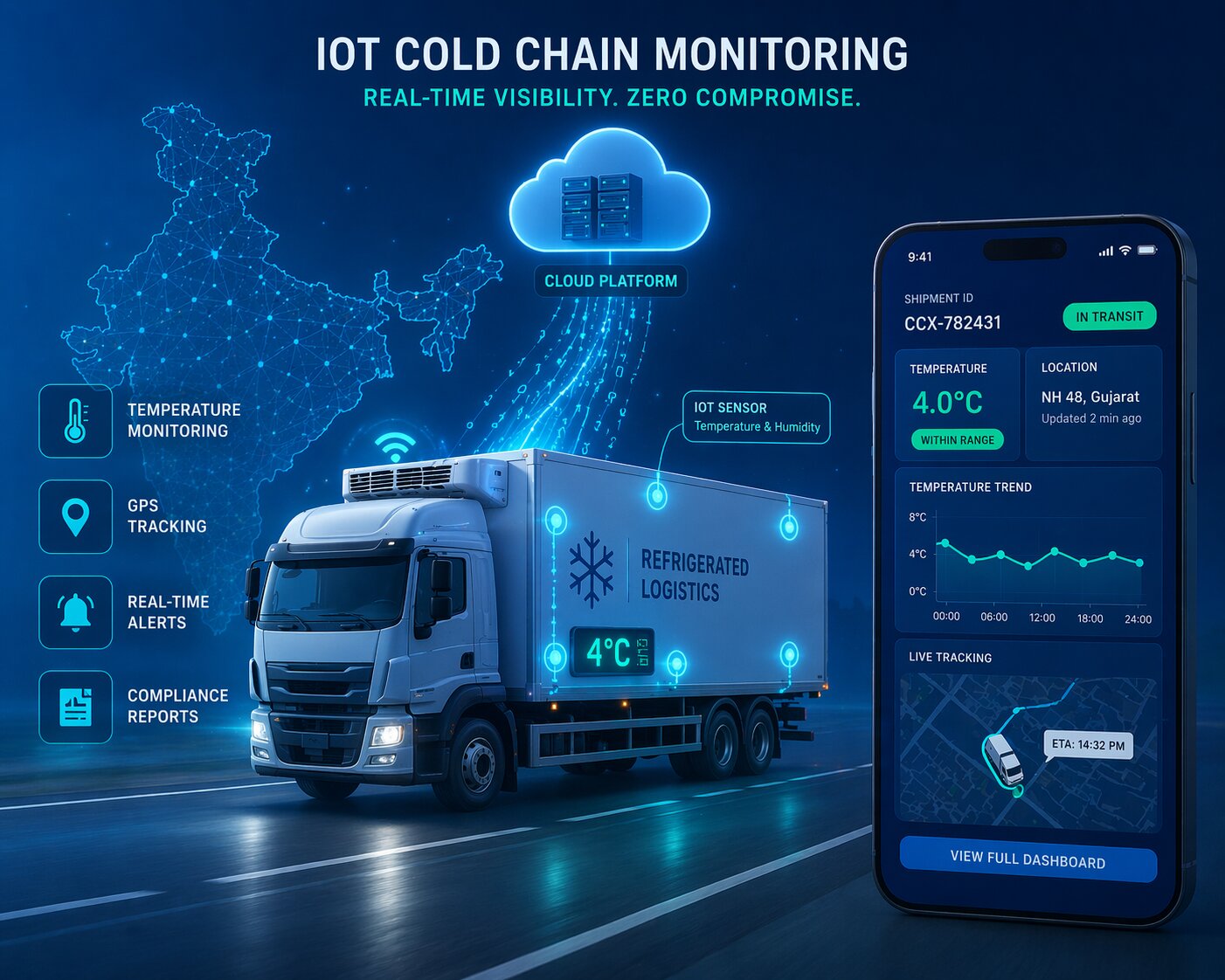
Core Technologies in Modern Cold Chain Monitoring
IoT Temperature & Humidity Sensors
Wireless, battery-powered sensors placed inside vehicles, containers, and warehouses that continuously measure temperature and humidity. Data is transmitted every few seconds or minutes to a central platform via cellular, Wi-Fi, or LoRaWAN networks. Modern sensors are accurate to ±0.1°C and can operate from −40°C to +85°C.
GPS Location Tracking
Real-time GPS modules installed in vehicles provide precise location data, enabling logistics managers to know exactly where a shipment is at any given moment. Combined with temperature data, GPS allows pinpoint identification of where in the journey a temperature excursion occurred — a city, a road segment, or even a specific depot.
Cloud-Based Dashboards & Mobile Apps
All sensor and GPS data flows to a secure cloud platform where it is visualized on web and mobile dashboards. Logistics managers can monitor an entire fleet from a single screen, drill down into individual shipments, review historical records, and generate compliance reports at the tap of a button.
Automated Alert Systems
When temperature exceeds or falls below a configured threshold, the platform instantly dispatches SMS, email, and in-app push notifications to designated personnel. Alerts can be tiered — a soft warning at 7°C and a critical alarm at 10°C — giving teams time to intervene before cargo is damaged.
AI-Driven Predictive Analytics
Advanced platforms use machine learning algorithms to analyze historical temperature patterns, vehicle behavior, route conditions, and equipment performance data to predict potential failures before they occur. This transforms cold chain management from reactive firefighting to proactive prevention.
🚨 Why Cold Chain Failures Happen: The Root Causes
Cold chain failures are rarely caused by a single catastrophic event. More often, they result from an accumulation of small operational weaknesses — inadequate equipment, lack of visibility, human error, and poor process design — that compound over time until a shipment is lost. Understanding the root causes is the first step to preventing them.
1. Temperature Fluctuations During Storage
Storage facilities face constant thermal challenges. Power failures — particularly common in rural and semi-urban India — can knock out refrigeration units for hours. Walk-in cold rooms with poor insulation gain heat faster than their compressors can compensate. In busy distribution hubs, frequent door openings during loading and unloading allow warm ambient air to flood the cold space. Even a 30-minute exposure to ambient temperature can push a vaccine shipment permanently outside its safe range of 2–8°C, rendering the entire batch non-compliant and potentially unsafe.
2. Temperature Excursions During Transit
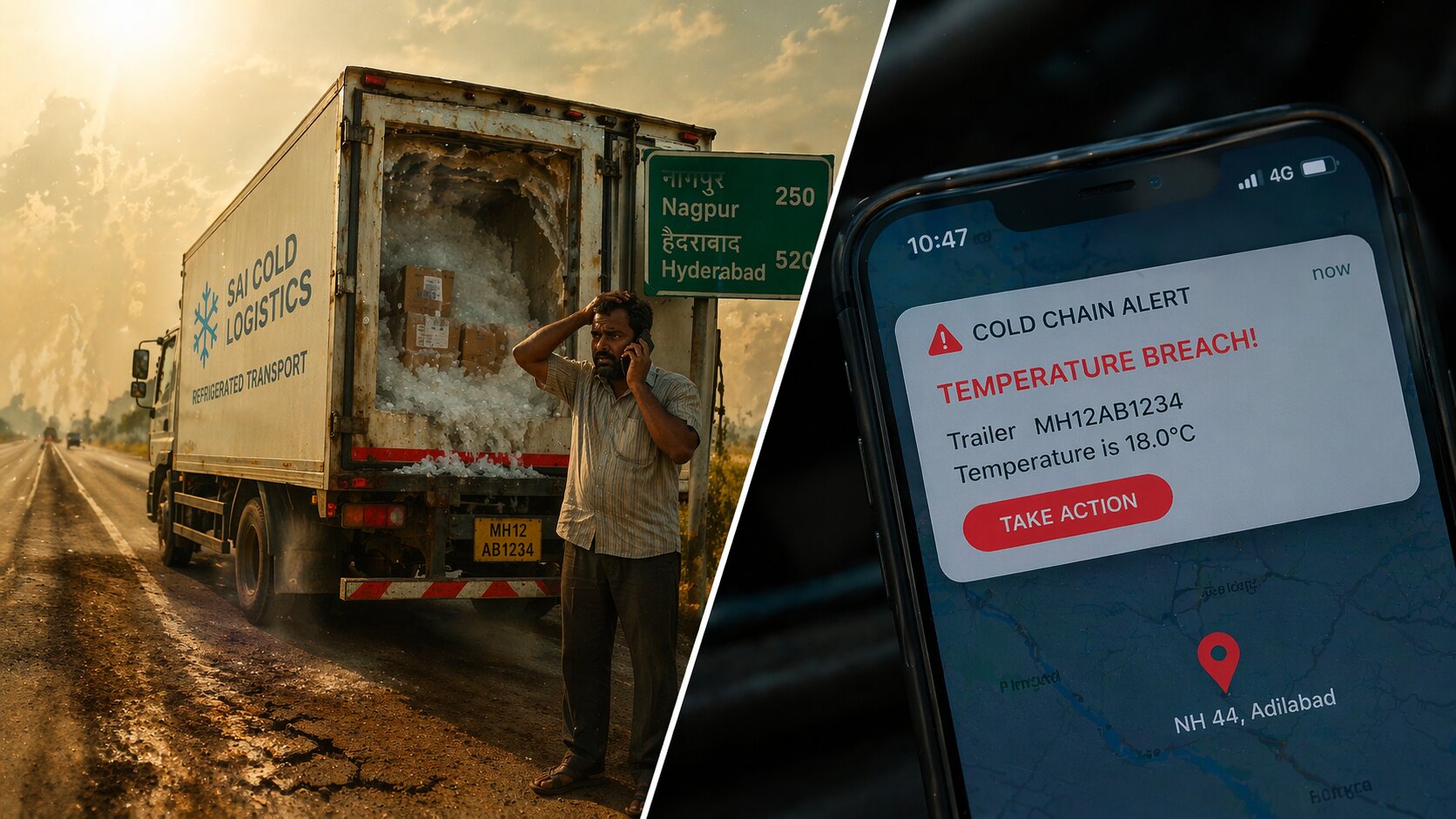
Refrigerated trucks — or ‘reefer vehicles’ — are the backbone of cold chain logistics, but they are also the most vulnerable link. Refrigeration units can malfunction mid-route. Driver behavior such as unnecessary door openings during stopovers, parking in direct sunlight, or running engines at idle to save fuel can all contribute to temperature rise inside the cargo hold. On long-haul routes from, say, Pune to Hyderabad in summer, even a 2-hour temperature breach can compromise the entire shipment.
3. Absence of Real-Time Visibility
In traditional logistics operations, there is no mechanism to detect a problem while it is happening. A data logger placed inside a carton will faithfully record every temperature reading — but the data sits locked in that device until someone physically retrieves and downloads it at the destination. By that time, the damage is already done, the cargo may have been delivered to a patient or consumer, and the window for corrective action has long passed. The absence of real-time visibility turns every shipment into a guessing game.
4. Manual Monitoring & Human Error
Human-logged temperature records — where a driver or warehouse staff records a reading every few hours on paper — are notoriously unreliable. Readings are missed, fabricated, or simply filled in at the end of a shift based on memory. A 2023 pharmaceutical supply chain audit in India found that over 38% of manual temperature logs contained gaps or inconsistencies. This not only fails to prevent loss — it also creates a false sense of compliance that collapses the moment a regulatory body conducts an inspection.
5. Equipment Failure & Deferred Maintenance
Refrigeration compressors, door seals, and thermostat controls degrade over time. In high-utilization logistics fleets, maintenance is often deferred under operational pressure. Without predictive monitoring systems that can detect early signs of equipment degradation — such as increased compressor cycling frequency or slower temperature recovery after door openings — failures happen without warning, at the worst possible moment: in the middle of a long-distance consignment.
💸 The Real Cost of Cold Chain Failures
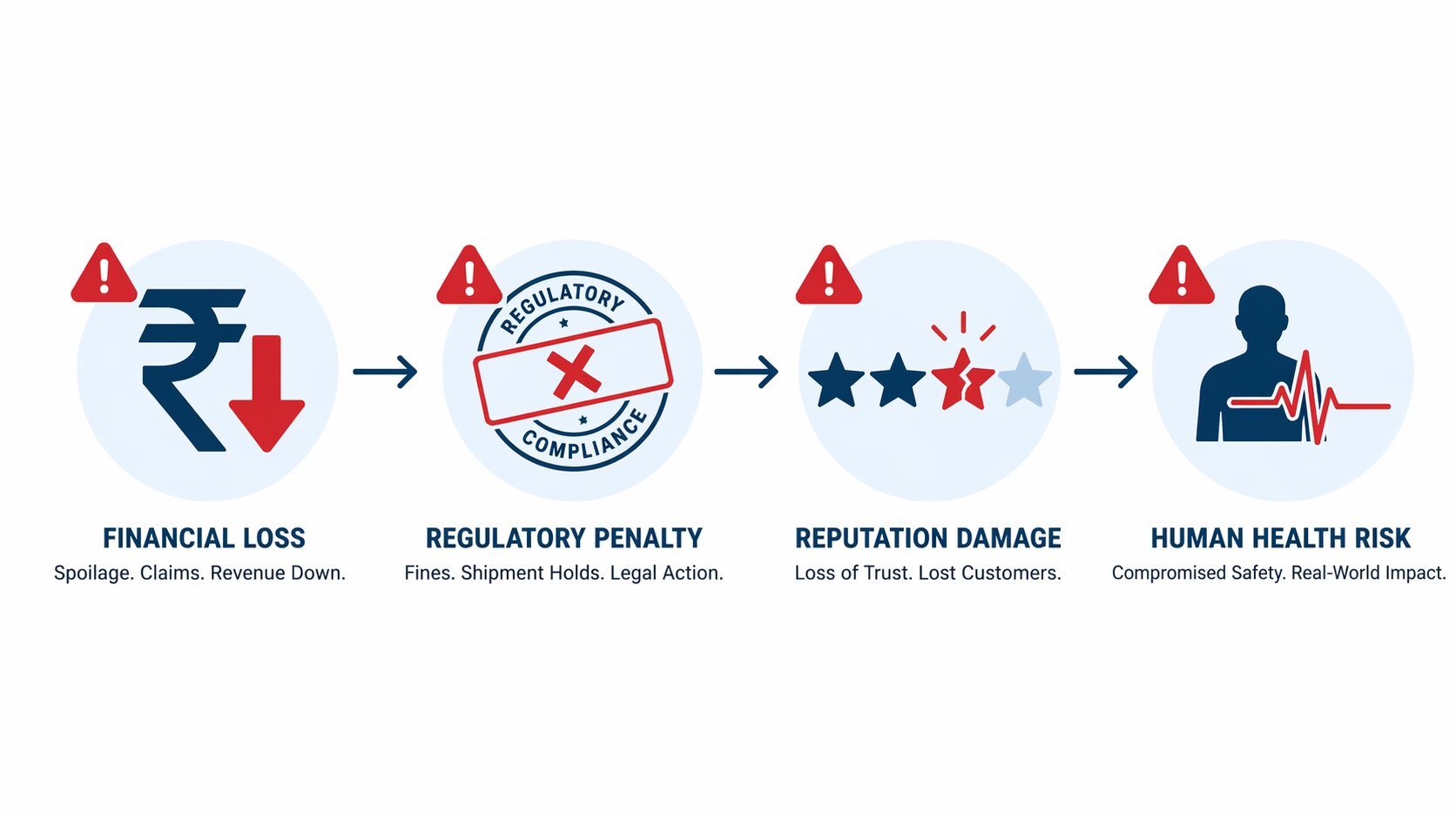
Cold chain failures carry costs that extend far beyond the immediate financial loss of a damaged shipment. They create a cascading impact across financial, regulatory, reputational, and — in the case of healthcare products — human dimensions that can threaten the very existence of a logistics business.
Financial Losses
The direct financial cost of a cold chain failure depends on the cargo type and shipment size. A single failed vaccine consignment for a hospital can range from ₹2,00,000 to ₹25,00,000. A refrigerated truckload of premium seafood destined for export can represent ₹10,00,000 to ₹40,00,000 in write-offs. For dairy cooperatives supplying bulk cream or cheese, a transit failure can mean tens of lakhs in spoiled product. Beyond the direct cargo loss, there are hidden costs: emergency re-procurement, express shipping, disposal charges for hazardous pharmaceutical waste, and overtime for staff managing the fallout.
Regulatory Penalties & Compliance Risks
In the pharmaceutical sector, temperature excursions are not merely an operational problem — they are a regulatory liability. The Central Drugs Standard Control Organisation (CDSCO) and Good Distribution Practice (GDP) guidelines require documented temperature records for all medicines. A single undocumented excursion can trigger product recalls, license suspensions, and penalties that dwarf the value of the original shipment. For vaccine distributors working with government health programmes, failure to maintain the cold chain can result in permanent contract termination and blacklisting.
Reputational Damage & Customer Loss
In today’s hyperconnected marketplace, a single high-profile cold chain failure can go viral and permanently damage a brand. For a hospital or pharmacy chain that received ineffective vaccines or spoiled medicines, the damage to patient trust is incalculable. For a food brand, images of spoiled products shared on social media can trigger consumer boycotts. In the B2B space, a logistics provider that fails to protect a high-value pharmaceutical shipment rarely gets a second chance.
Human Cost: The Hidden Dimension
Perhaps the most sobering consequence of cold chain failure in the pharmaceutical space is its direct impact on patient health. Vaccines that have been exposed to temperatures outside their safe range lose potency — sometimes completely — while appearing visually indistinguishable from viable product. When compromised vaccines are administered, they provide no protection, leaving patients vulnerable to preventable diseases. In India’s public immunization programmes — which handle millions of doses annually — a systemic cold chain failure is not just a business problem. It is a public health crisis.
🧠 How Smart Cold Chain Monitoring Solves These Problems
Modern IoT-enabled cold chain monitoring platforms address every one of the root causes described above by transforming passive, after-the-fact data collection into an active, predictive, and automated system that works continuously — even when no human is watching.
📡 1. Real-Time Temperature & Humidity Tracking
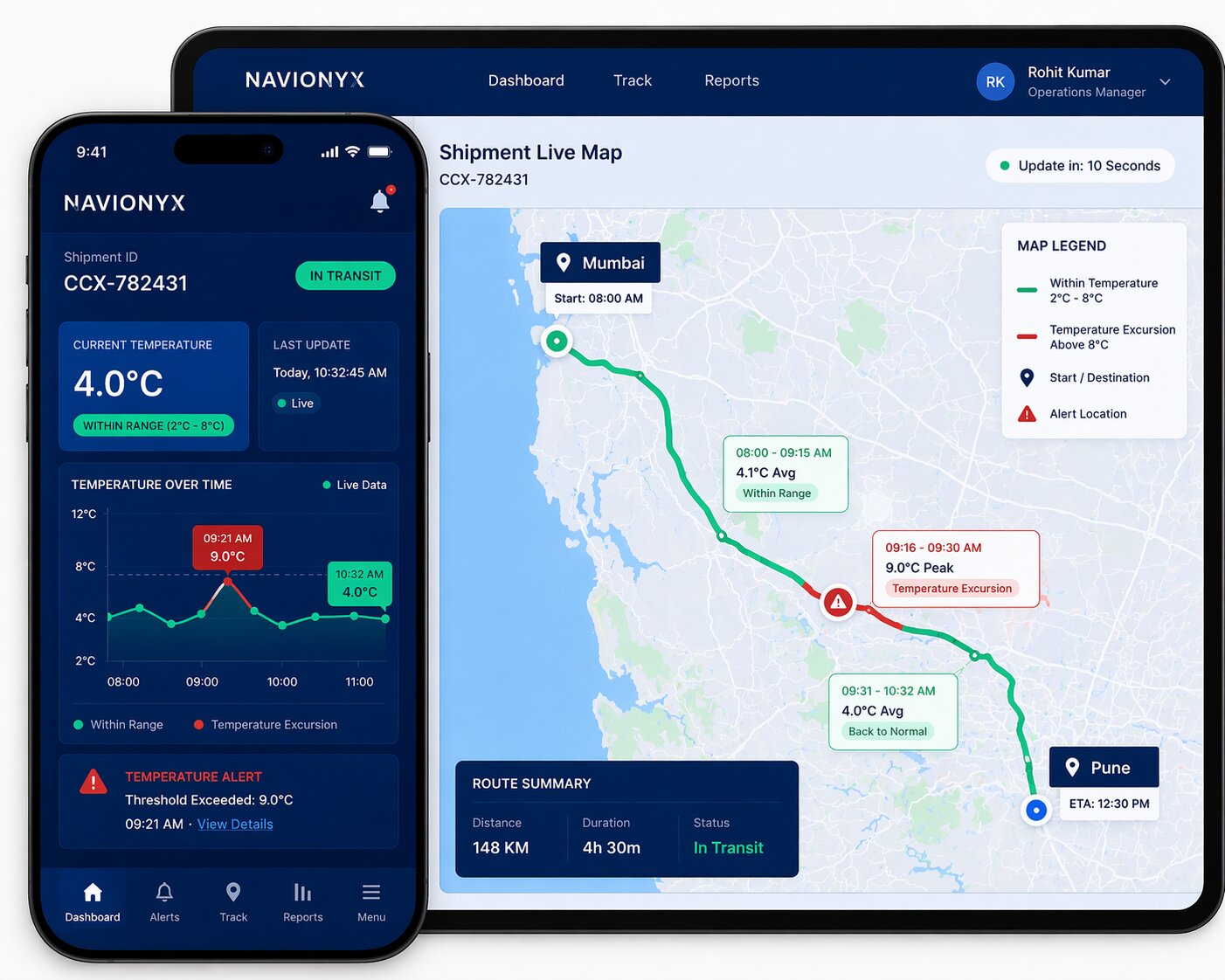
IoT sensors installed inside every vehicle, container, and storage unit transmit live temperature and humidity readings at configurable intervals — as frequently as every 30 seconds. This data flows instantly to a cloud dashboard where logistics managers can see the current condition of every shipment in their network on a single screen. There is no lag, no estimation, and no gap. If a refrigeration unit fails at 2:00 AM on a highway in Rajasthan, the system knows within seconds — and so does the on-call manager.
📍 2. GPS-Linked Location & Condition Mapping
By combining GPS location data with live temperature readings, modern platforms can answer the question that was previously unanswerable: ‘Where in the journey did the temperature excursion occur?’ This capability is critical for root cause analysis, insurance claims, regulatory investigations, and process improvement. A geo-tagged temperature event map showing that excursions consistently occur at a specific depot or road segment is actionable intelligence that leads to infrastructure upgrades, route changes, or supplier audits.
🔔 3. Instant Multi-Channel Alerting
When a temperature threshold is breached, the platform simultaneously dispatches alerts via SMS, WhatsApp, email, and push notification to a configurable list of recipients — the driver, the fleet manager, the warehouse supervisor, and the quality officer. Alert thresholds are fully customizable: for vaccines, a warning might trigger at 7.5°C and a critical alarm at 9°C, giving a 30-60 minute intervention window before the cargo crosses the 10°C hard limit. This window — which simply did not exist before real-time monitoring — is where shipments are saved.
📊 4. Automated Data Logging & Compliance Reporting
Every temperature reading, every GPS coordinate, every alert triggered, and every action taken is automatically recorded with a cryptographic timestamp in a tamper-evident cloud database. At the end of a journey, the system generates a comprehensive temperature excursion report that can be exported as a PDF or CSV for regulatory submissions, client audits, or insurance claims. For pharmaceutical companies operating under CDSCO or GDP guidelines, this automated digital documentation replaces unreliable paper logs and transforms compliance from a burden into a competitive differentiator.
🤖 5. Predictive Analytics & AI-Powered Insights
The most advanced cold chain platforms go beyond monitoring to prediction. By analyzing patterns in historical temperature data, machine learning models can identify early warning signs of refrigeration unit degradation — such as slower temperature recovery times after door openings, or unusual compressor cycling patterns — days before the unit actually fails. Fleet managers receive maintenance recommendations proactively, allowing them to schedule repairs during non-operational windows rather than discovering a failure mid-shipment. This predictive capability turns cold chain monitoring from a safety net into a strategic operations tool.
🚚 Industry Use Cases: Where Cold Chain Monitoring Matters Most
Cold chain monitoring is not a niche solution — it is a cross-industry imperative. The following sectors represent the highest-stakes applications, where temperature deviations carry the most severe consequences.
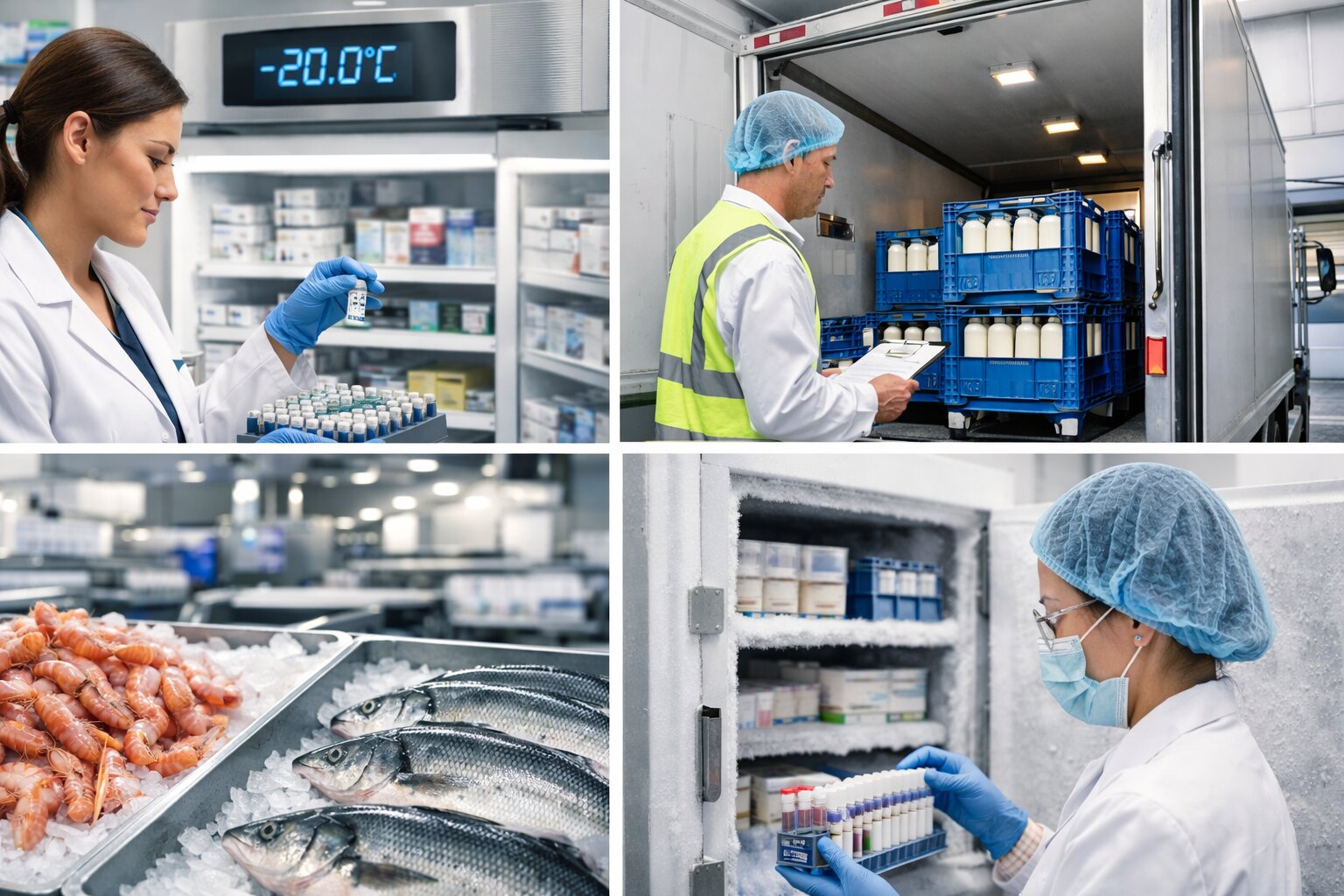
| 💊 Pharma & VaccinesSafe temperature range: 2–8°C | Vaccines, biologics, insulin, and specialty drugs require unbroken cold chain from manufacturer to patient. Even a 2-hour excursion above 8°C can render an entire batch non-efficacious. Monitoring enables CDSCO compliance, GDP documentation, and patient safety assurance. |
| 🥛 Food & DairyMilk: 1–4°C | Frozen foods: −18°C or below | India loses 30% of its fresh produce and dairy due to inadequate cold chain. Real-time monitoring enables dairy cooperatives to prevent spoilage, extend shelf life, reduce FSSAI non-compliance events, and maintain freshness across long inter-state routes. |
| 🐟 Seafood & Marine ProductsFresh seafood: 0–2°C | Frozen: −18°C | India is one of the world’s largest seafood exporters. Maintaining temperature integrity from coastal processing plants to international airports and ports is critical for export compliance, APEDA certification, and premium market access. |
| 🧬 Biotech & Life SciencesBlood samples: 2–8°C | Reagents vary | Diagnostic samples, blood products, research chemicals, and cell therapy products have zero tolerance for temperature variation. A single unmonitored transit can invalidate weeks of laboratory work or compromise a diagnostic result used for clinical decision-making. |
🇮🇳 The Indian Cold Chain Challenge: A Unique Context
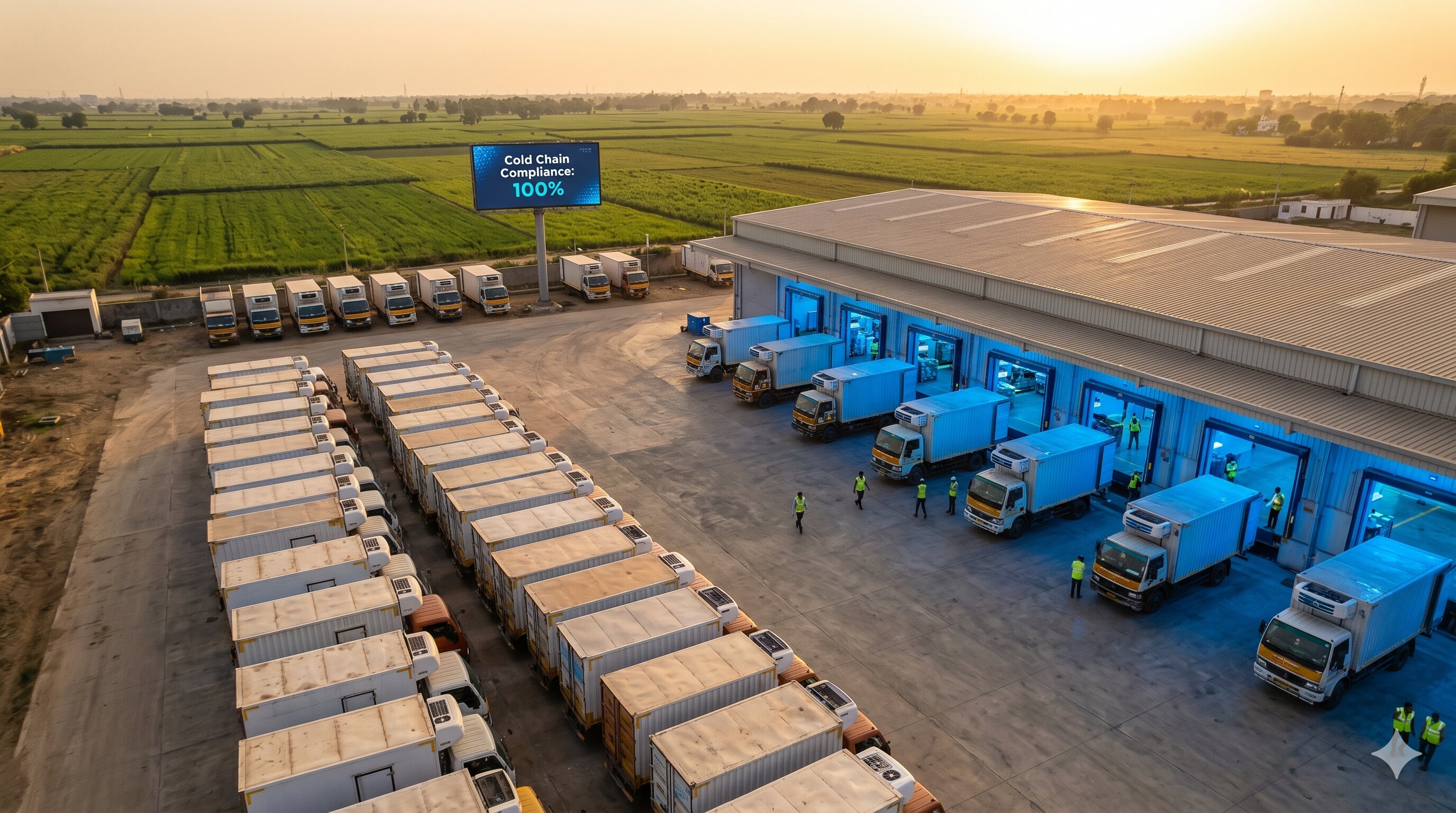
India presents a cold chain challenge unlike any other market in the world. Its sheer size, climatic diversity, infrastructure gaps, and explosive economic growth create both extraordinary risk and extraordinary opportunity for businesses with the right monitoring capabilities.
📊 India Cold Chain Market at a Glance
India’s cold chain logistics market is projected to exceed ₹92,600 crore by 2025, growing at a CAGR of 15–17%. Yet the country has only 8,000 reefer vehicles — a fraction of what is needed. With 90% of perishable produce transported without refrigeration, the gap between cold chain demand and cold chain capacity represents both India’s greatest food loss challenge and its most significant logistics opportunity.
Geography & Distance
India’s road network spans 6.4 million kilometres, and major agricultural and pharmaceutical production hubs are often located thousands of kilometres from consumption centres. A vaccine shipment from a Hyderabad manufacturer to a hospital in Leh, Ladakh may traverse 5 different climate zones, 3 state borders, and road conditions ranging from six-lane expressways to single-lane mountain tracks. No other country in the world places this kind of geographic demand on a cold chain — and no manual system can monitor it reliably.
Extreme Climate Conditions
India’s ambient temperatures present a relentless challenge. In summer, road surface temperatures in Rajasthan, Gujarat, and Madhya Pradesh can exceed 55°C — temperatures that can breach an under-maintained reefer vehicle’s thermal integrity within minutes. In the northeast and Himalayan states, temperatures plunge to −20°C or below, creating freeze risk for products that must stay above 2°C. Real-time monitoring that tracks both temperature and ambient conditions is the only reliable defence against India’s climatic extremes.
Power Infrastructure Gaps
Despite rapid grid expansion, power supply in India’s tier-2, tier-3, and rural regions remains unpredictable. Cold storage facilities in smaller towns frequently experience 4–8 hour power cuts without automatic generator backup. Without a monitoring system that immediately alerts facility managers to power failure events, an overnight outage can go undetected until the morning shift arrives — by which time a warehouse full of temperature-sensitive cargo may be beyond recovery.
Regulatory Evolution
India’s regulatory environment for cold chain logistics is rapidly maturing. The CDSCO has tightened GDP guidelines for pharmaceutical distribution, requiring documented temperature monitoring at all stages. FSSAI’s revised food safety regulations increasingly mandate temperature records for perishable food logistics. The government’s National Action Plan for Cold Chain Development has set ambitious targets for reefer vehicle adoption and cold storage capacity. For logistics providers, these regulatory trends make technology adoption not just commercially advantageous but legally necessary.
📉 Monitoring vs. No Monitoring: The Numbers Don’t Lie
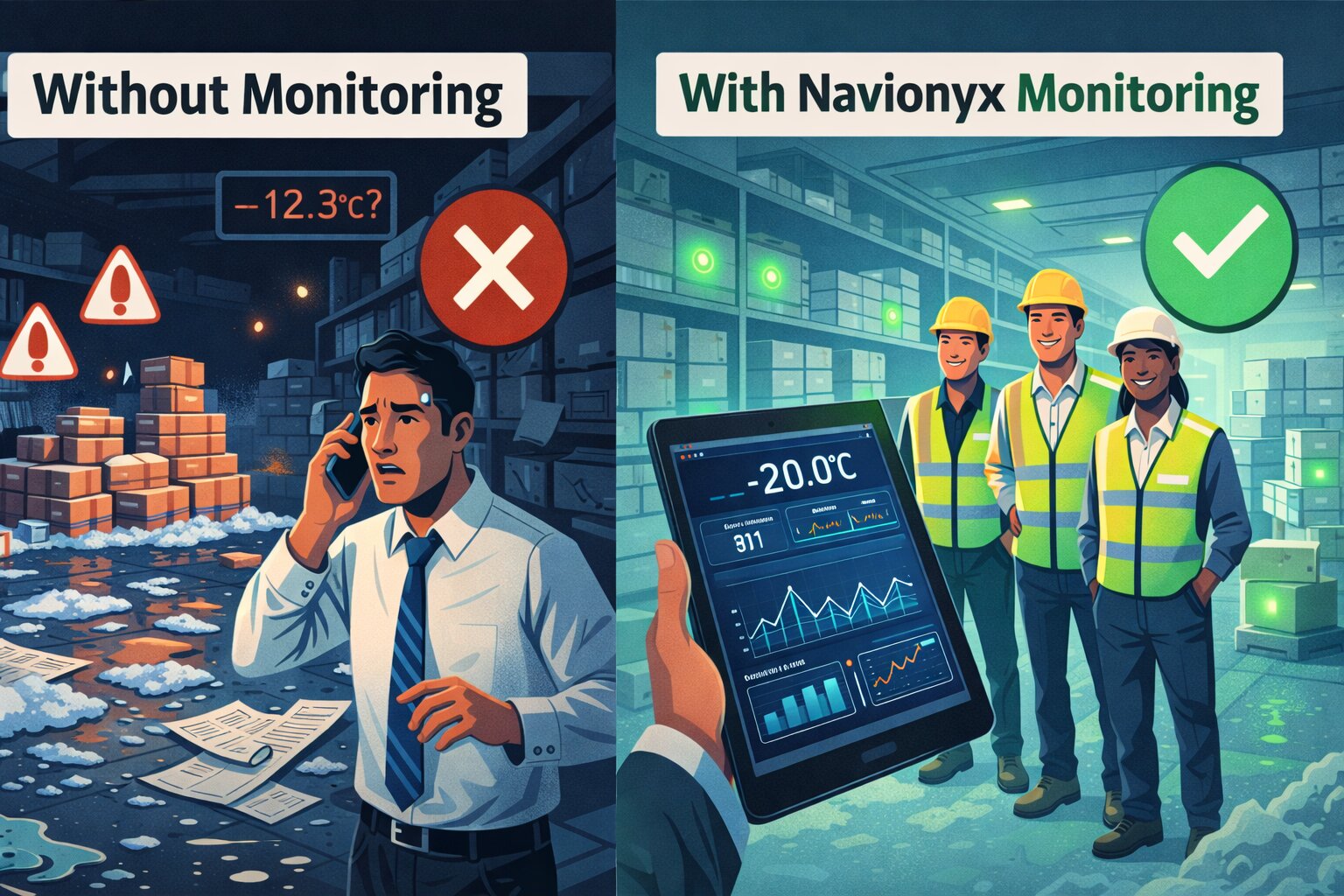
The business case for cold chain monitoring is not theoretical — it is quantifiable. The following comparison illustrates the operational and financial difference between a logistics operation with and without real-time cold chain monitoring.
| ❌ Without Monitoring | ✅ With Smart Monitoring |
|---|---|
| No real-time visibility — problems found at destination | Live dashboard — full visibility at every moment |
| Loss detected only after delivery | Instant alerts allow in-transit intervention |
| Manual paper temperature logs — unreliable | Automated tamper-evident digital records |
| Unable to identify where failure occurred | GPS-linked excursion maps pinpoint exact location |
| Reactive maintenance — repair after failure | Predictive alerts — service before breakdown |
| Regulatory compliance depends on human accuracy | Audit-ready reports generated automatically |
| High product wastage — 20–30% spoilage typical | Less than 2% spoilage with active monitoring |
| No data for insurance or legal claims | Timestamped records support claims and disputes |
| Customer trust eroded by repeated failures | Consistent delivery quality builds long-term loyalty |
| Tendering disadvantage — no compliance proof | Digital compliance records win enterprise contracts |
🔐 Data, Compliance & the Competitive Advantage
In an increasingly regulated and competitive logistics landscape, the data generated by cold chain monitoring systems has value that extends far beyond operational management. It becomes a strategic asset that enables businesses to win contracts, satisfy regulators, resolve disputes, and continuously improve their operations.
Winning Enterprise Contracts & Government Tenders
Large pharmaceutical companies, hospital chains, and government health agencies increasingly require documented proof of cold chain capability as a prerequisite for logistics contracts. A logistics provider that can demonstrate real-time monitoring, automated reporting, and a verifiable track record of temperature compliance has a decisive competitive advantage in tender processes. In the government vaccine logistics space — managed by organisations like the Universal Immunization Programme — the ability to provide real-time temperature data is rapidly becoming mandatory.
Regulatory Audit Readiness
CDSCO audits of pharmaceutical cold chains can happen with little notice. A company that can instantly pull up comprehensive, timestamped temperature records for any shipment — going back 12 or 24 months — is in a fundamentally different regulatory position than one scrambling through paper logs or data logger downloads. Audit readiness is not just about avoiding penalties; it is about demonstrating the kind of operational maturity that earns long-term regulatory trust and reduced audit frequency.
Insurance Claims & Dispute Resolution
When cargo is damaged, the question of liability can be intensely disputed. Without objective, timestamped data, shippers, carriers, and receivers spend months in negotiation with no resolution. With a monitoring system, the precise time, location, and duration of every temperature excursion is on record — enabling rapid, evidence-based resolution of insurance claims and eliminating the ‘he said, she said’ disputes that consume management time and damage commercial relationships.

🚀 The Future of Cold Chain: Trends Shaping 2025 and Beyond
Cold chain monitoring technology is advancing rapidly, and the next 3–5 years will see transformative changes that will raise the bar for what ‘good’ looks like in temperature-sensitive logistics.
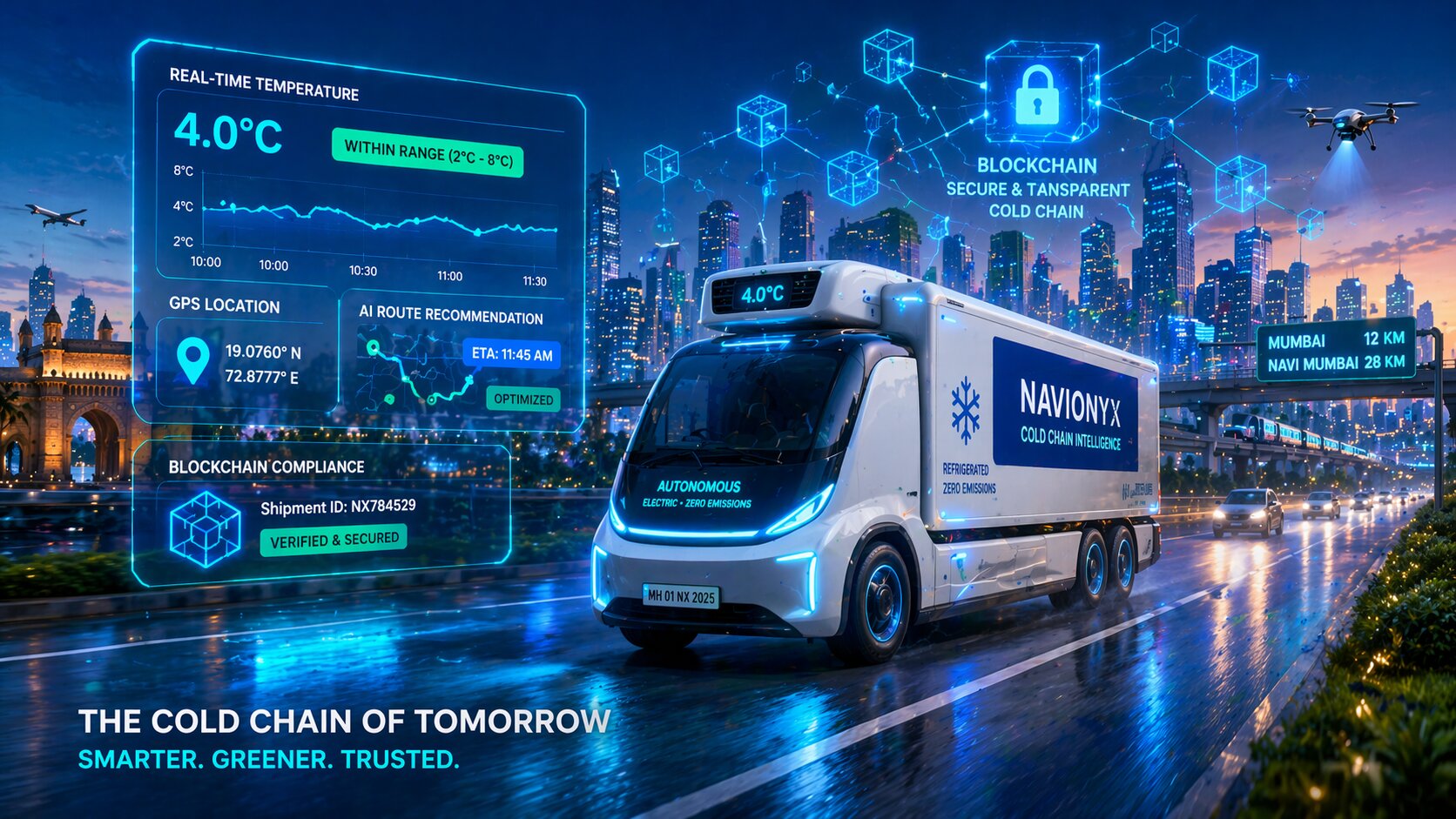
- AI-Powered Dynamic Route Optimization: Algorithms that factor in real-time weather, traffic, and ambient temperature conditions to recommend routes and stopover points that minimize thermal risk — not just travel time.
- Blockchain-Based Temperature Audit Trails: Immutable, decentralized records of temperature data that cannot be altered retroactively, providing the highest level of regulatory trust and enabling instant digital verification of cold chain integrity by any party in the supply chain.
- Ultra-Low Power LoRaWAN Sensors: Sensors with 5+ year battery life operating over long-range low-power networks — enabling cold chain monitoring in remote regions of India where cellular coverage is unreliable or non-existent.
- Autonomous Corrective Action: Systems that not only alert human operators but also autonomously trigger corrective actions — such as remotely adjusting refrigeration set points, rerouting vehicles, or notifying alternative storage facilities to prepare for emergency offloading.
- Integration with Government Health Systems: Direct API integration between cold chain monitoring platforms and government eVIN (electronic Vaccine Intelligence Network) systems — enabling seamless, real-time reporting of vaccine cold chain status across India’s entire immunization supply chain.
🚀 How Navionyx Enables Cold Chain Intelligence
Built for India. Trusted by Logistics Professionals.
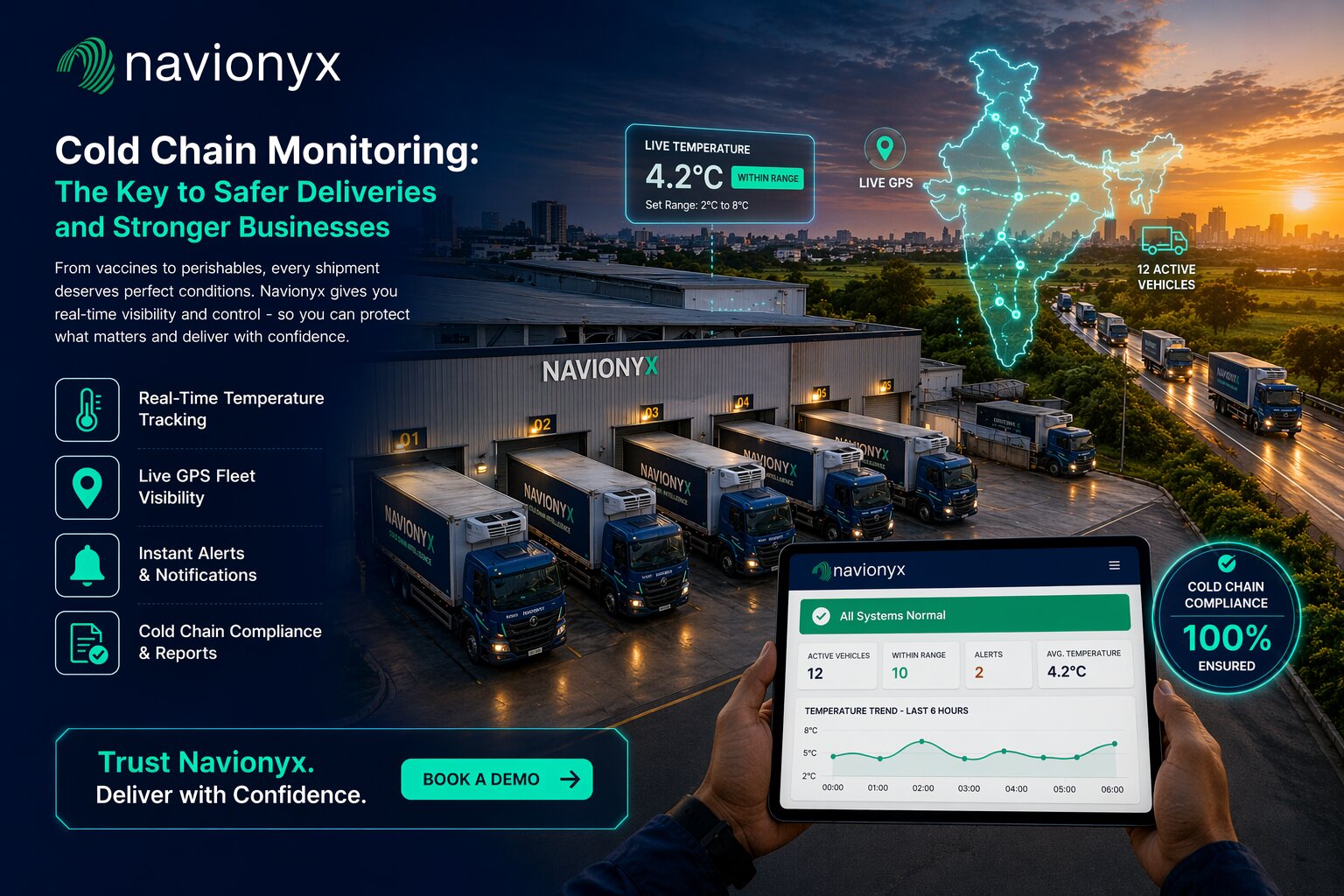
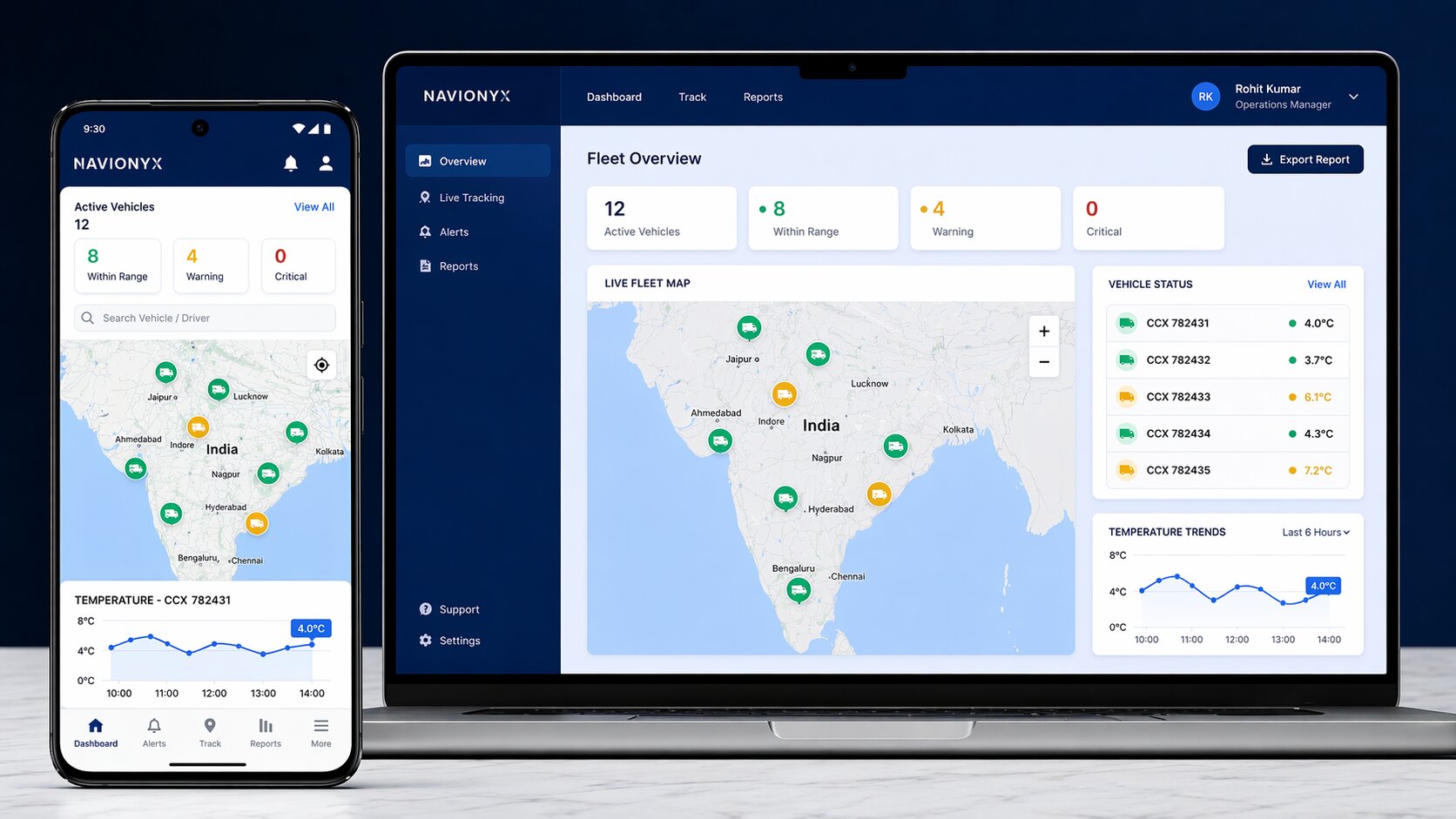
Navionyx is a made-in-India telematics and fleet intelligence platform built from the ground up for the specific challenges of the Indian logistics market. Our cold chain monitoring solution is not a bolt-on feature — it is a core part of a comprehensive platform that gives logistics operators complete visibility, control, and intelligence over their temperature-sensitive fleets.
📡 Multi-Parameter Sensing
Temperature, humidity, door open/close events, power status, and shock/vibration — all captured simultaneously from a single, compact sensor unit.
📱 Web & Mobile Dashboards
Intuitive, responsive dashboards accessible from any device. Monitor your entire fleet on a single map view, or drill down into individual vehicle temperature histories with one click.
🔔 Intelligent Alert Engine
Fully configurable alert thresholds with multi-channel notifications (SMS, WhatsApp, email, app push). Tiered alerting gives teams time to intervene before damage occurs.
📊 Compliance-Ready Reporting
One-click PDF and CSV reports covering temperature history, excursion events, alert responses, and GPS-linked condition maps — formatted for CDSCO, GDP, and FSSAI submissions.
🤖 Predictive Maintenance
AI-powered analysis of sensor patterns to predict refrigeration unit failure before it happens — reducing unplanned downtime, emergency repair costs, and cargo loss.
🇮🇳 India-First Architecture
Data hosted on secure servers in India. Built to work across cellular bands used in Indian networks. Designed for India’s geography, climate, regulatory framework, and language requirements.
🎯 Final Thoughts: Cold Chain Is About Trust
Cold chain logistics is not merely a technical challenge — it is a promise. A promise from a pharmaceutical company that their medicines will work as intended. A promise from a food brand that their products are fresh and safe. A promise from a logistics provider that the cargo they carry will arrive in the exact condition it left. Every link in the cold chain is a link in that promise.
Without monitoring, you are operating on hope. Hope that the refrigeration unit holds. Hope that the driver makes no unscheduled stops. Hope that the power doesn’t fail at 3 AM. In a country as complex and demanding as India, hope is not a cold chain strategy.
With smart monitoring, you have control. Control over your cargo, your compliance, your costs, and your reputation. And in the increasingly competitive world of temperature-sensitive logistics, control is the only sustainable competitive advantage.